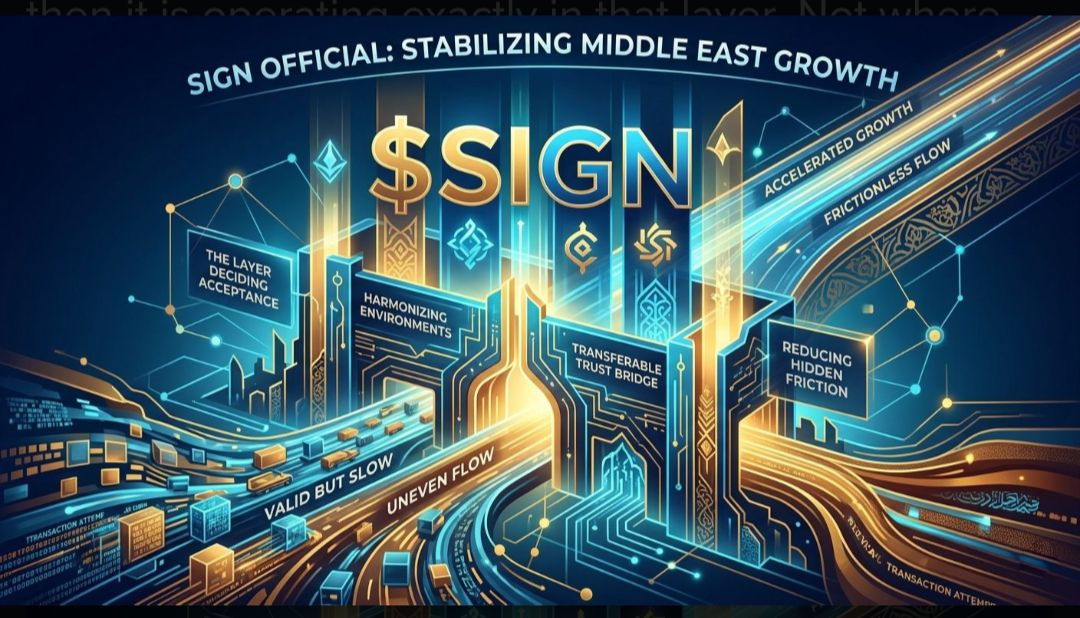
Sign Feels Like It Was Built From Real Friction, Not Just Theory
Most systems today don’t actually fail — they just don’t trust each other. One platform verifies everything perfectly, but the moment that data moves somewhere else, the process quietly starts again. It’s not visible as a “problem,” but it slows everything down.
@SignOfficial seems to come from observing this exact pattern again and again. Instead of improving one step, it focuses on what happens between steps. With $SIGN , verification is no longer locked inside a single system. It becomes something that can move, carry meaning, and still be trusted without repeating the same checks.
I’ve noticed this kind of flow especially in regions like the Middle East, where systems are expanding fast. Identity gets approved, documents are cleared, yet the next platform still asks for the same validation. Not because something changed, but because trust doesn’t transfer.
That’s where Sign fits naturally. It doesn’t replace existing systems, and it doesn’t try to make them look faster. It simply removes the invisible reset point where trust disappears. Over time, that small change can reduce friction in a big way.