
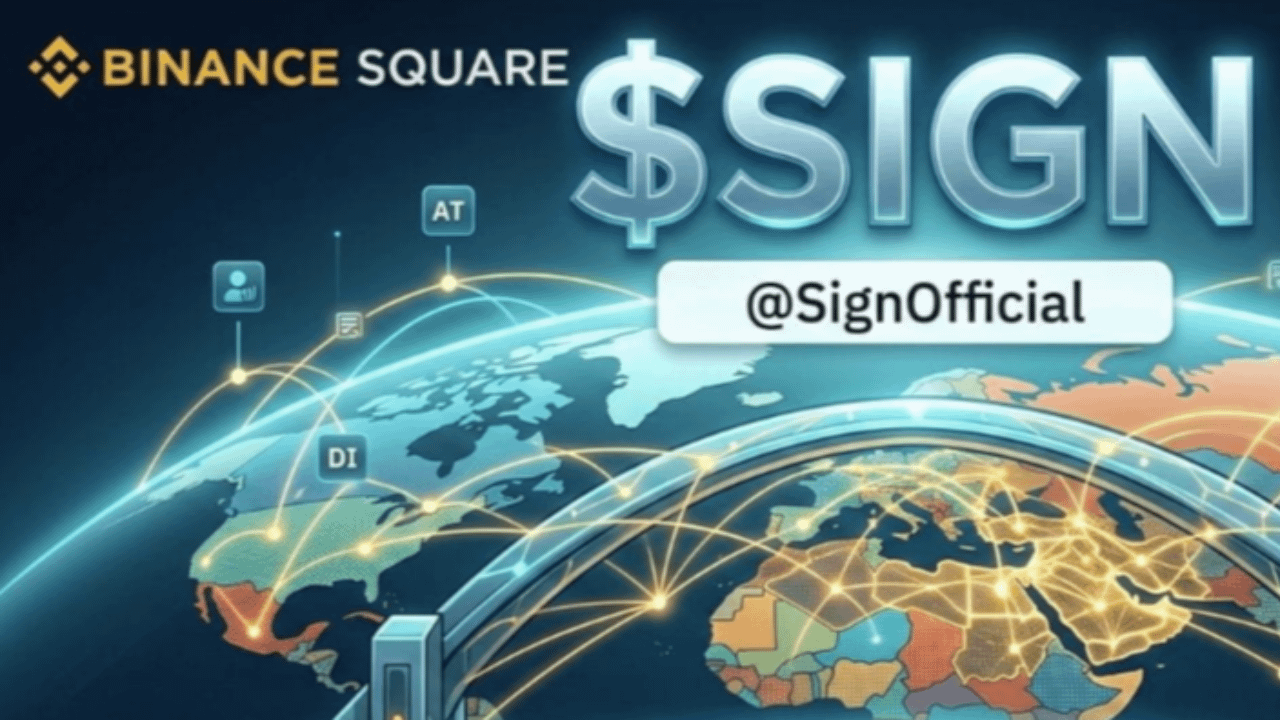
The next phase of global economic growth will not be defined solely by natural resources or traditional finance—it will be driven by digital infrastructure ownership. In the Middle East, where countries are aggressively investing in smart cities, fintech, and blockchain adoption, the concept of digital sovereignty is becoming increasingly critical.
This is where @SignOfficial enters the conversation as more than just another Web3 project. Sign is building what can be described as digital sovereign infrastructure—a foundational layer that allows governments, institutions, and enterprises to operate securely, transparently, and independently in a decentralized environment.
With $SIGN at the core of its ecosystem, the protocol enables governance, validation, and coordination across digital systems. This aligns perfectly with the Middle East’s strategic vision of reducing reliance on external systems while accelerating innovation within its own borders. From cross-border trade to digital identity and secure data verification, the applications are vast and directly tied to real economic expansion.
What makes this narrative compelling is that it’s not purely speculative—it fits into an already ongoing regional transformation. Countries are actively seeking infrastructure that ensures control, scalability, and trust. Sign provides a framework where these elements can coexist without compromising decentralization.
As adoption grows, $SIGN could become a key asset tied to infrastructure-level demand rather than short-term hype. That positions it differently from typical tokens and places it closer to the backbone of future digital economies.