
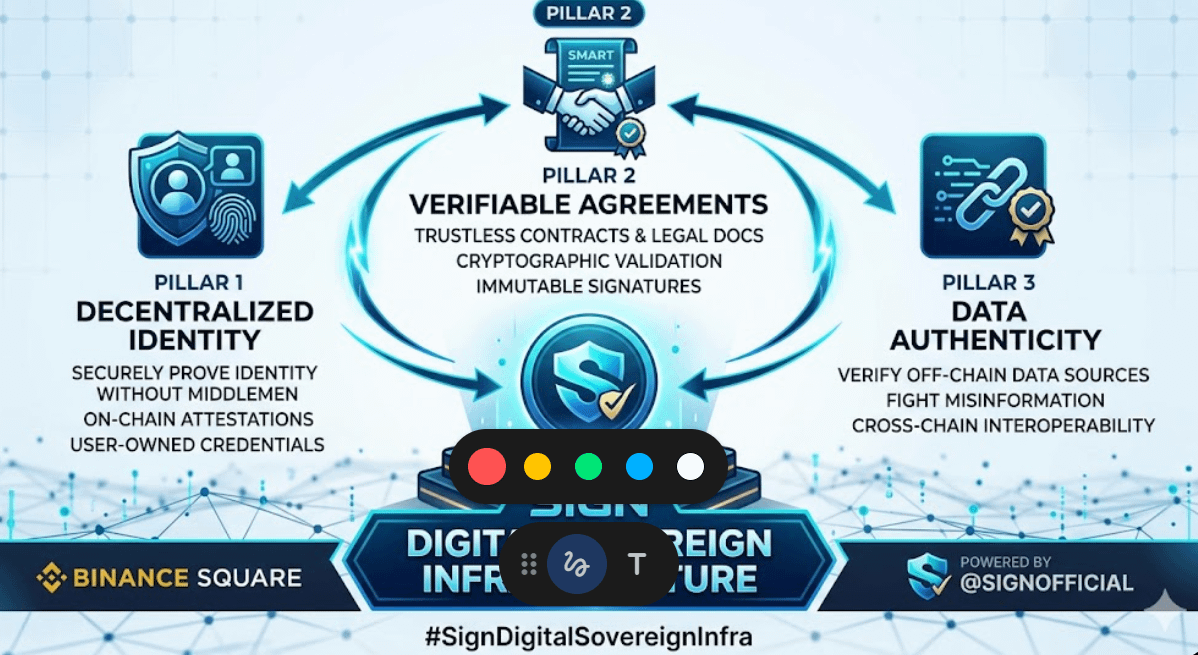
While many in the blockchain space are familiar with the concept of decentralized document signing through EthSign, the project's evolution into Sign marks a profound shift toward building foundational, omni-chain Digital Sovereign Infrastructure. This is not merely an e-signature tool; it is a universal, programmable verification layer designed to replace "trust" with cryptographic proof.
The Problem: Opaque and Fragmented Trust
In the current digital economy, trust is expensive and fragmented. We rely on centralized intermediaries (banks, governments, corporations) to verify identities, credentials, and contracts. This creates several critical issues:
Data Silos: Information is locked within specific platforms, limiting interoperability.
Single Points of Failure: Centralized databases are vulnerable to breaches and censorship.
Privacy Trade-offs: To prove a single fact (e.g., "I am over 18"), users often have to reveal their entire identity.
The Solution: The Sign Attestation Protocol
Sign Protocol provides the infrastructure to create, manage, and verify cryptographic attestations. An attestation is a formal, signed claim made by an entity about a subject.
The core of the protocol's technical superiority lies in three areas: Omnichain Interoperability, Schema Standardization, and Flexible Storage.
$SIGN @SignOfficial #SignDigitalSovereignInfra
