


@SignOfficial trust layer nobody asked for, but everyone’s about to need
Look, I'll be honest with you most crypto projects are weirdly easy to explain and impossibly hard to actually believe in. SIGN flips that on me every time. I can't wrap it up in one clean sentence, and honestly that used to annoy me. But the more I dig into it, the more I realize that's probably a good sign. It's not dressing up a familiar token story. It's trying to solve something foundational.

Most people try to box SIGN into neat categories credential verification, token distribution, attestations, identity rails, onchain signatures. And yeah, none of that is wrong. But it's like describing a car by saying "it has wheels."
Technically true, completely missing the point. What SIGN actually looks like to me is a trust infrastructure layer for the digital economy. The kind of thing nobody notices until it's missing, and then suddenly everything breaks. We're talking about proof that something is real, valid, approved, or authorized without repeating the whole verification circus every single time.
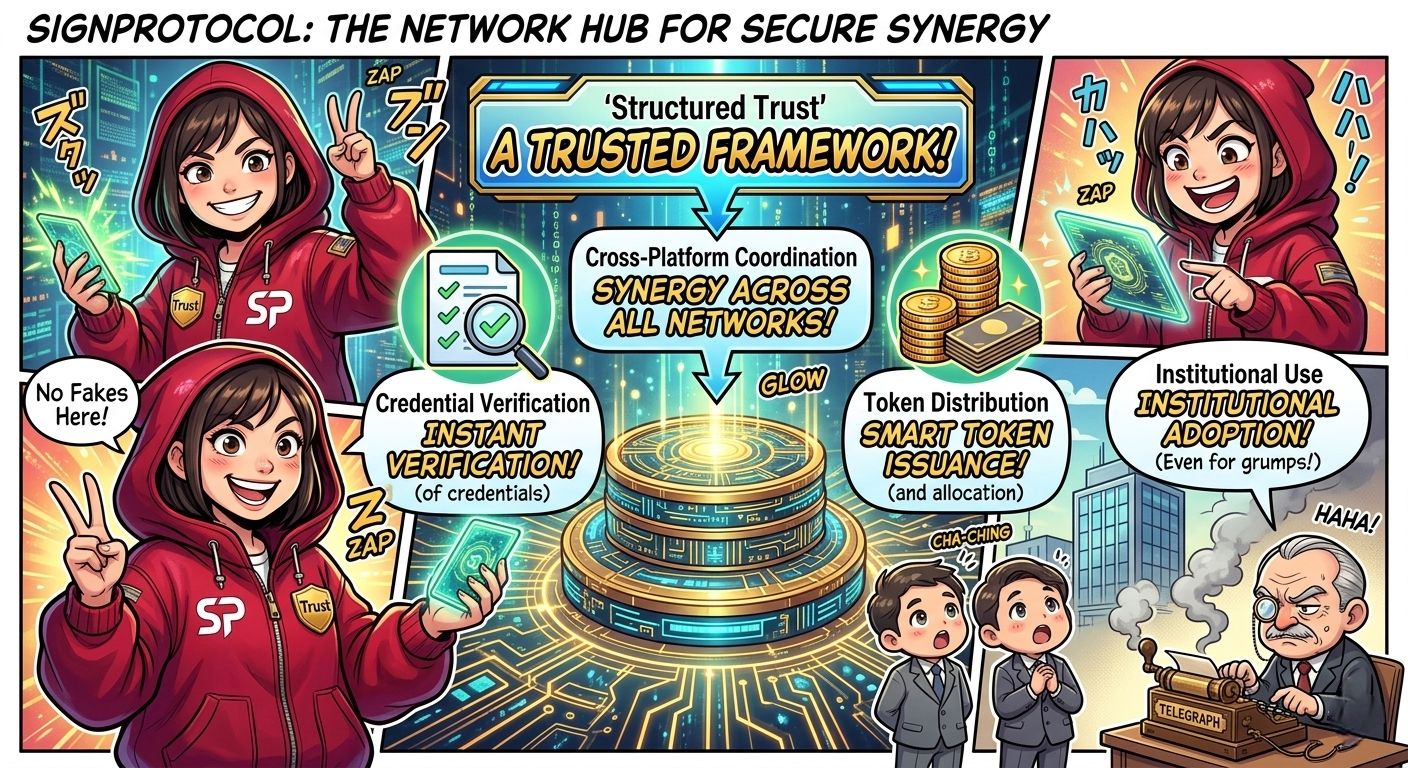
I was staring at the chart yesterday, watching it do nothing exciting, and it hit me: the internet got really good at moving data. Blockchains got really good at making transactions visible. But we still have this massive gap between information existing and information being trusted.
🤔 That gap is everywhere. Who's actually eligible for something? Who signed what? Which wallet qualifies? Which claim is legit? Which distribution isn't fake? Which credential works across systems without some poor soul doing manual checks in a spreadsheet?
That's the territory SIGN is quietly trying to own. And that's what keeps me interested not because it sounds futuristic (it doesn't), but because it feels painfully, boringly practical. Most of crypto is still chasing narratives. SIGN feels like it's dealing with administrative reality. Proof. Eligibility. Verification. Distribution. Auditability. Structured trust. None of that gets anyone excited on Twitter, but those are exactly the themes that matter once speculation cools off and real usage starts demanding actual structure.
The thing that finally clicked for me is that SIGN isn't relying on one narrow product to justify itself. It's got the protocol layer, sure, but also applications and workflow products wrapped around it. That's rare. Most infrastructure projects stay so abstract they become technically impressive but commercially useless. Others go too far the other way single app with zero defensibility. SIGN is trying to bridge both. It wants builders to use it, but it also wants to sit inside real institutional workflows. That gives it a different weight than most "trust" or "identity" projects I've seen.
Now, here's where I need to be honest about something that makes me uncomfortable. The more I look at the product side, the more impressive it gets. But the more I look at the token side, the more complicated things look.
I learned this the hard way a few cycles ago back when I got way too excited about a project with incredible tech and ignored the supply schedule. That mistake cost me. So now I look at both. And with SIGN, the infrastructure thesis is actually ahead of the token thesis. The business logic is ahead of market sentiment. The project might already be more important than the chart suggests, but that doesn't mean the chart is wrong. Sometimes the market isn't rejecting the product. It's just waiting for harder proof that network usage actually turns into token gravity instead of staying trapped at the application layer.
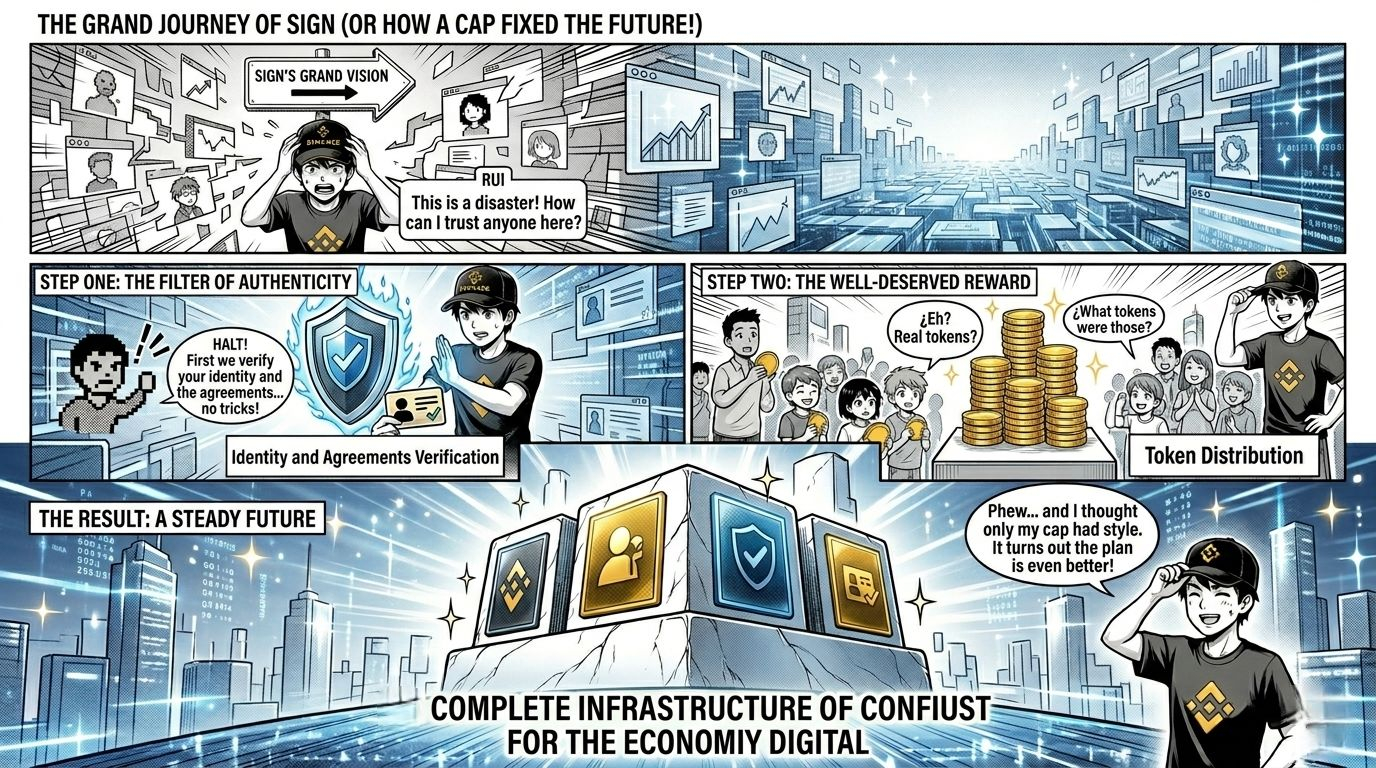
That's why don't think SIGN makes sense as a hype play. It's a long-duration infrastructure question. Does the digital world need better systems for portable proof, verification, and structured trust? If yes, then SIGN is pointed at something much deeper than a short-term category trend. If no, then it's one more smart project building ahead of demand that takes way longer than expected to mature.
💭 I think the demand is real, though. was dealing with a vendor contract last week totally unrelated to crypto and the amount of back-and-forth just to verify who had signing authority was ridiculous. That's the kind of friction that scales terribly. The world is moving toward more digital coordination, more tokenized assets, more cross-platform identity needs, more compliance pressure. More situations where "just trust me" stops being acceptable. In that environment, proof infrastructure stops looking niche and starts looking like a missing layer.
🙌 So yeah, SIGN stands out to me. Not because it's perfect. Not because the token model is fully resolved. Not because the market has already decided to reward it. It stands out because it's building around a genuine structural need. And in a market still addicted to shiny narratives, that alone puts it in a completely different class from most projects people yell about every day.
.
.