

Crypto has never been short on bold promises. Every cycle brings a fresh wave of projects that claim they will fix trust. fix fairness. fix incentives. At first glance a lot of them sound convincing. Then the market gets ugly. Liquidity dries up. Users get nervous. Unlocks hit. Systems wobble. And the big story that looked solid suddenly starts to feel thin. That is probably why I do not get excited very easily anymore. I still pay attention. But I do it with caution. I have learned that in crypto the real test is never the launch week story. It is what still makes sense when the pressure starts building.
That is also why SIGN caught my eye in a different way. Not because it promised some magical future. Not because the branding was loud. What stood out to me was something more basic. It seems to be spending serious energy on the part that many teams try to glide over. Distribution. Who gets what. When they get it. Under which rules. That may sound dry compared with the usual market noise. But to me that is often where the truth lives. If a project is willing to make that layer more visible and more structured then at least it is focusing on a problem that actually matters. SIGN presents TokenTable as a system for allocation. vesting. and distribution with clear schedules and predictable outputs. That feels more grounded than another story built only on vibes.
The simple idea is not hard to follow. Token distribution in crypto is often messy. People hear one number at launch and discover a very different reality later. Unlocks surprise the market. Early holders get nervous. Retail feels like the last person to know what is happening. SIGN seems to be pushing the opposite approach. Make the allocation logic visible. Show the release schedules. Give people a clearer picture of supply over time. In plain terms it looks like an attempt to make token distribution less of a black box. I think that matters because confusion is not a side issue in crypto. Confusion is often where distrust begins.
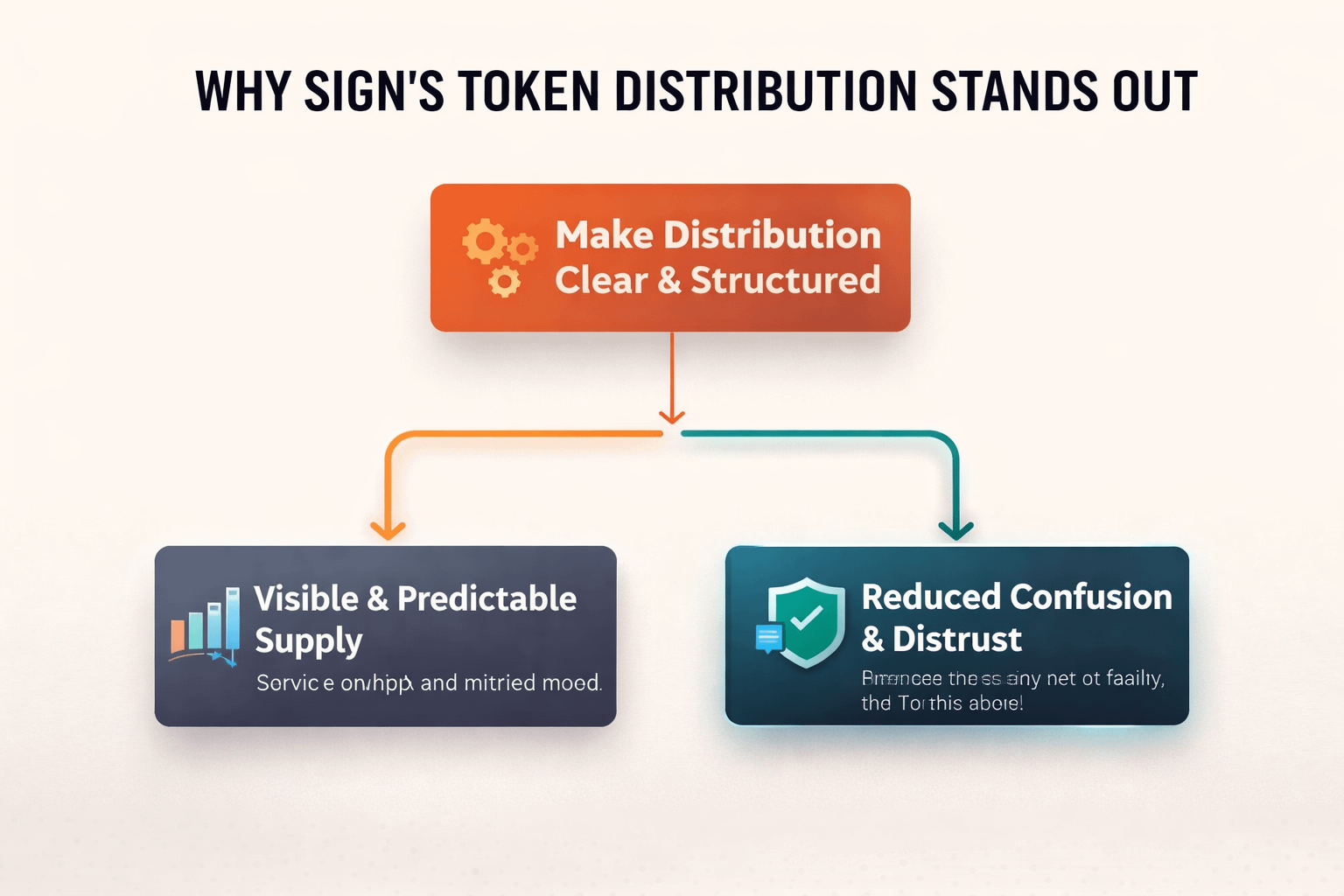
This becomes more important when things go wrong. And in crypto things always go wrong at some point. Markets crash. Chains get congested. Users rush for the exit. Teams face pressure they did not expect. Weak systems usually look acceptable in calm conditions. Then stress arrives and all the hidden flaws come into view. Broken trust rarely starts with one dramatic event. It often starts with small gaps in clarity. unclear incentives. and promises that were never backed by something solid. A distribution system that can still be inspected when people are anxious is worth more than a polished slogan. If SIGN is serious about this layer then I can at least see the logic. Real infrastructure earns its value when the environment stops being friendly.
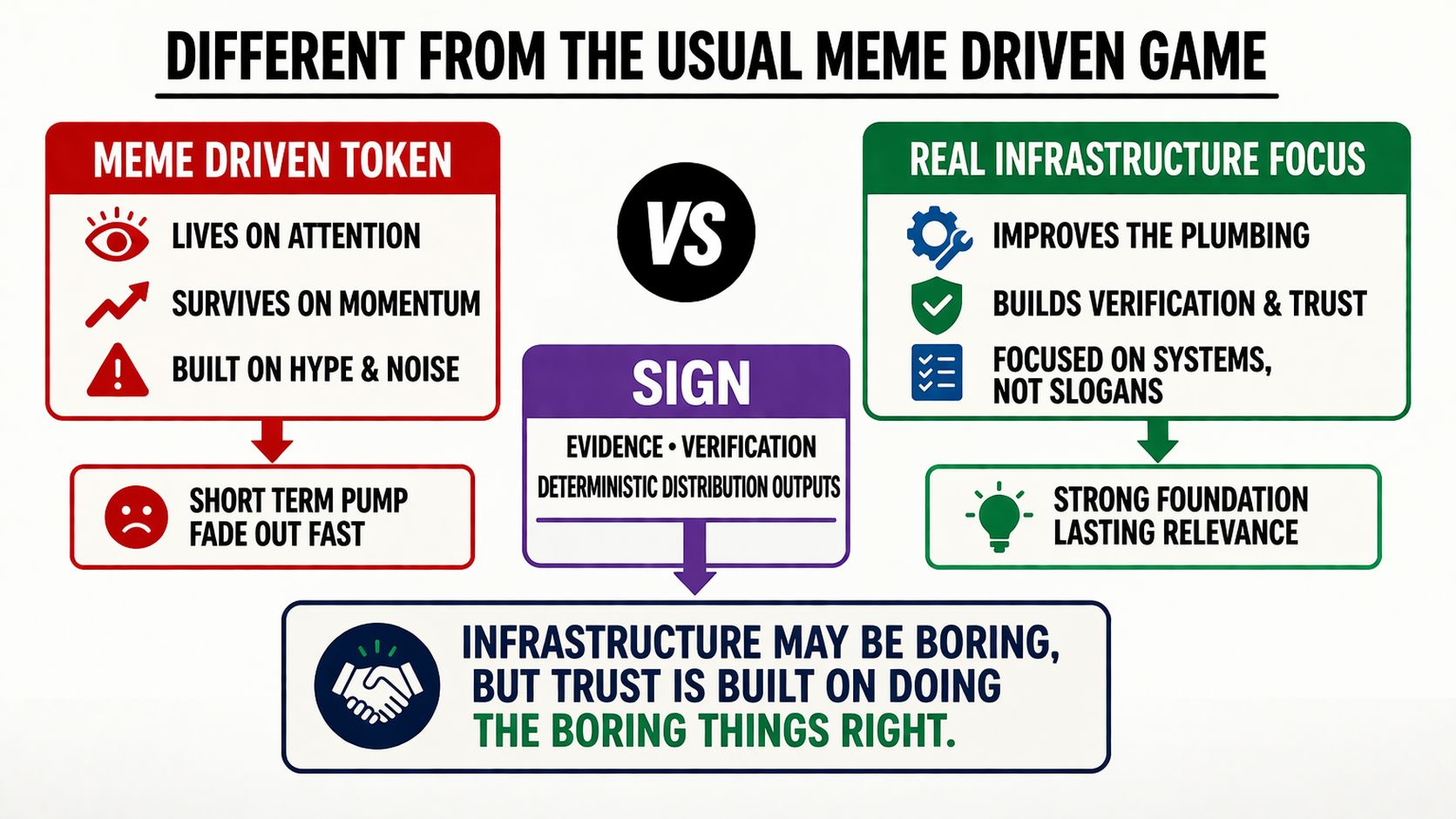
That is where this feels different from the usual meme driven game. I am not saying speculation disappears. It never does. But there is a difference between a project that lives on attention alone and one that tries to improve the plumbing underneath capital formation and token launches. SIGN talks about evidence. verification. and deterministic distribution outputs across its product stack. I do not treat those words as proof by themselves. Still the direction is more interesting to me than another token that survives only on momentum. Infrastructure is rarely glamorous. But trust usually rests on boring things being done properly. In the long run I tend to respect that more than noise.
At the same time I am not ready to hand out easy approval. Serious systems cannot afford weak design. One blind spot in allocation rules. one confusing unlock path. or one mismatch between what is promised and what is executed can damage trust very quickly. Crypto users have long memories when they feel they were misled. So my view stays balanced. Transparent token distribution is a strong story only if the transparency is real. It has to be easy to inspect. hard to manipulate. and reliable when nobody is in the mood to be patient. If that standard is not met then the story falls apart.
When I zoom out this is the part of crypto that still feels worth watching. Not the loudest narratives. Not the fastest pumps. The better direction is useful systems that can survive real use and real scrutiny. Blockchain does not create lasting value just because something is onchain. Value comes when systems are understandable. dependable. and adopted because they solve a real coordination problem. If SIGN is moving in that direction through clearer distribution infrastructure then that says something meaningful about where crypto should mature next. Adoption needs reliability more than theater.
So I am not treating $SIGN like a finished answer. I am treating it like something worth observing. The focus on transparent distribution gives it a more serious shape than a lot of what passes through this market. That does not remove risk. It does not guarantee trust. It does not settle the long term case. But it does point toward a part of crypto that I think deserves more attention. I am still watching. Still learning. Still cautious. In this space that may be the healthiest way to stay curious.