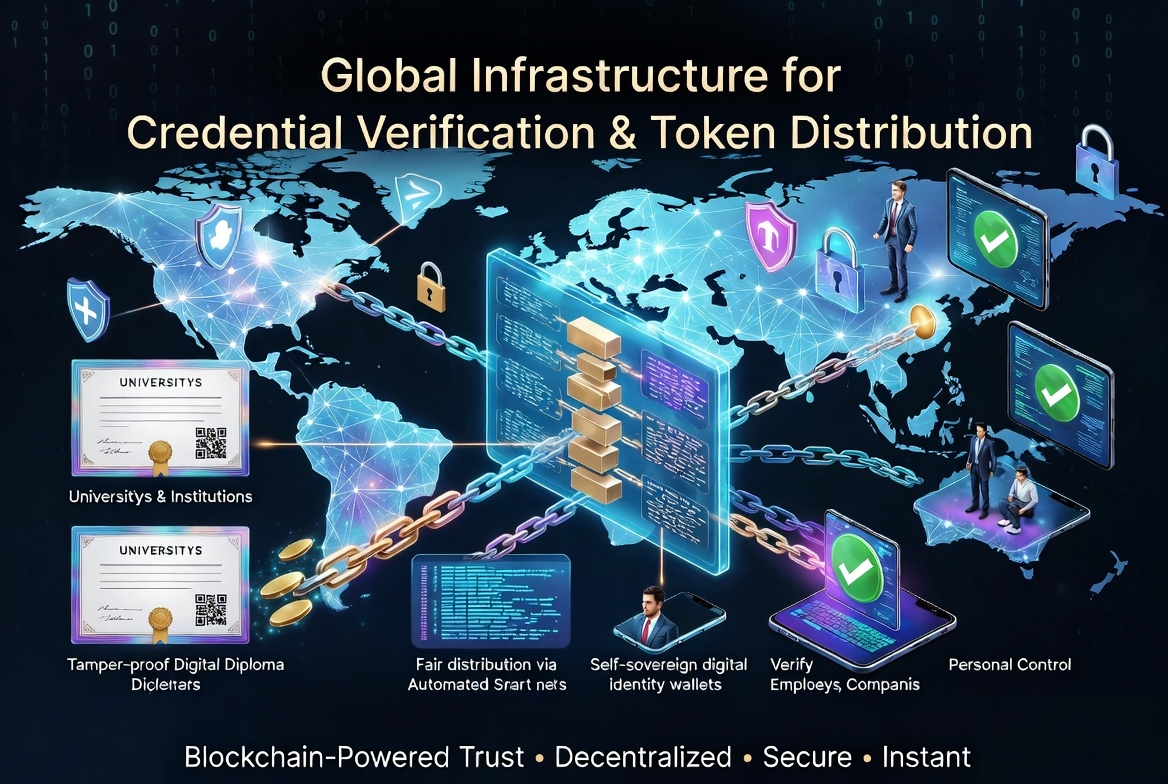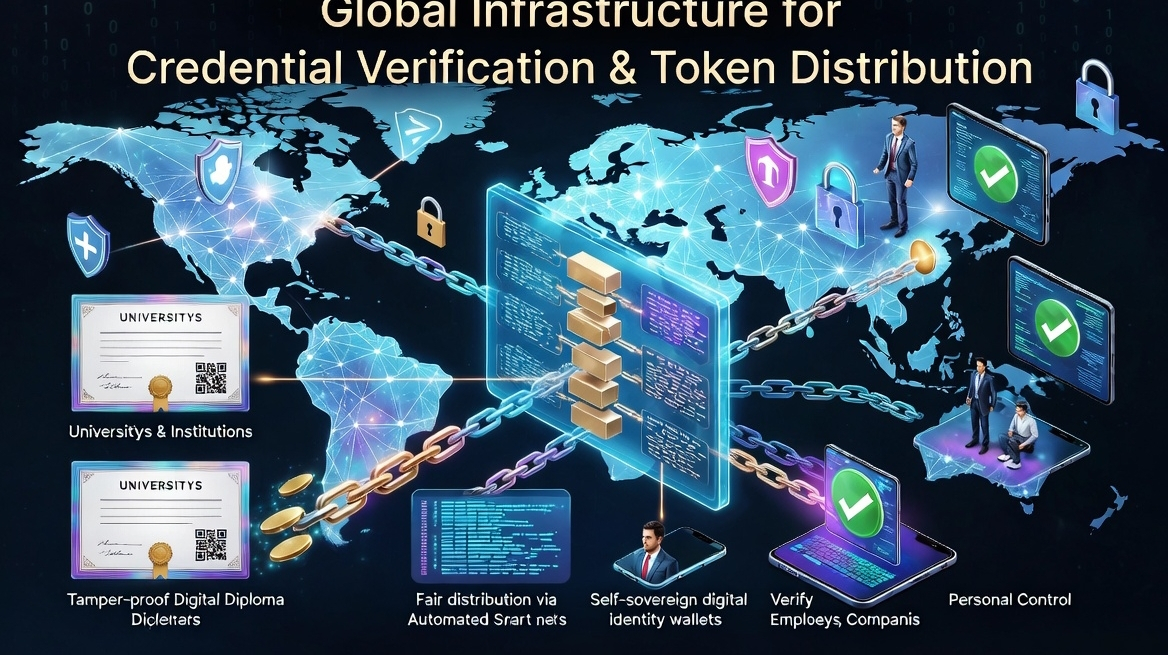
increasingly digital world, trust has become one of the most valuable currencies. Whether it’s verifying academic degrees, professional certifications, or distributing digital assets, the need for secure, transparent, and scalable systems is more urgent than ever. This is where global infrastructure for credential verification and token distribution steps in—bridging trust gaps through advanced technologies like blockchain and decentralized networks.
The Trust Problem in a Digital Age
Traditional systems of credential verification rely heavily on centralized authorities—universities, corporations, and governments. While these entities play a critical role, their processes are often slow, fragmented, and vulnerable to fraud. Fake degrees, forged certificates, and unverifiable claims continue to challenge employers and institutions worldwide.
At the same time, token distribution—whether in the form of cryptocurrencies, digital rewards, or access rights—faces its own issues. Centralized control can lead to lack of transparency, unequal access, and security vulnerabilities.
Decentralization as the Foundation
The emergence of blockchain technology has introduced a new paradigm: decentralization. Instead of relying on a single authority, decentralized systems distribute trust across a network of nodes. This ensures that data is tamper-resistant, transparent, and verifiable by anyone with access.
Credential verification systems built on blockchain allow institutions to issue digital credentials that are cryptographically secure. Once issued, these credentials cannot be altered or forged, and individuals can share them instantly with employers or organizations across the globe.
Similarly, token distribution platforms leverage smart contracts to automate and secure the allocation of digital assets. This removes intermediaries and ensures fairness, accuracy, and efficiency.
Key Components of the Infrastructure
A robust global infrastructure for credential verification and token distribution typically includes:
1. Digital Identity Systems
Users need a secure and self-sovereign identity to interact with decentralized platforms. These identities give individuals control over their personal data and credentials.
2. Verifiable Credentials
Institutions issue credentials in a digital format that can be independently verified. These credentials are portable, meaning users can carry them across platforms and borders.
3. Blockchain Networks
The backbone of the system, blockchain ensures data integrity, transparency, and immutability.
4. Smart Contracts
Automated programs that execute predefined rules, enabling seamless token distribution and credential validation without human intervention.
5. Interoperability Protocols
To achieve global adoption, systems must communicate with each other across different platforms and blockchains.
Real-World Applications
The impact of this infrastructure spans multiple industries:
Education: Universities issue tamper-proof digital diplomas, reducing fraud and simplifying verification for employers.
Employment: Companies can instantly verify candidate credentials, improving hiring efficiency.
Finance: Token distribution enables decentralized finance (DeFi), allowing users to access financial services without traditional banks.
Healthcare: Medical credentials and records can be securely shared among authorized professionals.
Benefits of a Global System
The advantages of such an infrastructure are transformative:
Transparency: Every transaction and credential can be independently verified.
Security: Cryptographic protection prevents tampering and fraud.
Efficiency: Instant verification and automated distribution reduce delays and costs.
Accessibility: Individuals worldwide can participate without reliance on centralized authorities.
Challenges and Considerations
Despite its promise, several challenges remain:
Regulatory Uncertainty: Governments are still developing frameworks for blockchain-based systems.
Scalability: Handling large volumes of data efficiently remains a technical hurdle.
Adoption Barriers: Institutions may resist change due to legacy systems and lack of awareness.
Privacy Concerns: Balancing transparency with data protection is critical.
The Road Ahead
The future of credential verification and token distribution lies in collaboration. Governments, private organizations, and technology providers must work together to establish standards and frameworks that ensure interoperability and trust.
As adoption grows, we may see a world where individuals fully own their credentials and digital assets—accessible anytime, anywhere, and verifiable instantly. This shift has the potential to redefine how trust is established in the digital economy.
Conclusion
The global infrastructure for credential verification and token distribution represents a fundamental shift toward a more transparent, secure, and decentralized future. By leveraging blockchain and related technologies, we can eliminate inefficiencies, reduce fraud, and empower individuals with control over their digital identities and assets.
In the end, it’s not just about technology—it’s about building a system where trust is no longer assumed but mathematically guaranteed.