

 The more I’ve been turning Sign over in my head, the less it feels like some shiny new trust tool. It honestly feels like a quiet power move—the kind that doesn’t shout or flash, but gently asks who actually gets to decide if you belong somewhere.
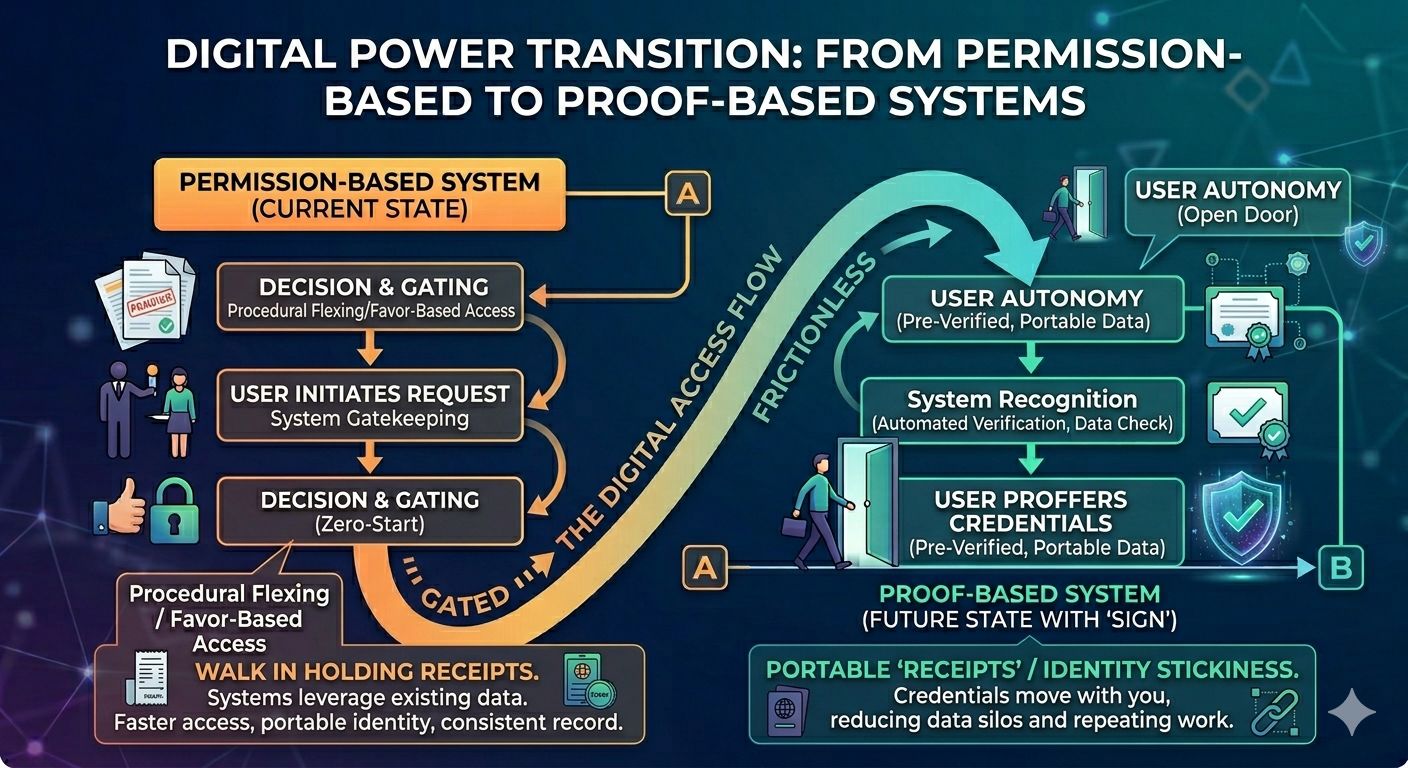
You know how most digital stuff still works? You show up with nothing, fill out the form, wait around while someone (or some system) reviews it, maybe approves you, maybe sends a polite “no thanks” email. Access is basically a favor handed down from whoever’s guarding the gate. It’s all permission, never proof.
Sign nudges you in the other direction. What if your evidence could just come with you? What if your identity, what you’re eligible for, the stuff you’ve actually done, or the credentials you’ve earned didn’t get wiped clean every single time you knock on a new door? You walk in already holding the receipts. The system doesn’t have to start from zero—it just looks, checks, and lets you through.
That tiny shift? It changes the whole vibe. Permission worlds are built to be slow on purpose. Every new platform acts like your past never existed. Every gatekeeper wants their own little ritual, their own checklist, their own moment of feeling important. Even when it’s obvious you qualify, the process still makes you ask nicely. It’s not real coordination. It’s just procedural flexing wearing a “we’re being careful” costume.
A proof-first world feels so much lighter. The weight moves. Institutions still exist, sure, but they stop pretending they’re the first and only judge every time. They can actually lean on what’s already been checked somewhere else. Your track record travels with you. Access stops feeling like someone might randomly withhold it and starts feeling like something your own evidence can unlock.
It’s a bigger flip than it looks at first. This isn’t just about faster sign-ups or smoother logins. It’s quietly handing authority back to the facts themselves instead of the endless approval line. Gatekeepers lose their automatic “yes or no” monopoly. The work you put in doesn’t vanish the second you leave one place. What you’ve already proven once actually counts somewhere else.
And man, that changes how it feels to show up online. You invest effort knowing it might actually follow you around. Your contributions stick around longer. Your history becomes something useful instead of something you have to keep proving from scratch. The internet starts rewarding the fact that you’ve been consistent instead of punishing you with a fresh reset every time.
Look, permission isn’t going to disappear completely, and it probably shouldn’t. Some calls will always need real human judgment, local rules, or extra eyes on things. That’s healthy. The real difference is whether those moments are the exception or just how the whole system is wired by default.
Sign, when it works the way it could, tips the default toward proof. It chips away at that sneaky habit institutions have of treating every qualified person like they’re brand new. It turns access from “will they let me in?” into “here’s what I’ve already earned—does this fit?”
That’s not some minor infrastructure tweak. It’s a real change in how digital power actually moves. And the longer I sit with it, the more it feels like something we’ve been waiting for.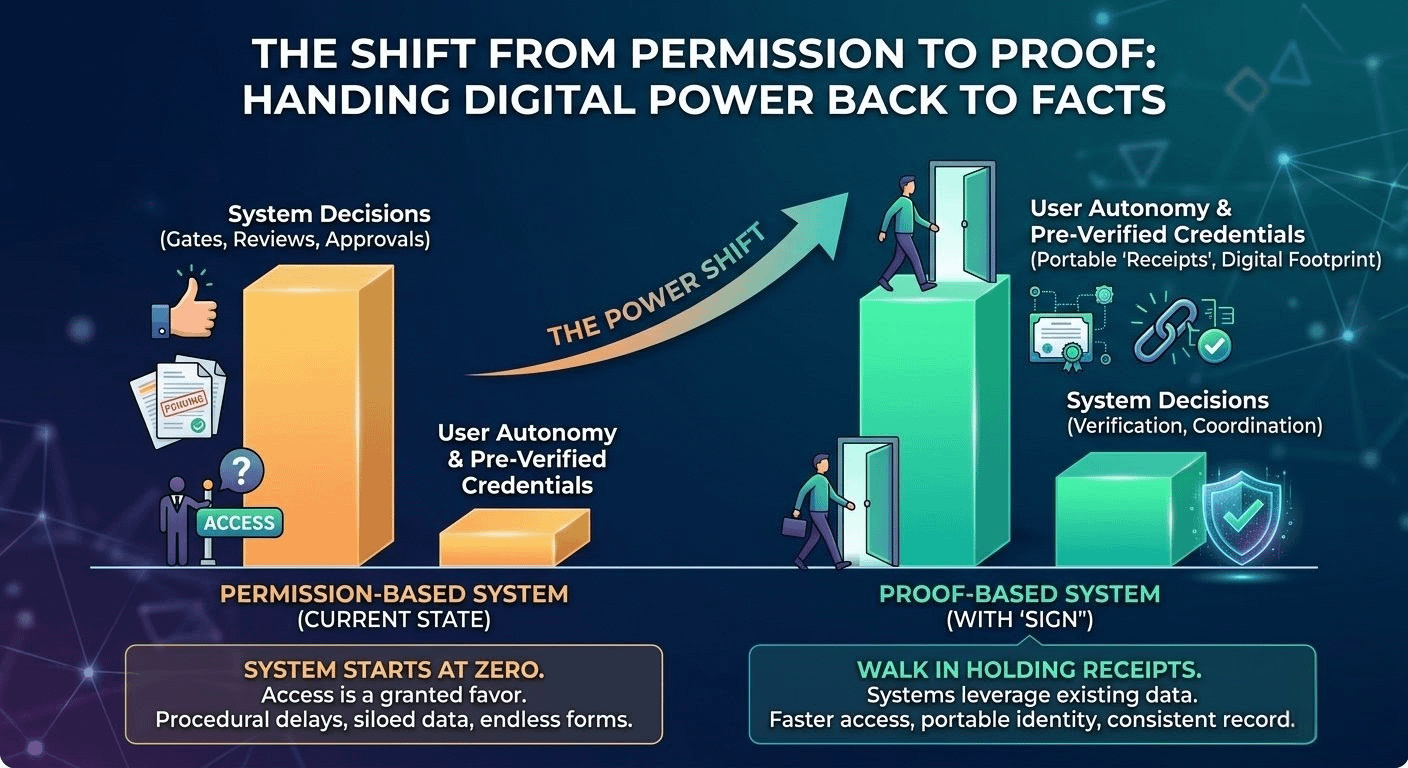
@SignOfficial #SignDigitalSovereignInfra
