
@SignOfficial #SignDigitalSovereignInfra $SIGN
SIGN The Small Shift I Keep Noticing in How People Talk About Trust
The thing that felt slightly off was not the token chart. It was the tone around the product.
People used to talk about projects like this as if they were only one thing: either an identity layer, or an airdrop tool, or another infrastructure pitch that sounded cleaner than the market it had to survive. But the official framing has moved. In the newer docs, S.I.G.N. is described as a layered system that unifies execution, identity, and evidence, while Sign Protocol, TokenTable, and EthSign are treated as standalone products that can be used in those deployments when needed. That sounds like a structural change, not just a branding one.
I do not think the market always notices this kind of shift right away. It usually notices the louder things first: listings, allocations, unlocks, headlines, the usual. But the more interesting movement is often in what the project is trying to become in people’s minds. Sign’s own materials now emphasize sovereign-scale verification, policy control, privacy by default, and auditability, which is a very different emotional territory from the old “crypto utility” language people casually toss around.
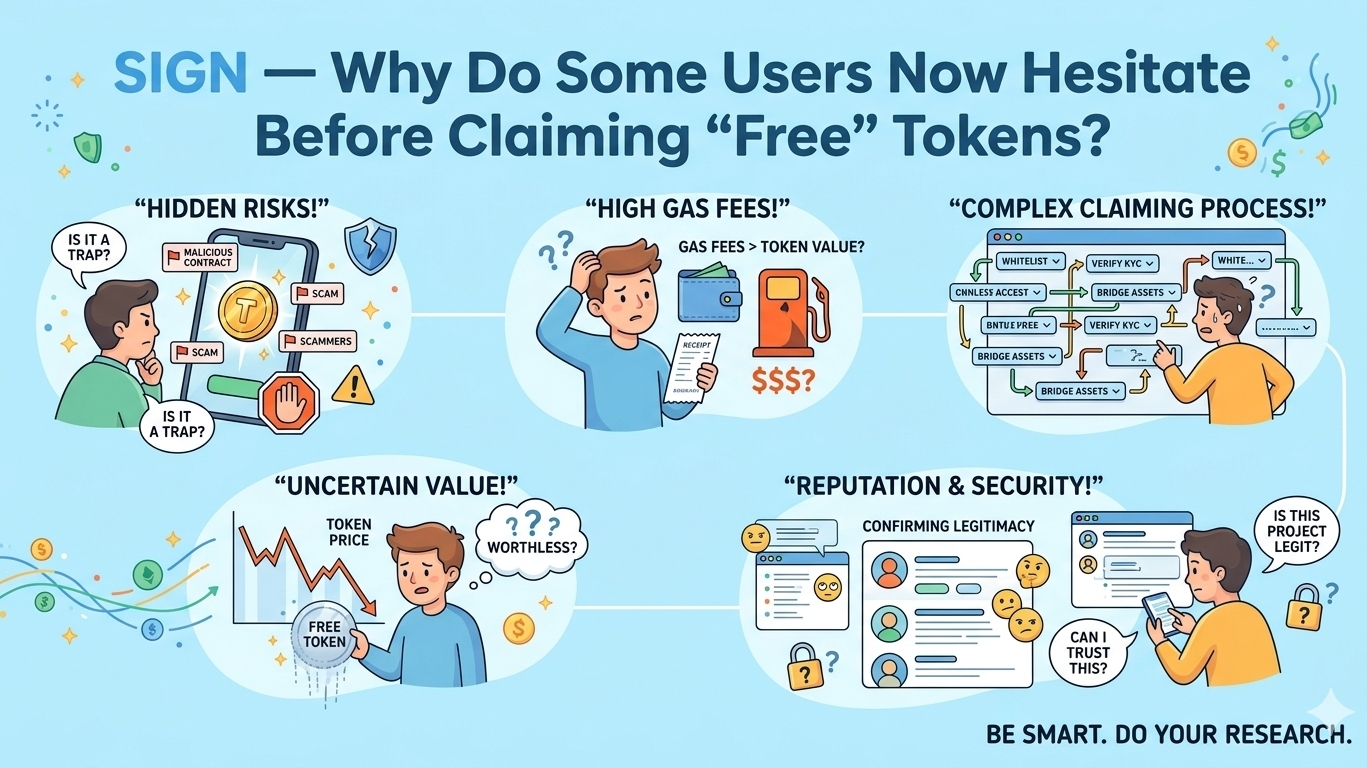
That matters because trust products do not spread the same way speculation products do. Speculation asks people to react quickly. Trust infrastructure asks them to slow down and repeat behavior. It changes what users check before they click, what institutions require before they approve, and what kind of hesitation becomes normal. Sign’s official description leans hard into that: verifiable credentials, attestations, programmable distribution, and systems that can prove who approved what, when, and under which authority. That is not just technical detail. It is a picture of a market that wants receipts before it wants momentum.
The reason I keep circling back to this is that the project is no longer being presented as a narrow app with a single use case. Binance’s research page describes Sign as “the global infrastructure for credential verification and token distribution,” and says Sign Protocol is an omni-chain attestation protocol, while TokenTable handles distribution, including airdrops, vesting, and unlocks. It also lists EthSign and SignPass as applications built on top of that stack. In other words, the project is trying to sit underneath multiple behaviors, not just serve one campaign.
And that creates a very specific kind of participant filter.
The people who only want fast narratives usually lose interest when the conversation moves toward governance, authorization, and verification layers. They want a clean thesis; this kind of project gives them a system. On the other hand, the people who are used to reading infrastructure tend to become more attentive when they see terms like attestation, identity, evidence, and distribution all in the same architecture. They know that these are not decorative words. They are the places where friction either disappears or becomes visible.
There is also a quieter detail here that feels more important than it first appears: the docs now frame the broader system around deployment realities, not ideology. They talk about public, private, and hybrid modes, and about privacy, interoperability, and operational control as practical constraints rather than abstract ideals. That is the sort of language that tends to show up when a project is trying to be usable in real environments, not just legible in crypto timelines. I am not sure this is fully appreciated yet. Maybe it is too early. Maybe the market still prefers simpler stories. But the direction is hard to miss.
What makes this worth watching is not the promise that everything will suddenly align. It is the possibility that trust infrastructure may be entering a phase where users stop seeing verification as a feature and start seeing it as the default shape of participation. If that happens, then token distribution, identity, approvals, and proofs stop being separate conversations. They become one behavior pattern. And once a market starts behaving that way, it is usually already past the point where the old narrative was enough.
So for now, the interesting question is not whether Sign sounds ambitious. Of course it does. The more useful question is whether the way people interact with it keeps getting more cautious, more procedural, and more dependent on proof. That kind of change does not announce itself loudly. It shows up in the small delays, the extra checks, the quieter comments, the reduced appetite for hand-wavy claims. And sometimes that is the real story long before the market agrees on one.