
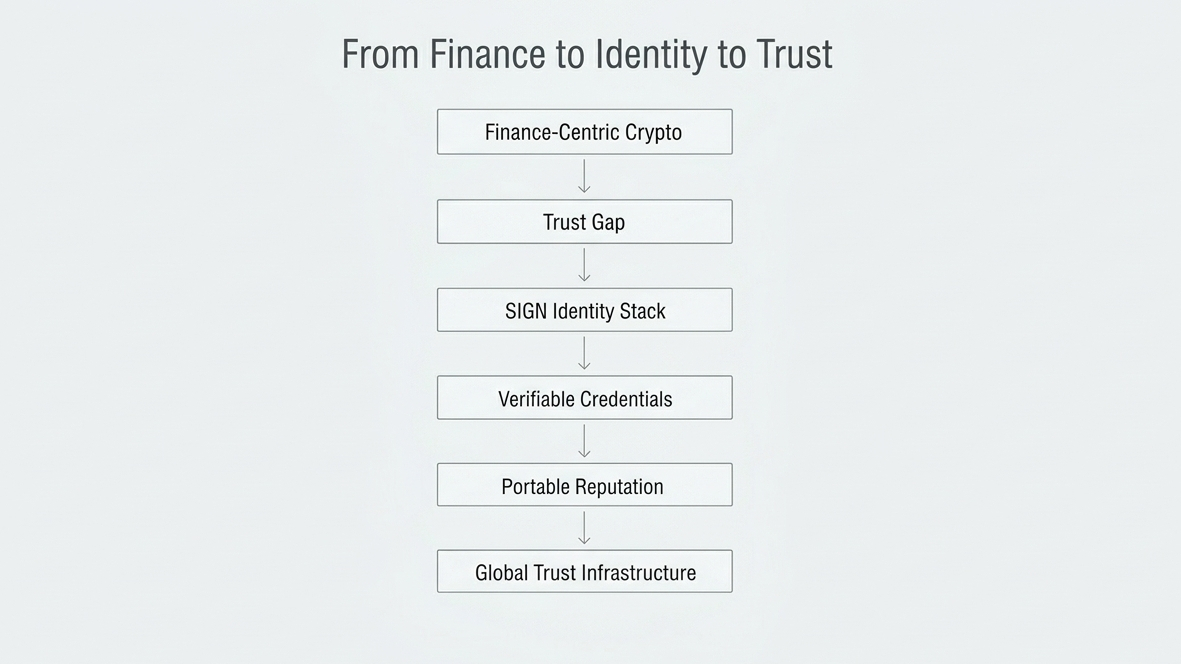
For years, crypto has been obsessed with money. DeFi, trading, yield farming all variations on the same theme: moving value around. And I’ve been part of that world, chasing yields, watching charts, trying to make sense of it all.
But somewhere along the way, I started feeling like we’d hit a ceiling. Finance is important, sure. But it’s not the only thing blockchains can do. The real breakthrough, I’ve started to believe, isn’t about moving money faster. It’s about moving trust.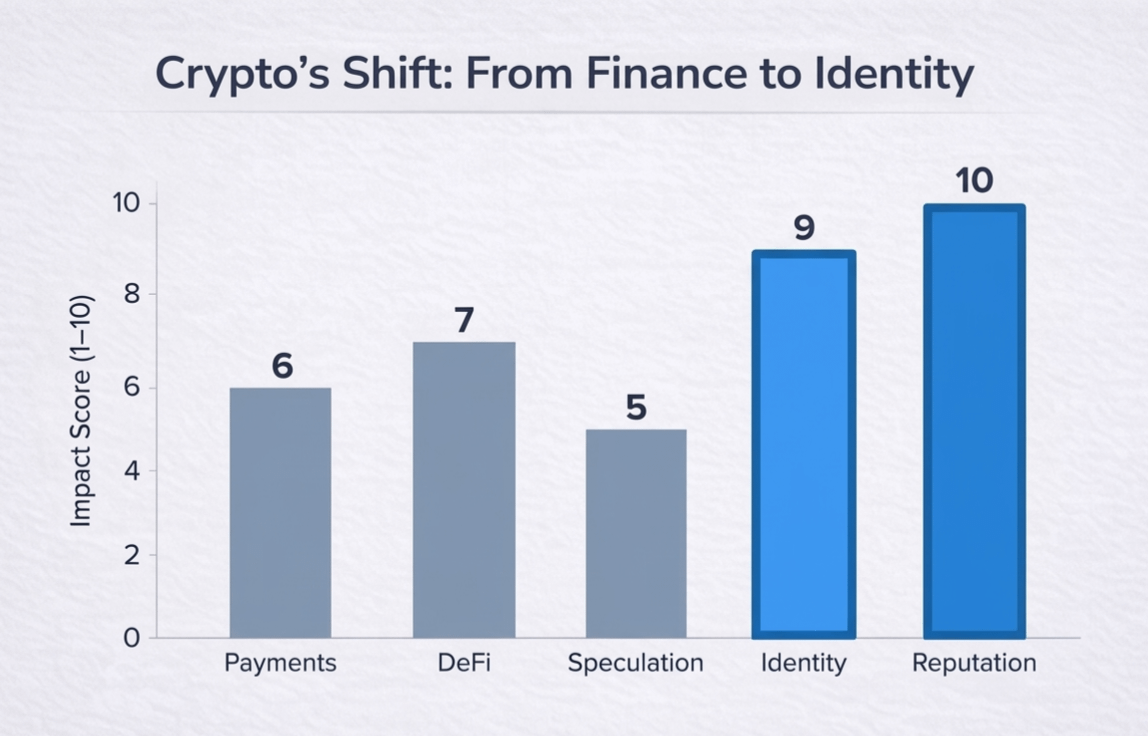
That’s what drew me to SIGN.
I look at what they’re building Sign Protocol for credentials, SignPass for identity, TokenTable for distributions and I see a project that’s quietly pivoting the entire crypto conversation.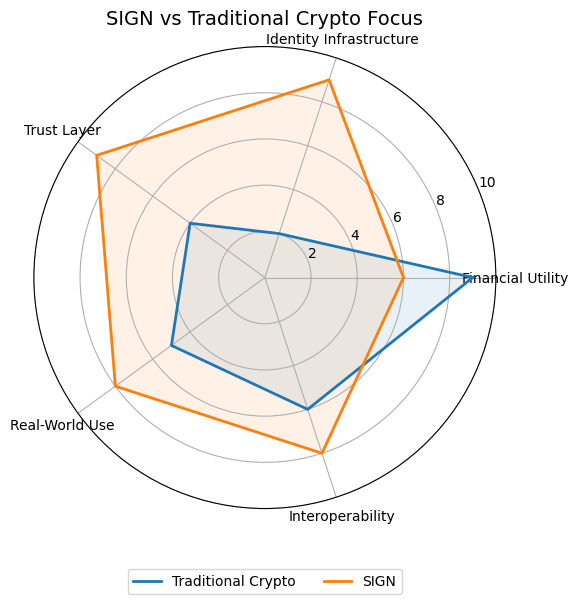 We’ve spent a decade asking “how do we make finance permissionless?” SIGN is asking a deeper question: “how do we make identity, reputation, and credentials permissionless?”
And the difference matters more than I initially understood.
When I think about the barriers people face in the real world, it’s rarely about access to capital. It’s about access to trust. A farmer can’t get a loan because there’s no record of land ownership. A refugee can’t access services because there’s no verifiable ID. A freelancer can’t prove work history because credentials are locked in silos. These aren’t money problems. They’re identity problems.
SIGN’s bet, as I see it, is that blockchain’s killer app won’t be a better way to trade it’ll be a better way to prove who you are and what you’ve done. And that shift from finance to identity opens up use cases that dwarf anything we’ve seen so far.
I’ll give you an example. If Sign Protocol becomes the standard for on-chain credentials, suddenly your reputation across DeFi, gaming, DAOs, and even real-world employment becomes portable. You don’t rebuild trust in every new context. You carry it with you. That changes the economics of participation.
The government partnerships make sense in this light. Nations are the original issuers of identity. If SIGN can upgrade that infrastructure, they’re not just selling software they’re plugging billions of people into a global credential network that works across borders and platforms.
I’m not naive. This is a long, messy road. Governments don’t move fast. Privacy concerns are real. And there’s always the risk that identity infrastructure gets captured by the very powers it’s meant to liberate us from.
But the direction feels right to me. After years of watching crypto circle around money, it’s refreshing to see a project aiming higher. Not just a better bank. A better foundation for how trust operates in the digital age.
Maybe that’s too philosophical for a market that mostly cares about price. But for me, that’s the angle worth paying attention to.