
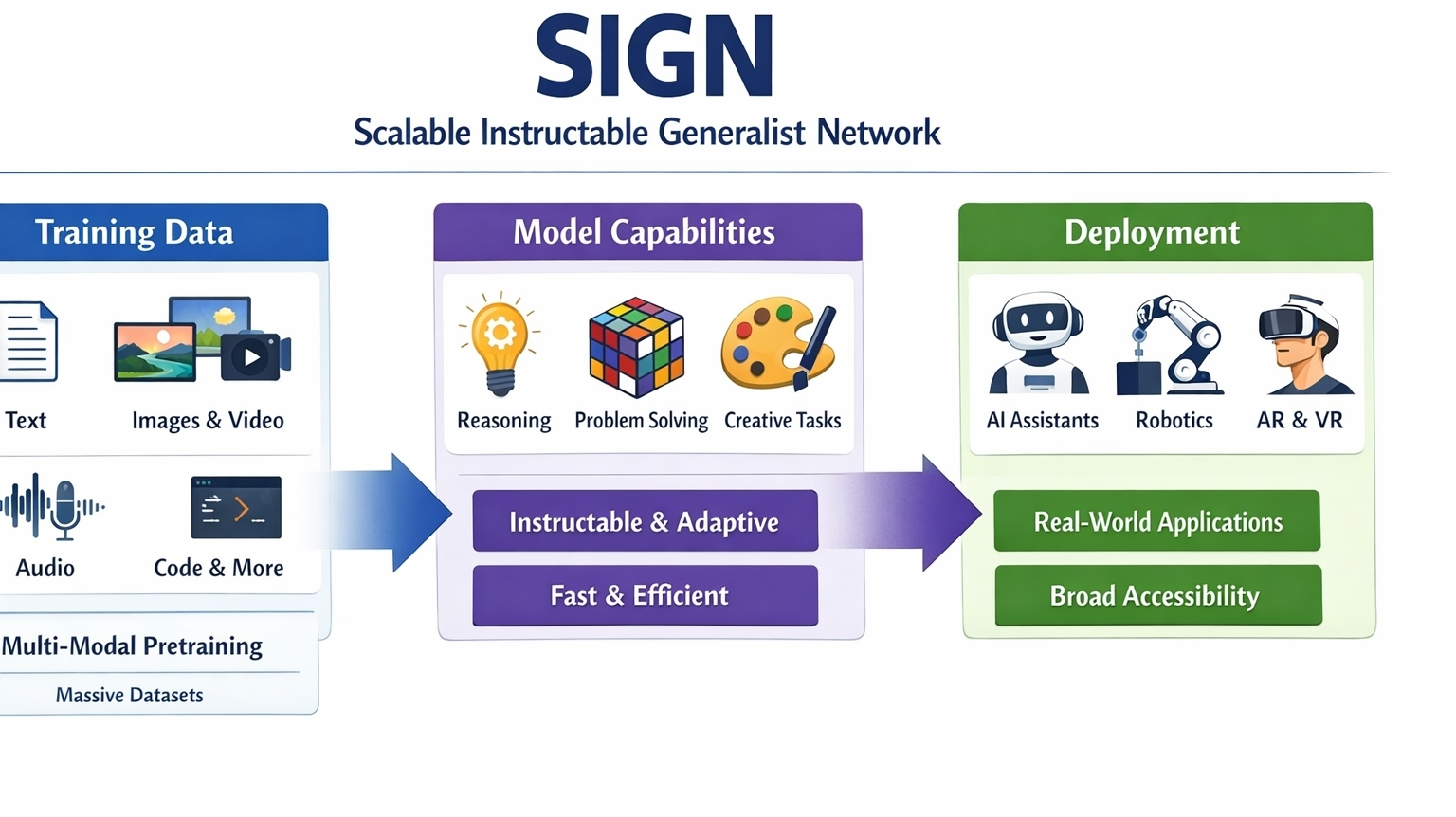
I came back to SIGN after a few months with a pretty simple question in mind: is this actually turning into something people will use in the real world, or is it still mostly ideas, diagrams, and token mechanics that look better on paper than in practice?
A few things have clearly moved forward. Not in a flashy way, but in a way that changes how the system could actually behave if it works.
The biggest shift, for me, is how distribution is evolving. It’s no longer just about sending tokens from point A to point B. That part was never interesting. What’s changing is that distribution itself is becoming programmable. With things like TokenTable and different release modes, you can start encoding behavior directly into how value moves—linear unlocks, event-based releases, combinations of proofs and signatures.
That’s a meaningful step. It means rewards don’t have to feel random anymore. They can respond to actions, conditions, or reputation. For builders, it turns distribution into something you can design, not just execute. And for the system as a whole, it means incentives can be adjusted without rebuilding everything from scratch.
But there’s a tradeoff here. The more complex and expressive this logic becomes, the harder it is for people to actually understand it. If users can’t see why they’re getting something—or when—they won’t trust it. Right now, it feels powerful, but not yet clear enough to be intuitive.
On the identity side, SignPass is moving in the right direction. A reusable, portable identity layer is kind of the whole point of what SIGN is trying to do. Without that, everything just turns into isolated credentials that don’t talk to each other.
What’s improved is the framing. Identity is no longer stuck inside one app or ecosystem—it’s being positioned as something you carry across platforms. And you can see where it could plug into real use cases like governance or access control.
But the hard questions are still unanswered. Will any serious institution actually rely on this? Does persistent on-chain identity create new risks, like sybil attacks or privacy concerns? And maybe most importantly—do people even want a single identity that follows them everywhere, or do they prefer more control and separation?
The technology behind it isn’t the issue. Verifiable credentials and zero-knowledge proofs have been solid ideas for a while. The real challenge is coordination—getting enough trust, across enough actors, for this to actually matter.
The verification layer itself is improving, but it still feels fragmented. There’s better alignment with standards, more attention to privacy, and clearer paths for developers to integrate things. That last part is probably more important than it sounds—lower friction is one of the few things that consistently drives adoption.
Still, there are too many choices. Different credential standards, different ways to verify, different assumptions about who or what you trust. If you’re a builder, you still have to make a lot of decisions just to get started. Until that gets simplified into something more opinionated and default, it won’t feel like true infrastructure. It’ll feel like a toolkit that requires too much setup.
One thing I do think is underrated is how verification and distribution are starting to connect. Instead of verifying something and then separately deciding what someone gets, the system is moving toward a flow where verified attributes directly drive rewards and access.
That’s where it starts to feel like a cohesive system. You can imagine reputation-based incentives, credential-gated economies, or identity carrying weight across platforms.
At the same time, this is where the risk increases. If credentials can be faked or farmed, the whole system weakens. If incentives are poorly designed, they get exploited. Right now, it feels like early composability—not something that’s been tested under real pressure.
There’s also still a layer of updates that doesn’t really change anything for me. Broad claims about being omni-chain, or general-purpose infrastructure for everything, don’t move the needle. Those ideas only matter if they result in real usage or force the system to specialize in a way that proves value. Otherwise, it just feels like expanding surface area without deepening utility.
So is SIGN closer to something people will actually use? A little, yes. The direction is clearer. Distribution is more expressive, identity is more portable, and the pieces are starting to connect.
But it’s not a decisive shift yet. The core things still need proof. Identity has to hold up against abuse. Distribution has to stay fair and understandable. And most importantly, real applications—beyond crypto-native experiments—have to depend on it and keep working over time.
A few months ago, I saw SIGN as an ambitious but abstract mix of verification and token distribution. Now it feels more like a system trying to combine identity, credentials, and incentives into one programmable pipeline.
That’s more concrete, but also more fragile. If one part fails, it affects everything else.
What would actually change my mind isn’t more features or announcements. It’s seeing this used in a high-stakes environment that survives real-world pressure. It’s seeing that credential-based systems don’t immediately get gamed. And it’s seeing a developer experience that removes most of the complexity instead of exposing it.
Until then, it feels like real progress with a clear direction—but not yet something proven to last.
And maybe that’s the real test ahead—not whether SIGN can be built, but whether it can survive when people start trying to break it.
@SignOfficial #SignDigitalSovereignInfra $SIGN
