
🚨 The conflict just took a serious turn — and most people still haven’t processed what it really means.
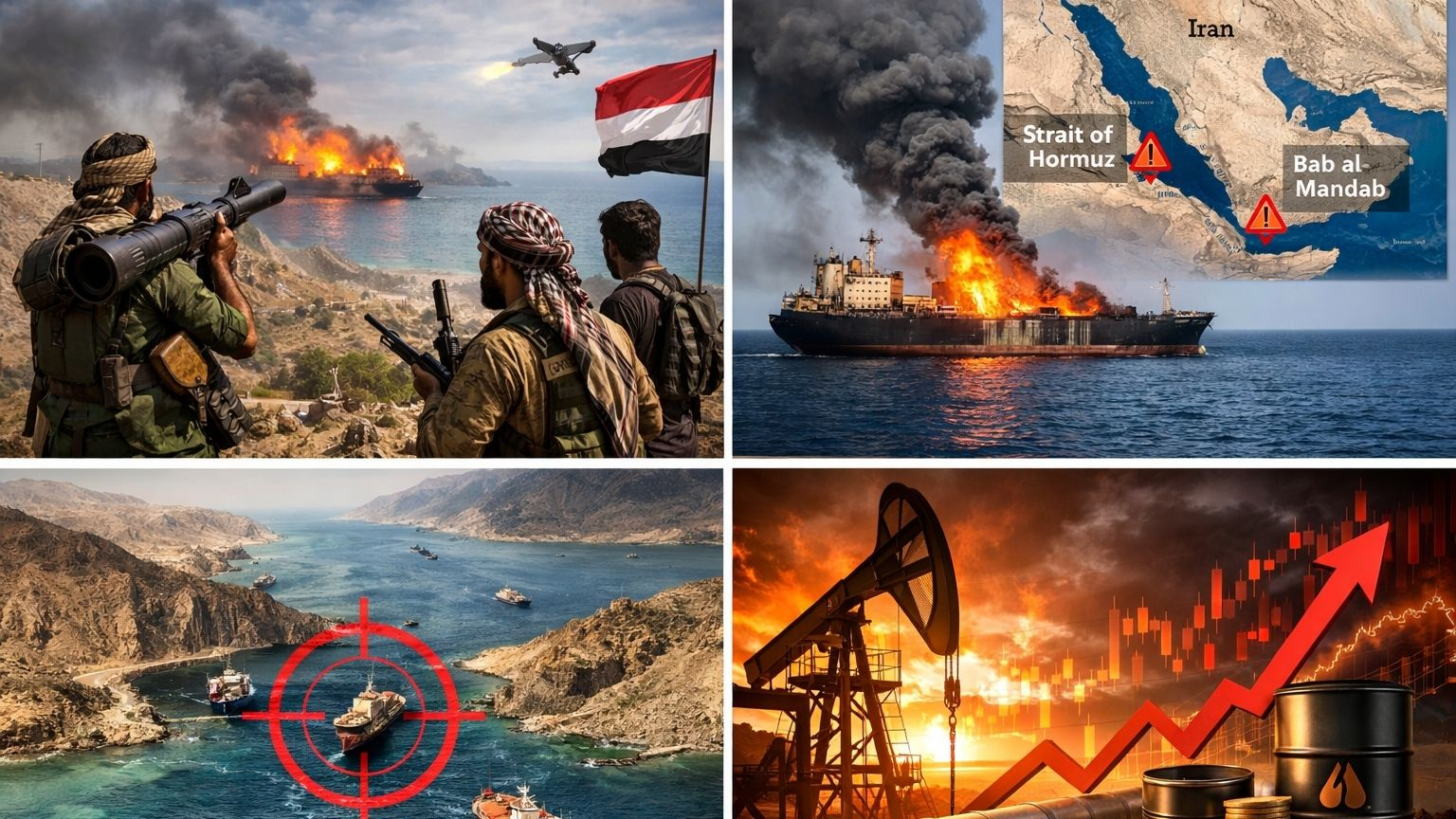
The Houthis have now formally entered the Iran war, and this isn’t just another headline. It fundamentally shifts where the real pressure points are.
Everyone’s been focused on the Strait of Hormuz — but that’s no longer the only story. The real risk is expanding.
With the Houthis stepping in, the Bab al-Mandab Strait is now emerging as the next major flashpoint.
Think about the scale of this:
💀 Hormuz handles around 20% of global crude supply — and it’s already been under disruption for weeks
💀 Bab al-Mandab carries roughly 12% of global trade — and it’s now directly at risk
💀 That’s nearly 30% of seaborne oil routes facing simultaneous pressure
💀 There’s no modern precedent for two critical chokepoints being threatened at the same time
💀 Thousands of casualties, oil already surging — and now a new player enters the equation
The Bab al-Mandab — often called the “Gate of Tears” — isn’t just another shipping lane. It’s a lifeline connecting the Red Sea to the Suez Canal. If this corridor is disrupted, Europe loses one of its most efficient energy and trade routes overnight.
And here’s what many are missing:
This isn’t new territory for the Houthis. Between 2023 and 2025, they targeted over 100 commercial vessels using similar tactics. The difference now is capability and timing — they’re more equipped, more coordinated, and stepping in at a critical moment.
While headlines focus on “ongoing talks” and “diplomatic progress,” the underlying reality looks very different. This escalation appears calculated — entering just as momentum in the conflict seemed to cool.
Here’s how this kind of scenario can unfold:
→ Initial disruption in Hormuz
→ Markets begin adjusting and rerouting supply
→ Instability spreads to Bab al-Mandab
→ Multiple Middle Eastern export routes come under pressure
→ Oil prices accelerate sharply
→ Food and fertilizer supply chains tighten
→ Inflationary pressure builds globally
→ Public and political pressure intensifies
→ Strategic leverage shifts — without a clear battlefield resolution
If the conflict was supposedly “nearing completion,” as Donald Trump suggested earlier, then why are more actors entering now instead of stepping back?
That’s the question no one is answering.
This is no longer just a regional conflict.
It’s turning into a direct strain on the global energy and trade system.
And the scale of what’s developing is still being underestimated.
