


Yesterday night at I tell you something just after the @SignOfficial attestation snapshot window closed, I found myself still staring at the screen, not because of volatility or hype, but because somethinge about the architecture refused to let me log off. I had already tracked the earlier moves on $BTC and $SIREN both reacting almost exactly to the psychological liquidity patterns I mapped out before, but this was different. This was not about price. This was about direction.
I started tracing activity on-chain and picked up a cluster of attestation interactions moving through a contract that partially resolved toh. The gas didn’t spike aggressively, but it rose just enough during a tight window to signal coordination rather than randomness. What stood out wasn’t the volume, it ws the structure. Repeated low-value attestations, followed by consolidation into a single wallet, suggested something more deliberate, almost like controlled environment testing. In most systems, that kind of pattern would be dismissed as noise. Yeah here it felt like someone probing the edges of a system designed around identity-linked certainty.
At one point I ran a basic simulation, issuing a mock credential and looping it through verification. The transaction did nt fail it didn’t revert it just paused. That delay, subtle but noticeable, shifted my perspective. In most blockchain environments, speed is the priority and delays feel like inefficiencies. In this system, the pause felt intentional, almost like a checkpoint. It made me realize that Sign Protocol is not optimizing purely for throughput, it’s optimizing for finality tied to identity, and that distinction changes everything.

As I kept mapping the system, it became clear that the architecture doesn’t behave like a simple stack of layers. It behaves like a loop. The economic layer, powered by mechanisms like TokenTable, doesn’t just move value, it conditions it. Capital becomes programmable in a way that can theoretically streamline massive global systems like welfare distribution, but it also introduces a reality where access to value is no longer neutral. It becomes dependent on identity states. That feeds directly into the technical layer, where the Onchain Attestation System acts as a source of verifiable truth, not just storing data but issuing it in a way that is immutable, composable, and instantly queryable. And then everything loops back through the governance and identity layer, where those attestations define who can access the system, how they interact with it, and what economic actions they are allowed to take.
While thinking through this, I couldn’t help but contrast it with systems like Fetch.ai or Bittensor, where the focus is on coordination of intelligence or autonomous agents. Sign Protocol feels more foundational than that. It isn’t just coordinating behavior, it’s defining existence within the network itself. It determines who is recognized, who is verified, and ultimately who is allowed to participate.
The honest part I keep returning to is that the technology works almost too well. There’s a level of precision here that removes ambiguity entirely. And when ambiguity disappears, so does a certain kind of freedom. Becausee once identity is anchored and every economic action is tied to that identity, the system gains a kind of absolute clarity that can be incredibly powerful in the right context, and deeply concerning in the wrong one. What looks like efficiency in one environment can become control in another.
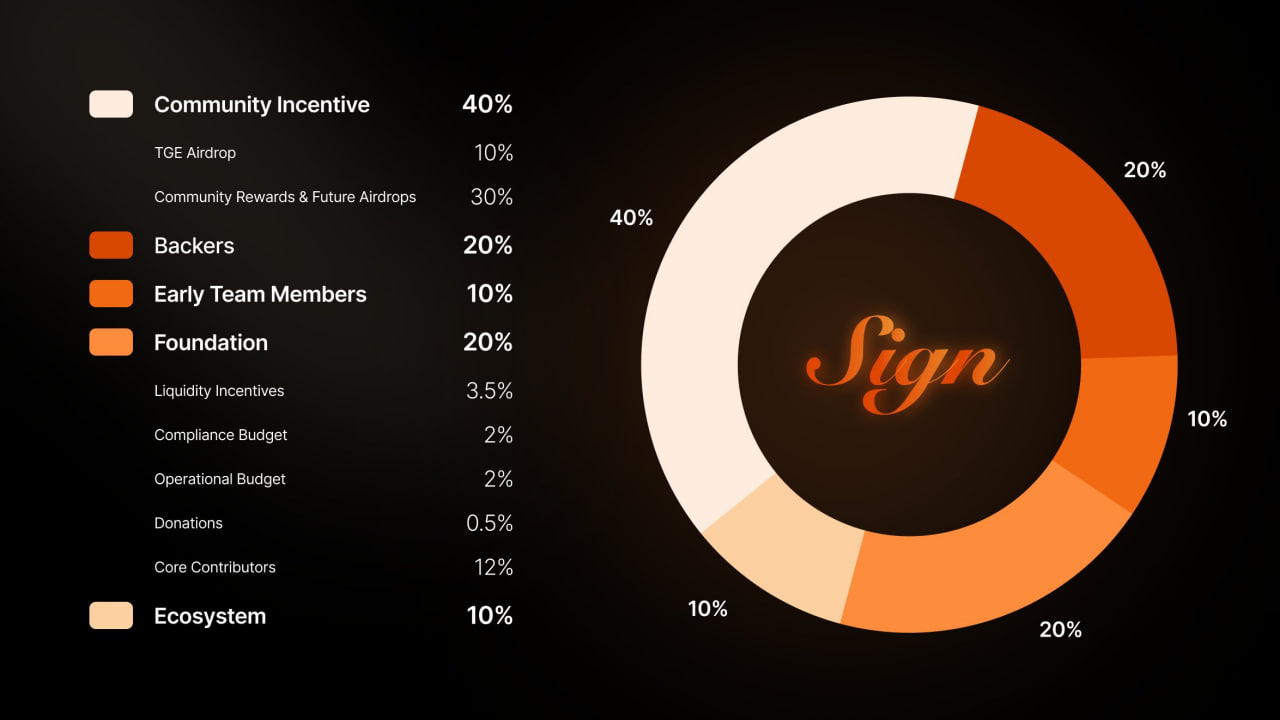
I understand the appeal. Governments need better infrastructure. Legacy databases are fragmented, inefficient, and often unreliable. A system like this could modernize entire national frameworks almost overnight. But at the same time, it asks for a trade-off that feels fundamentally at odds with the original ethos of crypto. It asks users to trust the very entities that these systems were initially designed to bypass.
The ripple I’m still sitting with is how easily the narrative shifts. Tools that were once positioned as mechanisms of liberation are now being refined into instruments of precision control. And it’s not happening through force, it’s happening through optimization. Through better UX, better efficiency, better outcomes on paper.
What I can’t fully resolve yet is what this means for the human layer. For the builder who isn’t thinking about governance dynamics, for the user who just wants access without friction, for the individual who may not even realize how much of their identity is being embedded into the system over time. If this becomes the standard, opting out may not feel like a real option anymore.
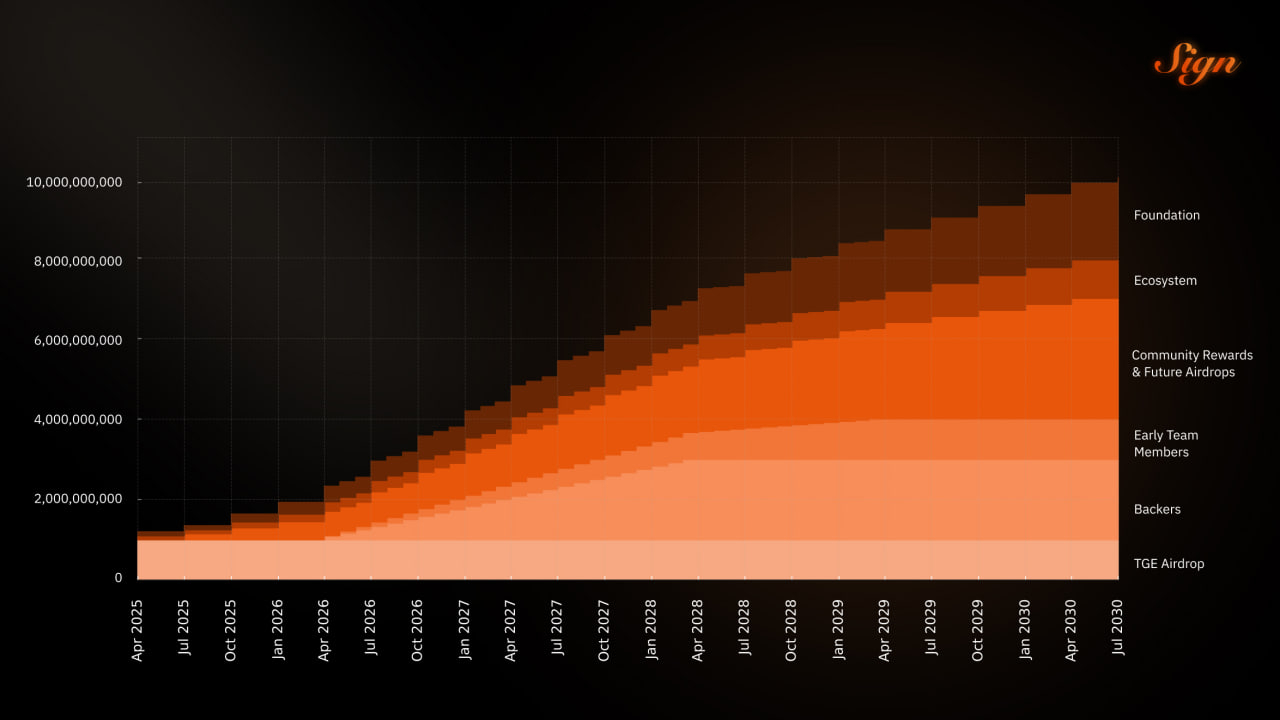
And I tell you that leaves me with a question I haven’t been able to shake since that moment the transaction paused. If identity becomes the gateway to everything on-chain, and that identity is ultimately controlled or issued by centralized authorities, are we still building permissionless systems, or are we just redefining what permission loaks like?
