

I used to think digital identity systems were mostly a design decision.
Pick a model centralized, federated, or self-sovereign implement it well, and the rest would follow. Clean architecture, clear rules, predictable outcomes.
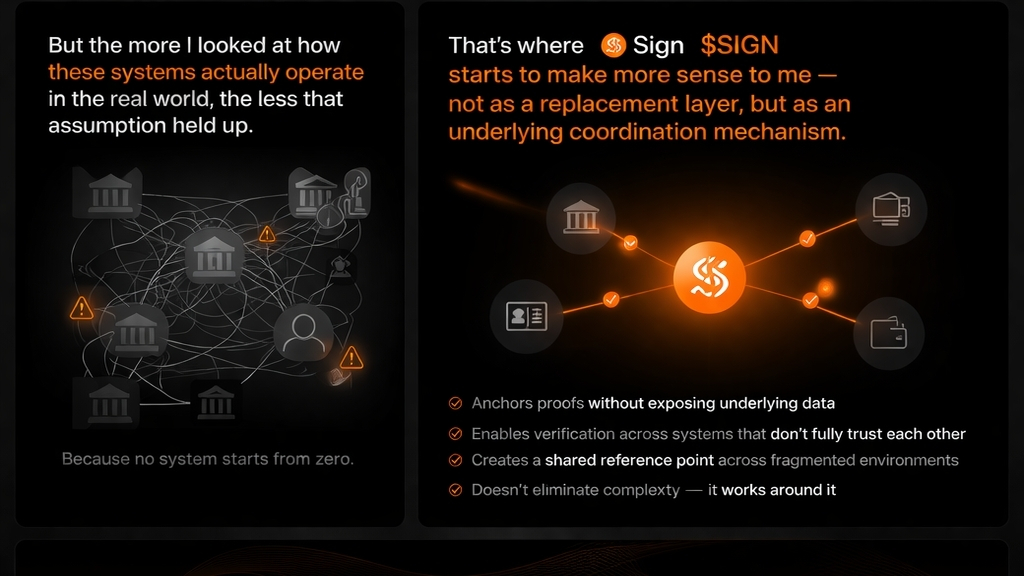
But the more I looked at how these systems actually operate in the real world, the less that assumption held up.
Because no system starts from zero.
@SignOfficial $SIGN #SignDigitalSovereignInfra
That’s where something like @SignOfficial and $SIGN starts to make more sense to me — not as a replacement layer, but as an underlying coordination mechanism.
Instead of owning identity data or redefining how institutions operate, it anchors proofs. It allows verification to happen without requiring full data transfer. It creates a shared reference point across systems that don’t inherently trust each other.
And importantly, it doesn’t eliminate complexity it works around it.
It feels more like a quiet layer in the background one that becomes more relevant as systems become more complex, not less.
And if that’s true, then the real value isn’t in replacing what exists…
but in making everything that already exists… work together without breaking.