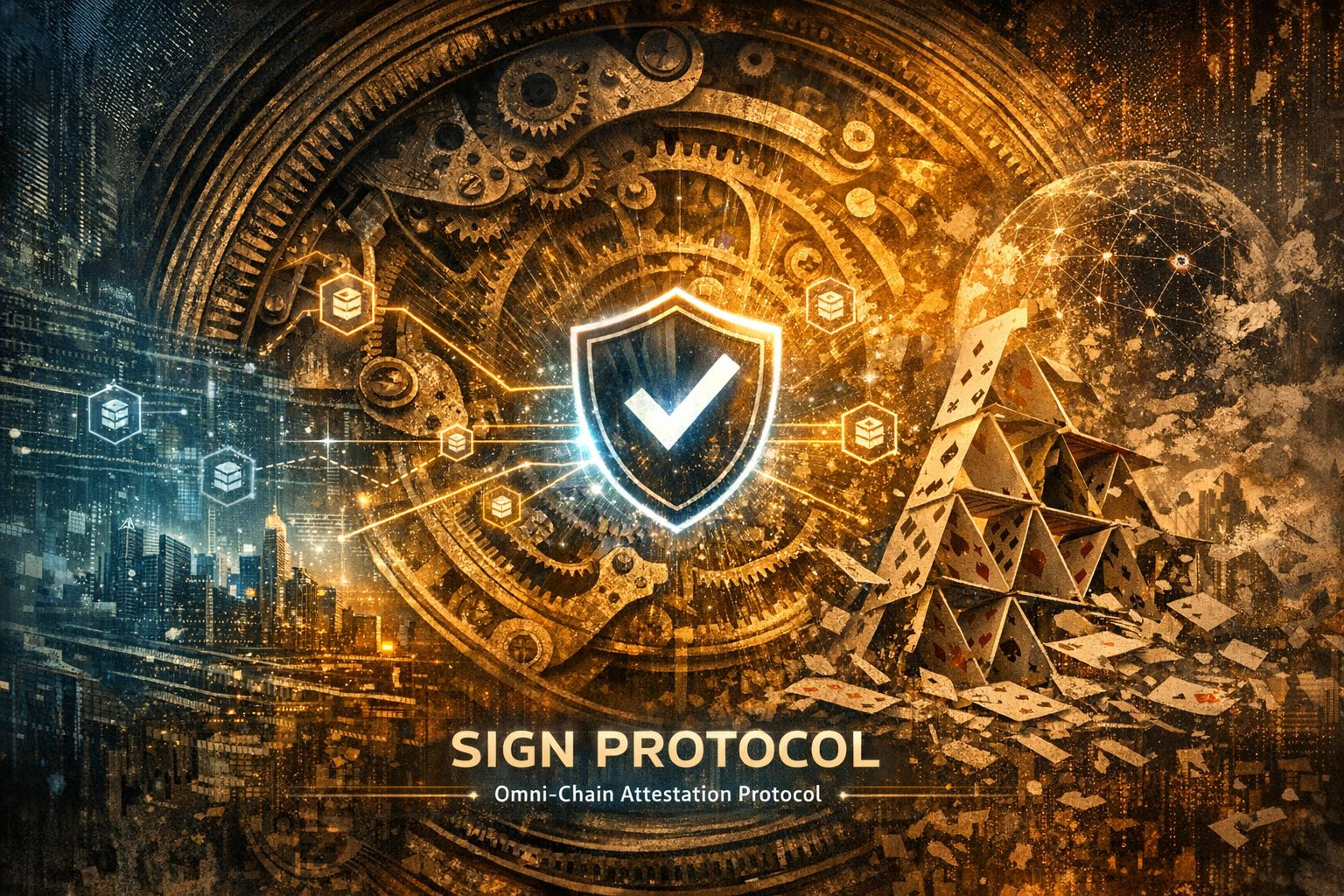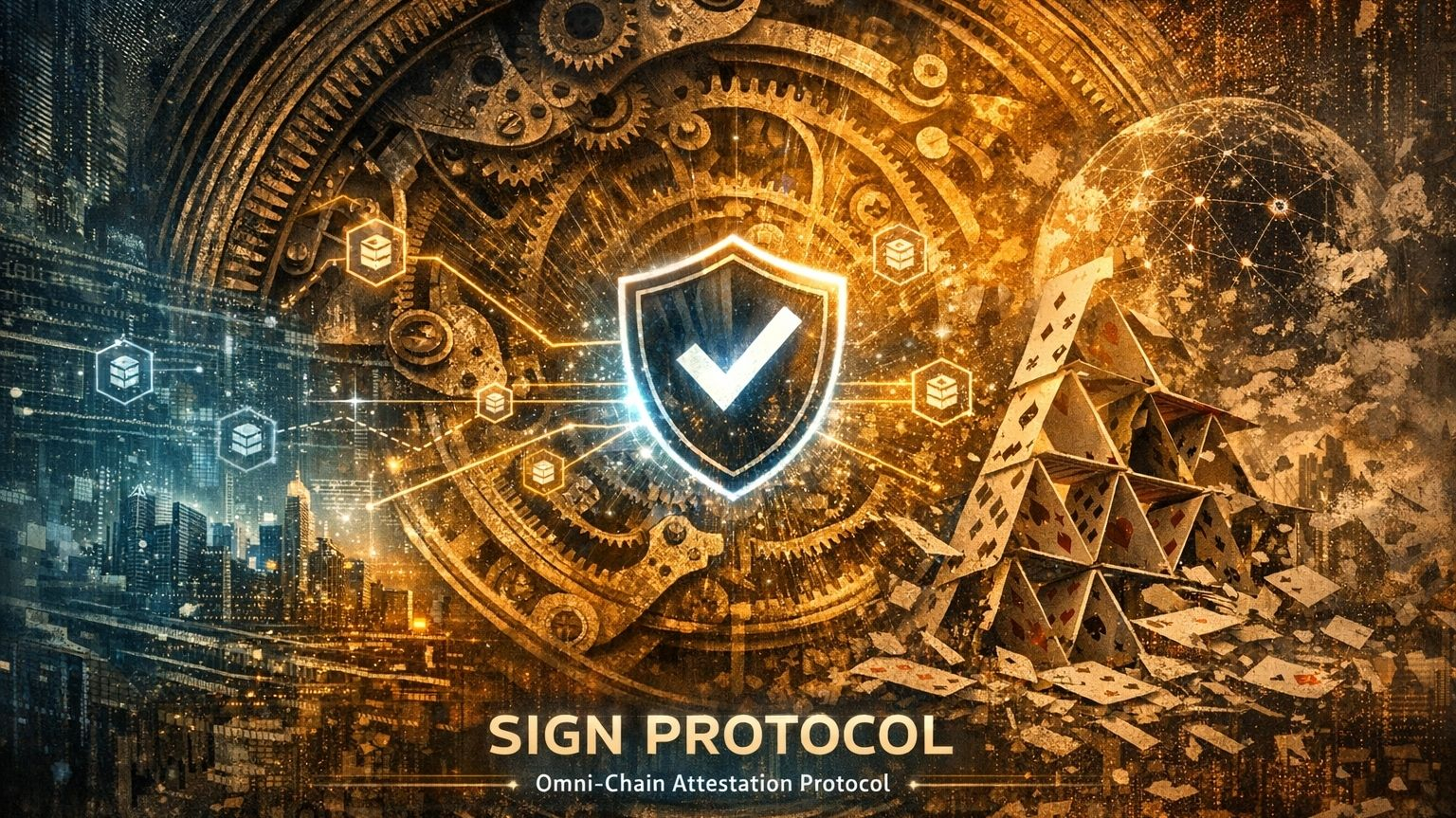

I'm sitting here thinking about a thought I haven't been able to get out my head for a few days now. When I talk about Sign Protocol, the first thing that comes to mind is how cheap trust has become in this messy digital world of ours. We talk about DeFi, Web3 and blockchain all day long, but at the end of the day, it's all data. And that data can be manipulated, the entire system will collapse like a house of cards - right... The core philosophy of Sign Protocol is not like a flashy advertisement, but rather, like a silent engine that is keeping the entire network running behind scenes. In fact, the real power of DeFi is not in the number of transactions, it lies in its authenticity or deep attestation. If you look at Sign Protocol's white paper, they don't just call it a service - not for once, they call it an 'Omni-chain Atestation Protocol'. Understand what this means... No matter what chain you use, you need a universal seal to verify the authenticity of your information. This seal is the Sign Protocol. When we make a claim or make a transation on internet, there was no easy way to verify it before. This protocol is filling that gap in such a way that the user may not even realize how big a verification layer is working behind the scenes. It can compared to the mechanism of a clock - we only see the time, but hundreds of delicate parts inside work silently, and the Sign Protocol is exactly that...
And honestly…
There is a catch here... that we need to understand. Everything has its limitations. Although the Sign Protocol is technically very powerful, there is room to think about its economic sustainablity or economic limitations. Currently, many projects come out who just want to capture market with hype but Sign Protocol is not walking that path at all. They are trying weave on-chain and off-chain data into a single thread. But the challenge is in adoption. Its real utility will emerge when people understand that just being trustless is not enough, but that a mechanism to 'prove' that trust is needed, only then its real utility emerge.
I mean actually…
Personally, I think this protocol is setting a new standard for digital trust. There is no such thing blind praise here, because if the system is not strong at the infrastructure level, the aplications built on it will not survive. They have no longer kept trust dependent on people, they have brought it directly into reality through coding and cryptography. When trust becomes a code, the scope for manipultion decreases. We hear a lot of big talk about digital ID or decentralized identity, but practically silent systems like Sign Protocol are making it reality. This may not a get-rich-quick scheme, but it is a solid technical solution for those looking for real value in the long run.
So to be honest...
At the end of the day, a system is at its strongest when it does its job perfectly without revealing its exstence. That's where the value of sign protocol lies - establishing the truth from the invisible.. Let's see until the end..🚀