
I’ve been watching how digital systems evolve for a while now, especially in the crypto space. At first, most of the conversation seemed to revolve around speed. Faster chains, lower fees, more transactions per second. Every new project wanted to prove it could process things quicker than the last one.
For a while, I thought that was the main challenge we were trying to solve.
But the more I paid attention, the more I realized something else kept showing up in different places. Even when systems became faster or more efficient, a very simple problem never really went away.
Trust.
Not the philosophical kind people like to talk about, but the practical kind. The everyday question that almost every system has to deal with: how do you know a piece of information is actually valid?
Think about how many processes rely on verification.
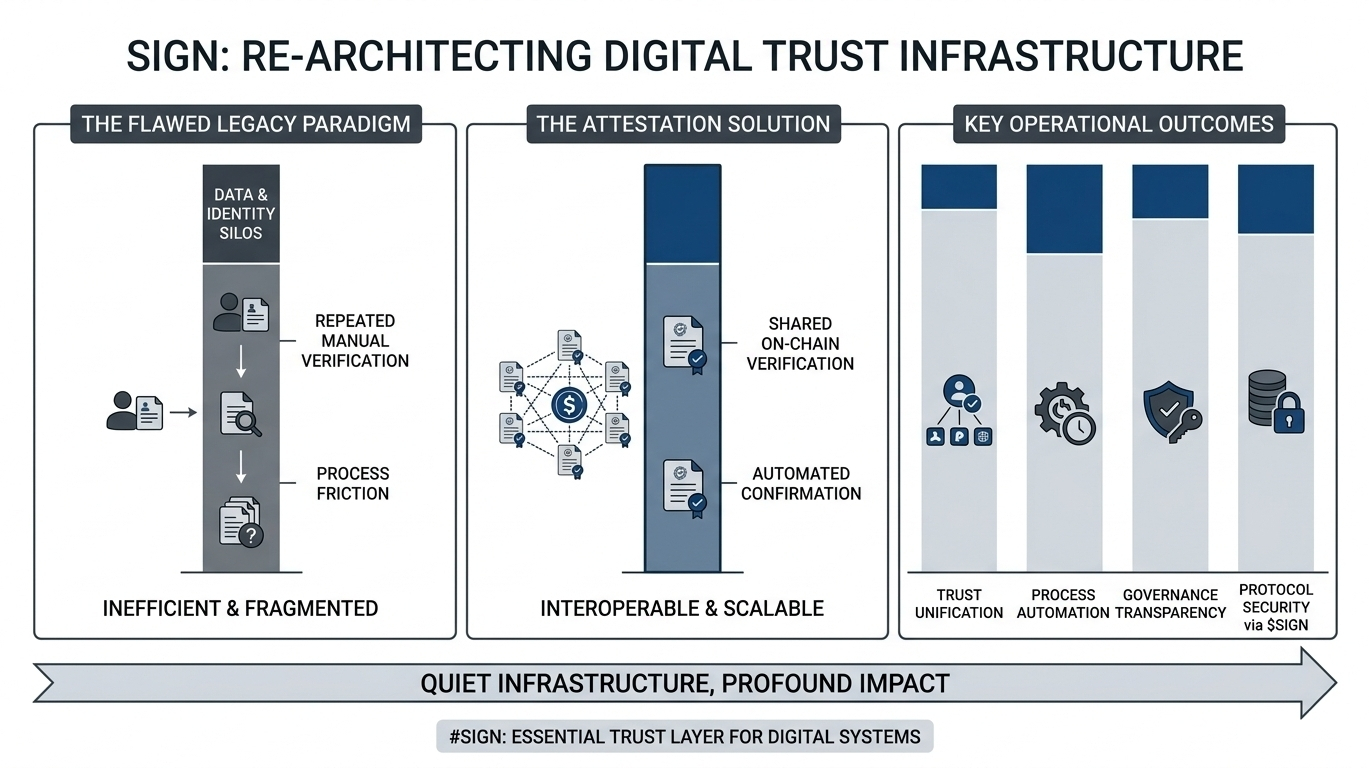
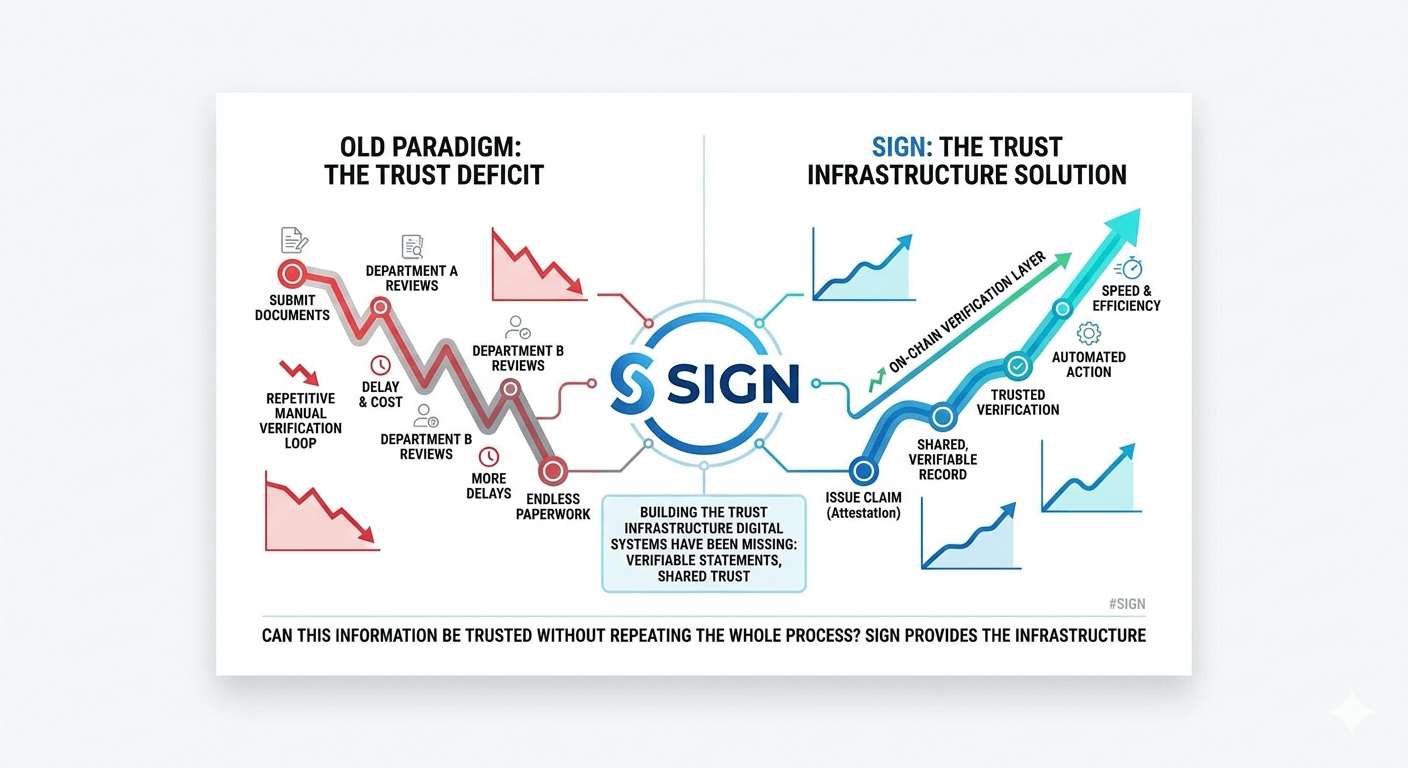
You submit a document somewhere. Someone checks it. Then another department asks for the same proof again. Sometimes you end up repeating the same process multiple times just because the systems involved don’t automatically trust each other.
If you’ve ever dealt with applications, certifications, or even basic paperwork, you probably know how that goes.
submit information →
wait for someone to review it →
send the same information again somewhere else.
Digital platforms improved the convenience a bit, but the pattern itself didn’t really change. The forms became online forms. The documents became digital files. But verification still happens over and over again.
I kept coming back to that idea.
Eventually, while looking at different infrastructure projects, I came across @sign. What made me pause wasn’t anything flashy. It was actually the simplicity of the concept behind $sign.
The focus is on something called attestations.
When you strip away the technical language, an attestation is basically a verified statement. Someone confirms that something is true, and that confirmation can then be checked by others.
The logic behind it is surprisingly straightforward.
someone issues a statement →
that statement becomes an attestation →
another system verifies it →
something happens only if the verification checks out.
At first glance it feels almost obvious, but when you start applying it to real situations, it becomes more interesting.
Take grants or funding programs, for example.
An organization approves a grant →
that approval becomes a recorded attestation →
funds get released only after that verification exists.
Or think about communities distributing rewards. Instead of manually checking every contribution, the system can verify a recorded approval before sending anything.
Even within teams or organizations, the pattern works.
task completed →
confirmation recorded →
payment or recognition triggered.
It’s basically creating a layer where different systems can rely on shared verification rather than repeating the same checks every time.
Of course, I’m not completely convinced that technology alone solves everything here. Systems can be well designed, but human decisions still play a big role. If the original approval process is flawed, recording it on-chain doesn’t automatically fix that.
There’s also another thing worth thinking about.
An attestation is only as trustworthy as the person or institution issuing it. If the source itself isn’t reliable, then the verification layer doesn’t help much.
So in the end, the challenge isn’t just technical infrastructure. It’s also about governance and deciding which issuers are actually trusted.
Still, the more I look at where digital systems seem to be heading, the more it feels like verification layers will quietly become important.
Not flashy applications.
Not the things people speculate about.
Just the infrastructure that answers a simple question: can this information be trusted without repeating the entire process again?
That’s part of why I’ve been keeping an eye on what the team behind @sign is building and how $sign might fit into that bigger picture.
I’m not treating it as a finished solution, and I’m definitely not assuming it solves everything. But the idea itself feels practical enough that it’s worth watching.
For now, I’m simply curious to see how it develops.
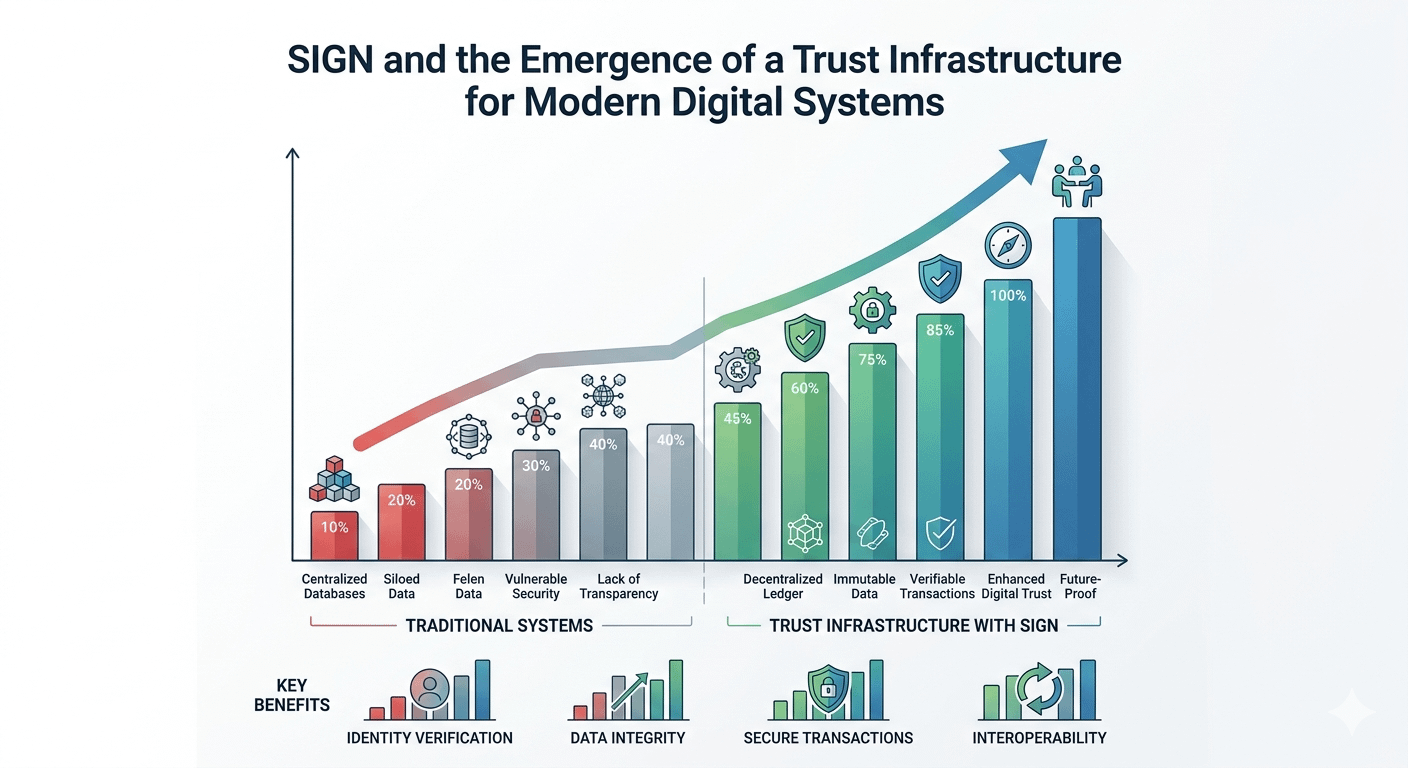
Sometimes the most important systems aren’t the loudest ones. They’re the quiet pieces of infrastructure that slowly become part of how everything else works.