

There is a pattern I keep coming to when I study how digital systems evolve. The biggest changes rarely come from improving speed or reducing cost. They come from removing assumptions that were quietly holding everything together.
* In systems today verification is still one of those assumptions.
We trust platforms to confirm identity.
We trust institutions to issue credentials.
We trust databases to store and validate information correctly.
In Web3, where the idea is to remove trust many applications still depend on hidden layers of centralized verification.
That contradiction is easy to ignore until systems start to get really big.
This is where SIGN comes in.
At glance it looks like another infrastructure project.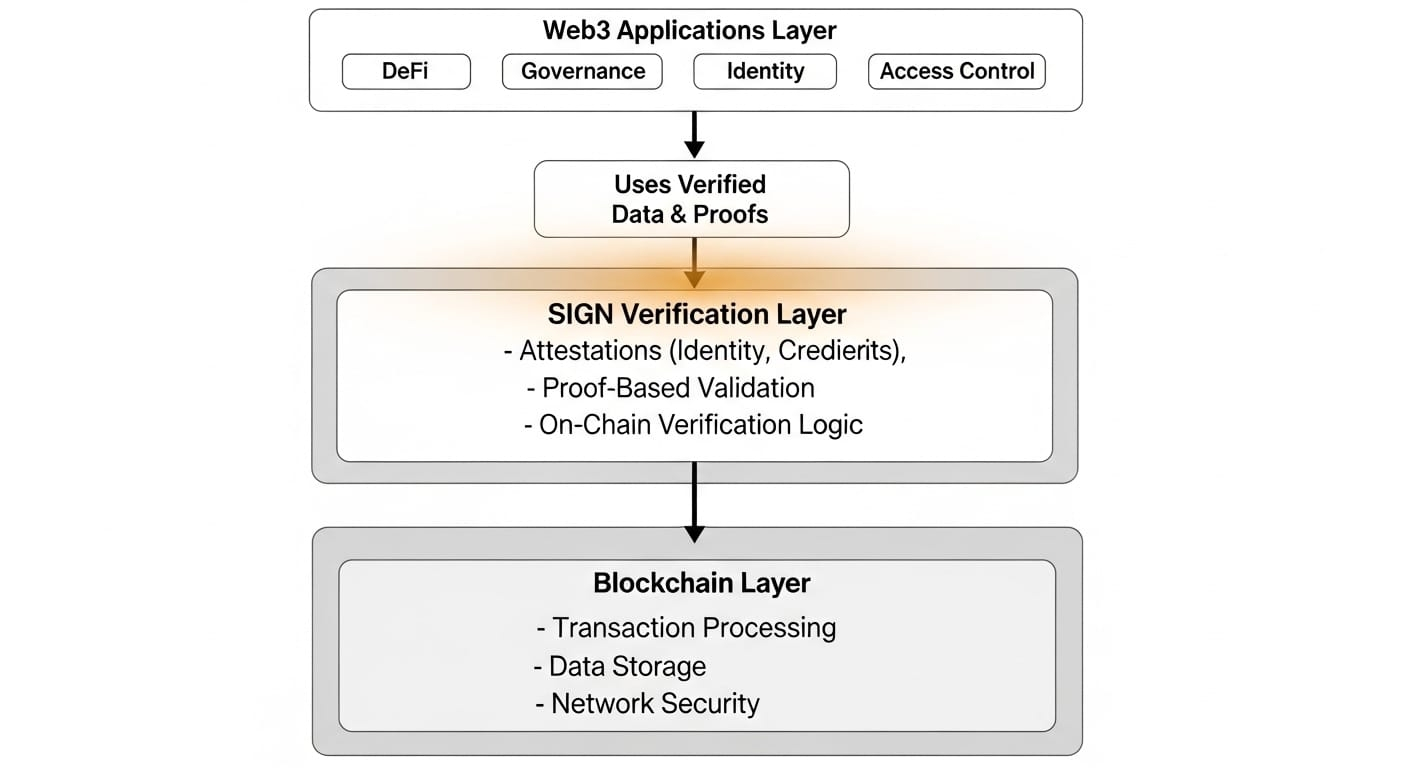
The more I think about it the more I realize SIGN is not trying to improve verification.
It is trying to replace how verification works entirely.
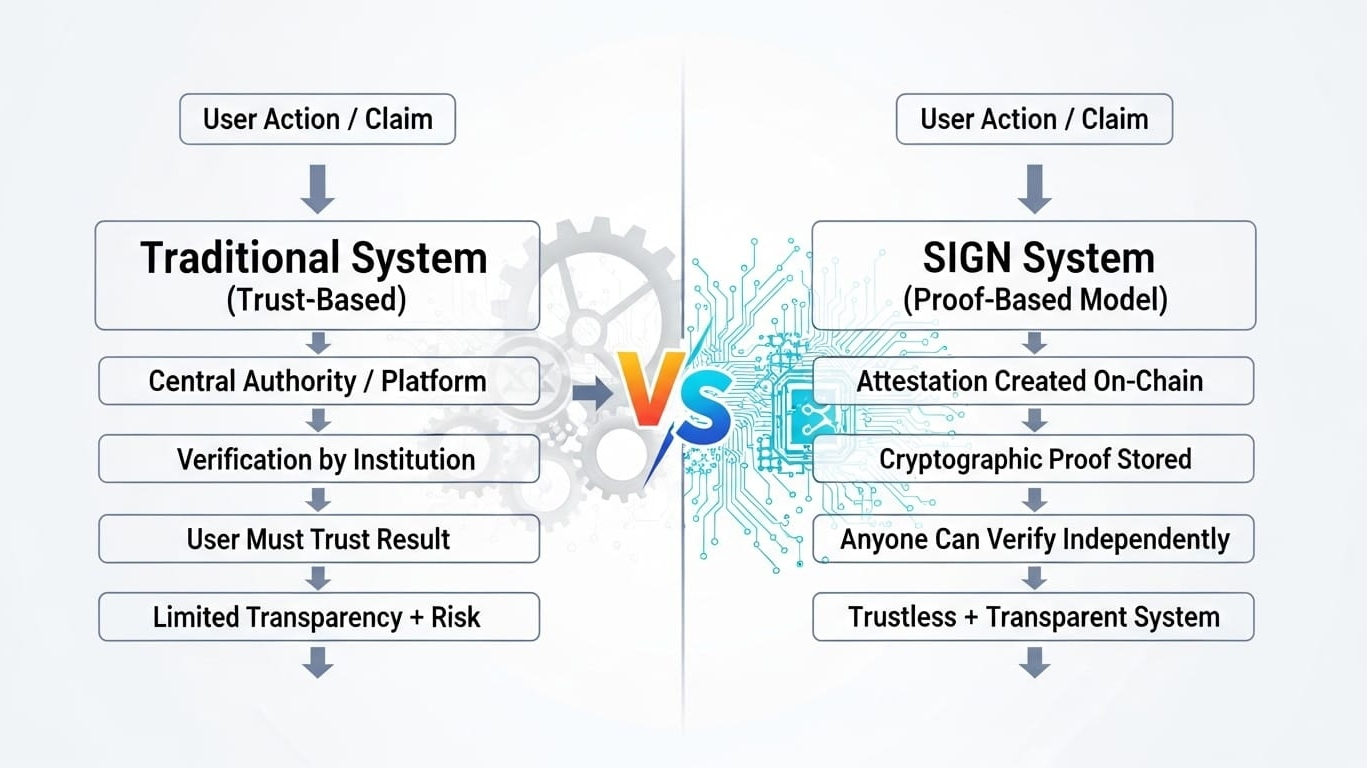
Traditional verification is based on authority.
A trusted entity confirms something and everyone else accepts it.
The problem is that this model does not work well in environments.
It creates bottlenecks introduces risk and forces users to depend on systems they cannot independently verify.
SIGN does things differently through its attestation infrastructure.
Of asking you to trust the source it allows claims to exist as verifiable proofs on chain.
Identity, credentials, ownership, participation all become attestations that can be checked by anyone.
Not because a platform says they are valid. Because the proof exists and can be verified independently.
That makes a difference in how systems are built.
Imagine being told you passed an exam versus being able to check your graded paper yourself.
The first requires trust.
The second provides proof.
SIGN is building for the model.
This becomes really important as Web3 moves beyond financial transactions.
* Token distributions need to prove fairness.
* Governance systems need to verify participation.
* Applications need to confirm eligibility without exposing data.
* Reputation systems need to track contributions in a way that cannot be manipulated.
All of these require verification not just record keeping.
Most blockchains today are excellent at recording events.
They tell you what happened.
They do not always tell you whether that information should be trusted beyond the transaction itself.
SIGN fills that gap by introducing a verification layer between raw blockchain data and application logic.
From a perspective this positions SIGN in a very interesting place within the Web3 stack.
* At the base blockchains handle transactions and data storage.
* At the top applications provide user interfaces and functionality.
* In between SIGN acts as a verification layer that connects data to proof.
This allows developers to build systems where assumptions are replaced with logic.
From my perspective this is where the long term narrative begins to form.
Infrastructure projects do not usually gain attention quickly because their value is not immediately visible.
They become important when other systems start depending on them.
The more applications integrate a verification layer like SIGN the stronger its position becomes.
This creates a kind of investment thesis.
Most tokens are driven by attention cycles.
They move with narratives and sentiment.
Infrastructure tokens behave differently.
Their value is tied to usage.
If developers build on top of them and applications rely on them daily demand grows naturally through network effects.
SIGN appears to be designed with that in mind.
Its ecosystem connects participation, protocol usage and incentives in a way that aligns growth with adoption.
This does not guarantee success. It creates a more grounded foundation compared to purely speculative models.
At the time it is essential to be realistic about the challenges.
* Adoption is the risk.
Strong technology alone is not enough.
Developers need to find it easy to integrate.
Applications need advantages over existing systems.
Users need an experience without additional complexity.
There is also increasing competition in the identity and verification space.
Multiple projects are exploring problems with different approaches.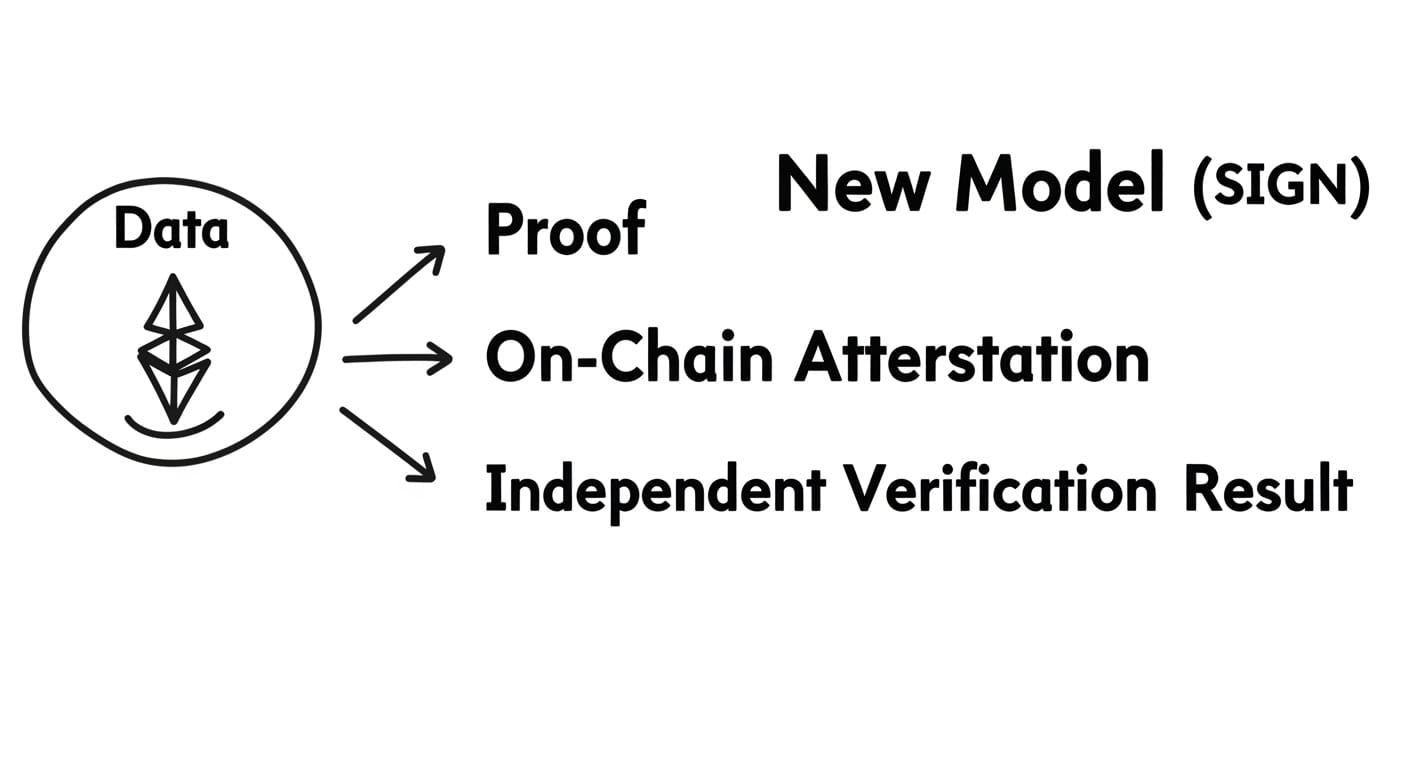
SIGN will need to stand out not through its architecture but through real world usage and developer adoption.
Another factor is timing.
Verification is clearly vital. The question is whether the market is ready to treat it as essential rather than optional.
If systems continue to rely on existing workflows adoption may take longer than expected.
Despite these risks the opportunity is difficult to ignore.
As Web3 evolves systems are becoming more complex.
Identity, permissions and data integrity are no longer concerns.
They are core requirements.
At some point relying on trust based assumptions stops working.
Proof becomes necessary.
If that shift happens at scale projects like SIGN move from being tools to becoming required infrastructure.
This is where my perspective becomes more cautious but more interested.
I do not see SIGN as a short term narrative driven by hype.
I see it as a long term bet on how verification evolves.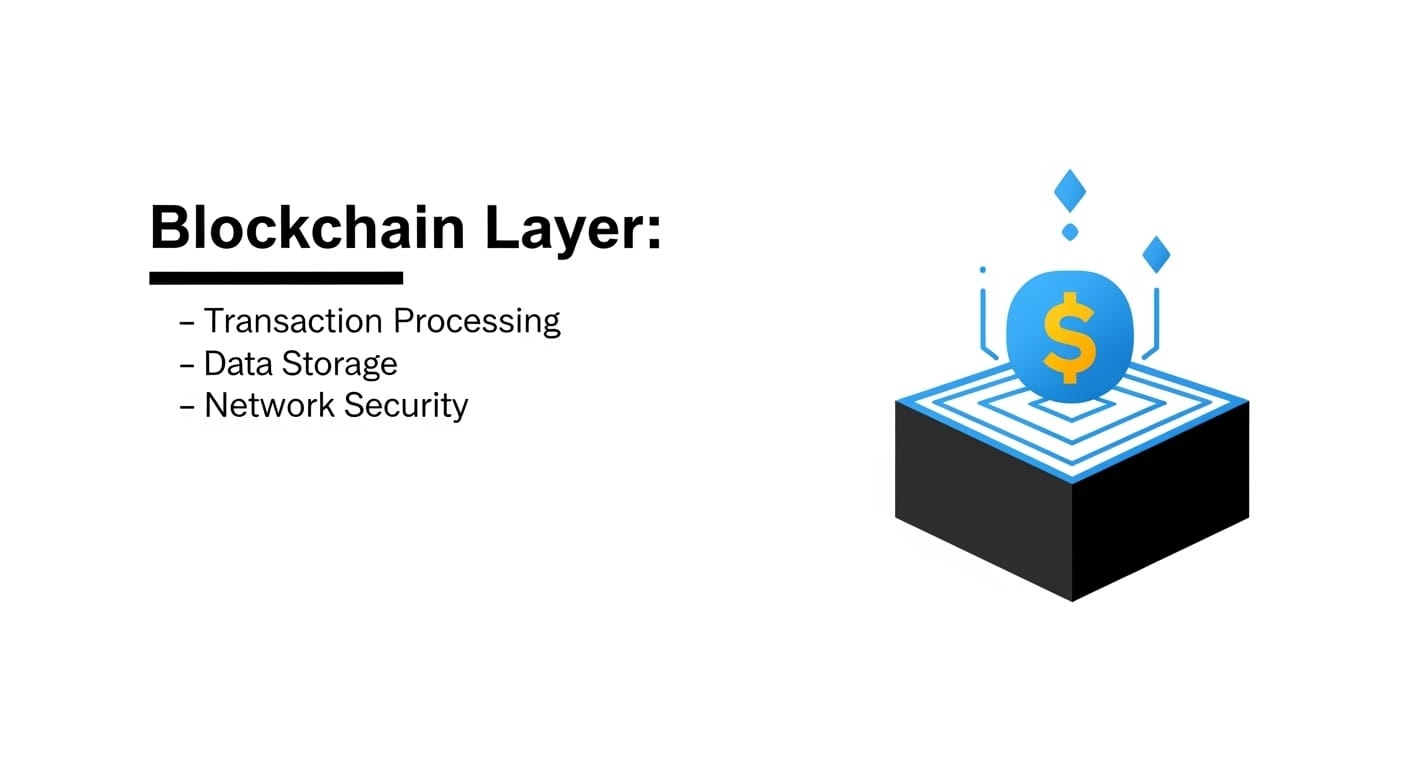
The real signal will not come from announcements or partnerships.
It will come from repeated usage.
Applications integrating it by default.
Developers building around its attestation model without thinking
That is when infrastructure becomes real.
In the end the question is not whether SIGN works.
It is whether the world, around it changes in a way that makes it necessary.
* If verification remains something systems handle occasionally SIGN stays a feature.
* If verification becomes something systems depend on every day SIGN becomes a foundation.
If that happens traditional verification does not get improved.
It gets replaced.
@SignOfficial $SIGN #SignDigitalSovereignInfra
