
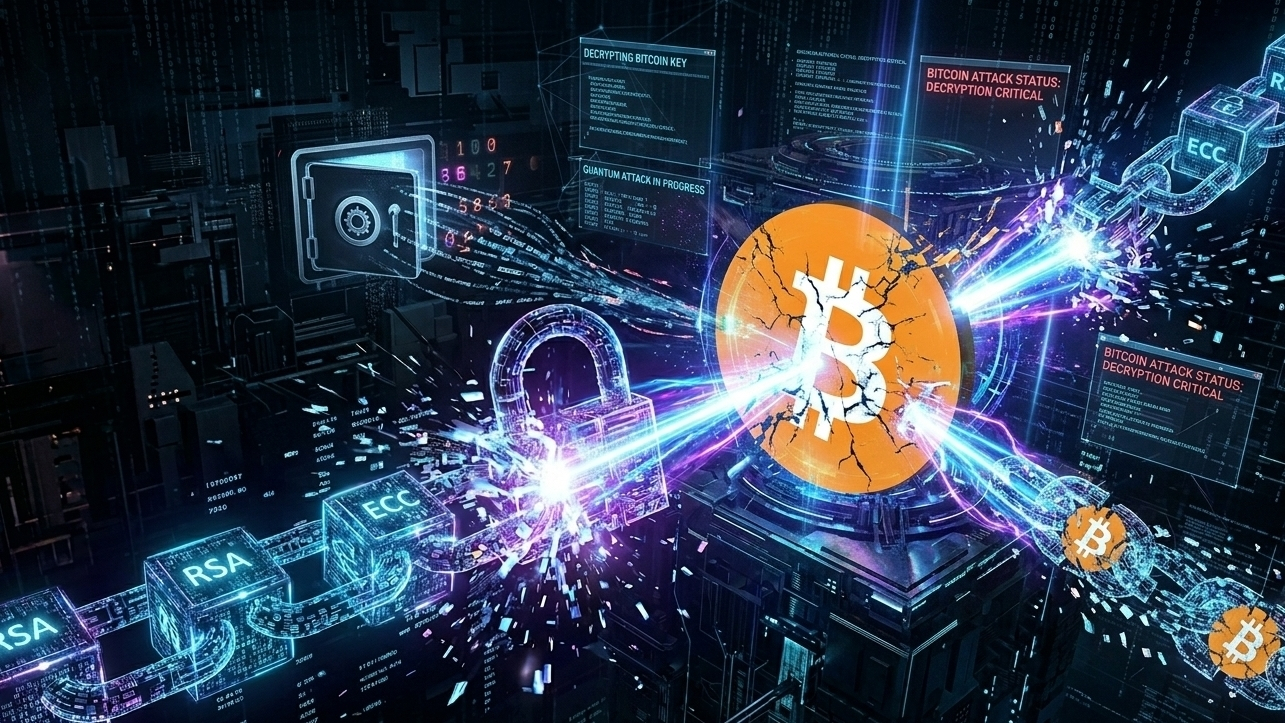
There's a hot topic right now: a study from Google, which discusses the increasingly real threat of quantum computers. This isn't just a theory; it's starting to reach a level that many in the technology and security industries are taking seriously.
It's important to remember that the crypto systems we use today are built on cryptographic foundations like RSA and Elliptic Curve Cryptography (ECC). Until now, these systems have been considered very secure because they would take a very long time—hundreds or even millions of years—to break using a regular computer. So, in practical terms, they're nearly impossible to break.
However, the problem begins to arise when we talk about quantum computers.
Quantum computers aren't just "faster" computers they work in a completely different way. Using approaches like superposition and entanglement, they can solve complex problems in ways that classical computers can't. This is where the threat begins to become apparent.
Algorithms like RSA and ECC, the backbone of crypto security, could become vulnerable to quantum computing. There are even predictions that if quantum computers are powerful enough, they could:
Decrypt encryption
Retrieve private keys from wallets
Even forge digital signatures
Even crazier, there are estimates that processes that previously took a very long time could be reduced to mere minutes. The name alone is impressive—quantum—and its power is certainly no joke.
But it's also important to remain realistic.
This threat is real, but it doesn't mean every crypto wallet will be compromised tomorrow. Quantum computer technology is still in its development stage, not yet at a level that could completely destroy the global cryptographic system. So, this is more of a long-term threat, not an immediate crisis.
What's even more interesting is the concept of "store now, decrypt later." This means that data encrypted now could be stolen and stored first, then unlocked later when quantum technology is ready. This makes the threat feel more imminent, even though it hasn't happened yet.
Personally, I don't think this is something to be overly afraid of, but it shouldn't be underestimated either. Rather, it serves as a reminder that technology is always evolving, and security systems must evolve with it. The crypto world will likely adapt, for example, with the development of post-quantum cryptography that is more resistant to quantum attacks.
So, in my opinion, this isn't the end of crypto, but rather the beginning of the next phase of evolution. As always, those who can adapt will survive.
And for us as users or even traders, this isn't a signal to panic, but rather a signal to be aware. Because in a world like this, those with earlier information usually have a stronger position.
I'm actually curious to see who will be the pioneers in this security solution going forward, and whether this will open a new narrative in the crypto market. What do you think?
Like and Follow for more information