
Let me start with a question, because this thought keeps looping in my mind…
What are we really building right now? Just a system to move money faster or something deeper, like a system to verify trust?
The more I think about it, the more it feels like this isn’t just about transactions. Projects like @SignOfficial l seem to be operating in a slightly different space. At first glance, it might look like they’re optimizing speed or efficiency but that’s not the core idea.
What they’re really pointing toward is this: money and information aren’t separate. They’re connected and that connection is identity.
Take a simple example. When a government distributes a subsidy, it’s not just about sending funds. The real challenge is verifying:
Who is receiving it?
Why are they eligible?
Is the claim actually valid?
That’s where most systems struggle. Verification today is slow, fragmented, and sometimes unreliable.
The idea here is subtle but powerful: instead of sharing raw data, you provide proof.
It sounds like a small shift, but this is where the real transformation begins.
Even when they talk about OBI or omni-chain infrastructure, it’s not just about being multi-chain. And when it comes to CBDCs, their approach feels balanced — not fully decentralized, not fully controlled. More like a middle ground where governments retain authority, but systems become programmable and auditable.
On paper, it sounds promising.
But there’s a question that’s hard to ignore…
If everything depends on proofs then who defines those proofs?
Who designs the schemas?
Who sets the rules?
Because controlling the schema essentially means controlling the system.
That part still feels unclear.
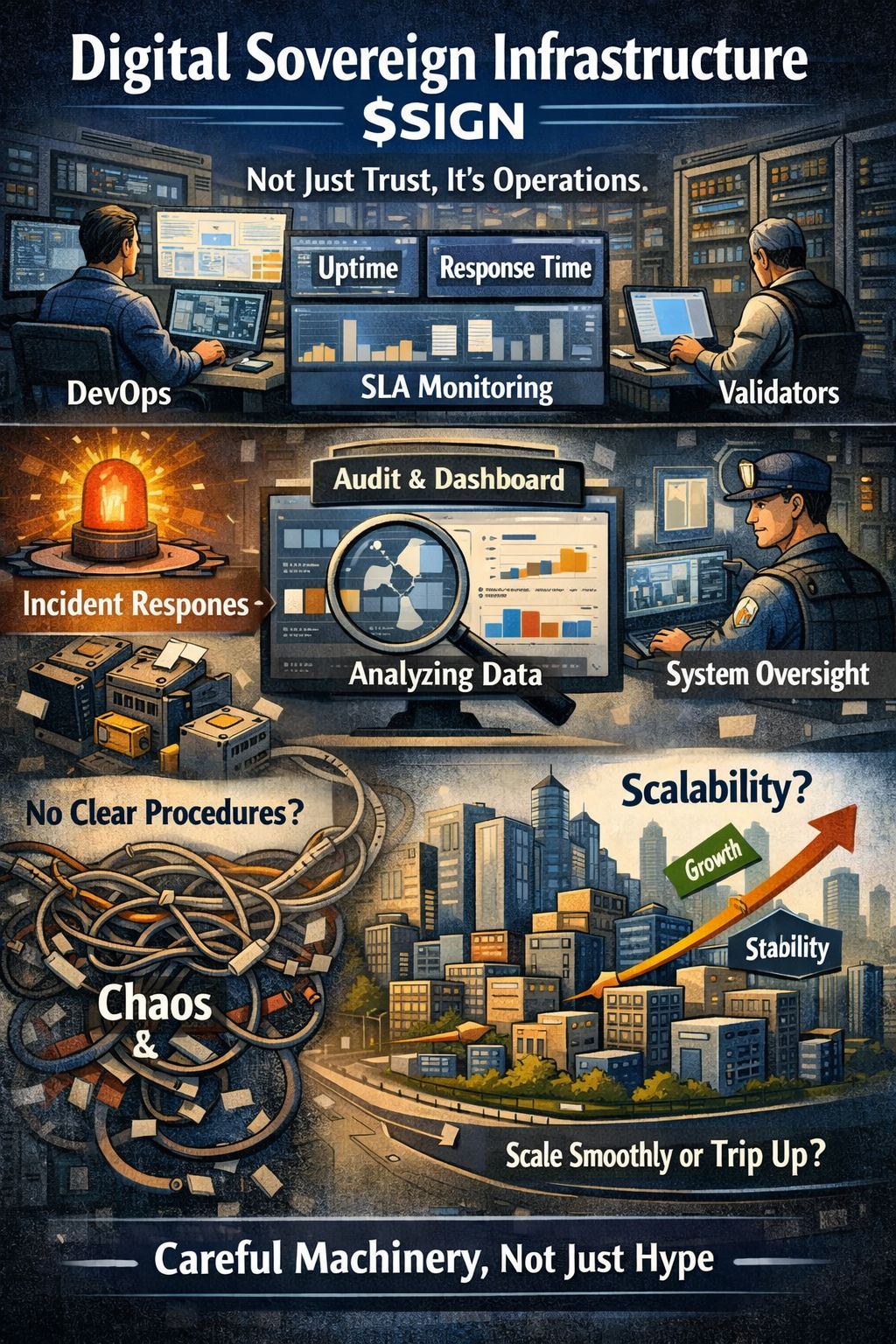
And beyond theory, there are real-world concerns — DevOps, latency, validator reliability. If these layers fail, the entire structure becomes fragile. Infrastructure might be invisible, but when it breaks, everyone notices.
So yes, the direction makes sense.
Connecting fragmented systems necessary.
Building trust through proofs powerful.
But the real test hasn’t happened yet.
Will this scale smoothly… or will complexity itself become the biggest bottleneck?
I’m not fully convinced yet.
But at the same time, it doesn’t feel right to ignore it either.
For now… I’m watching closely. Time will tell.