We’ve all watched this happen too many times.
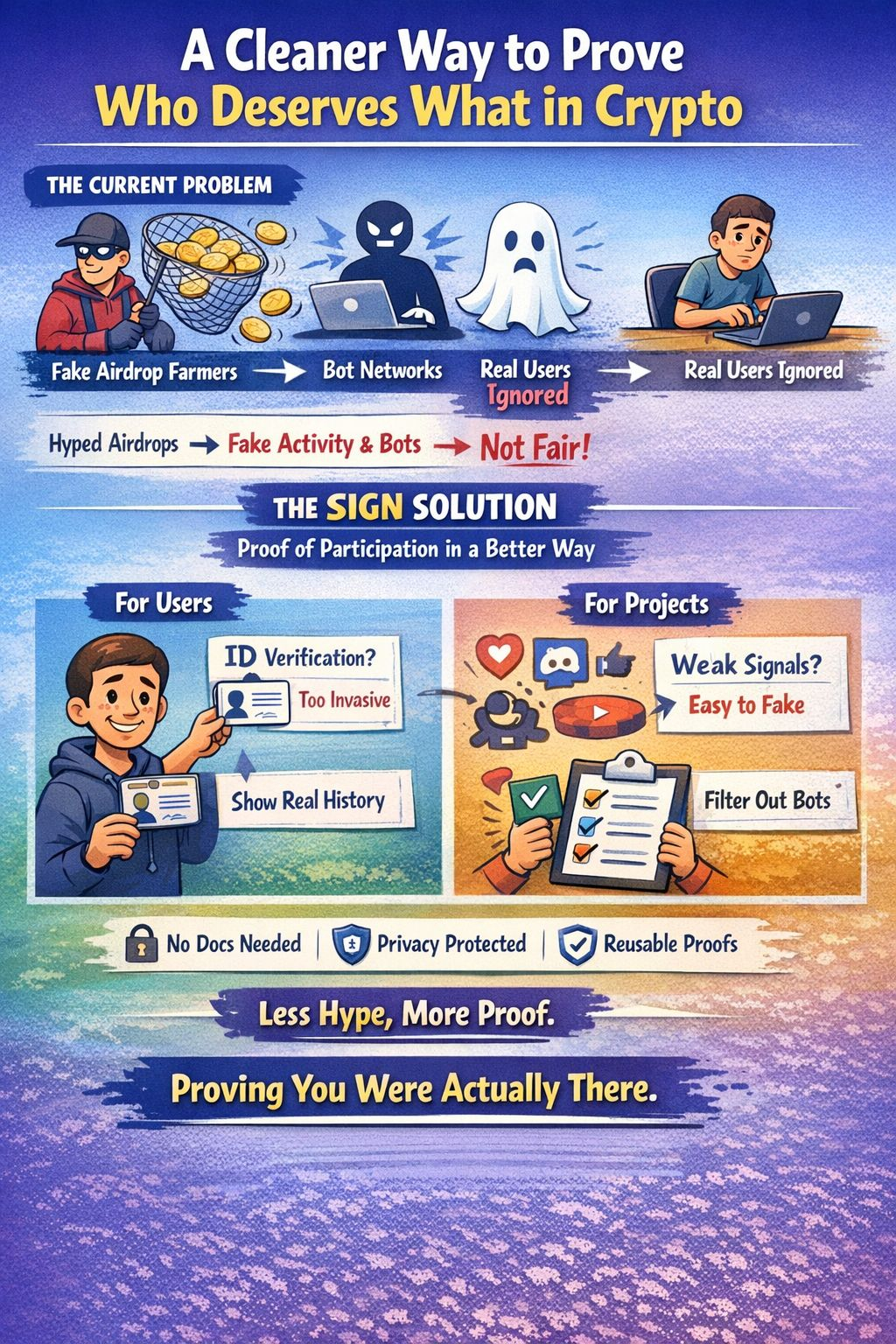
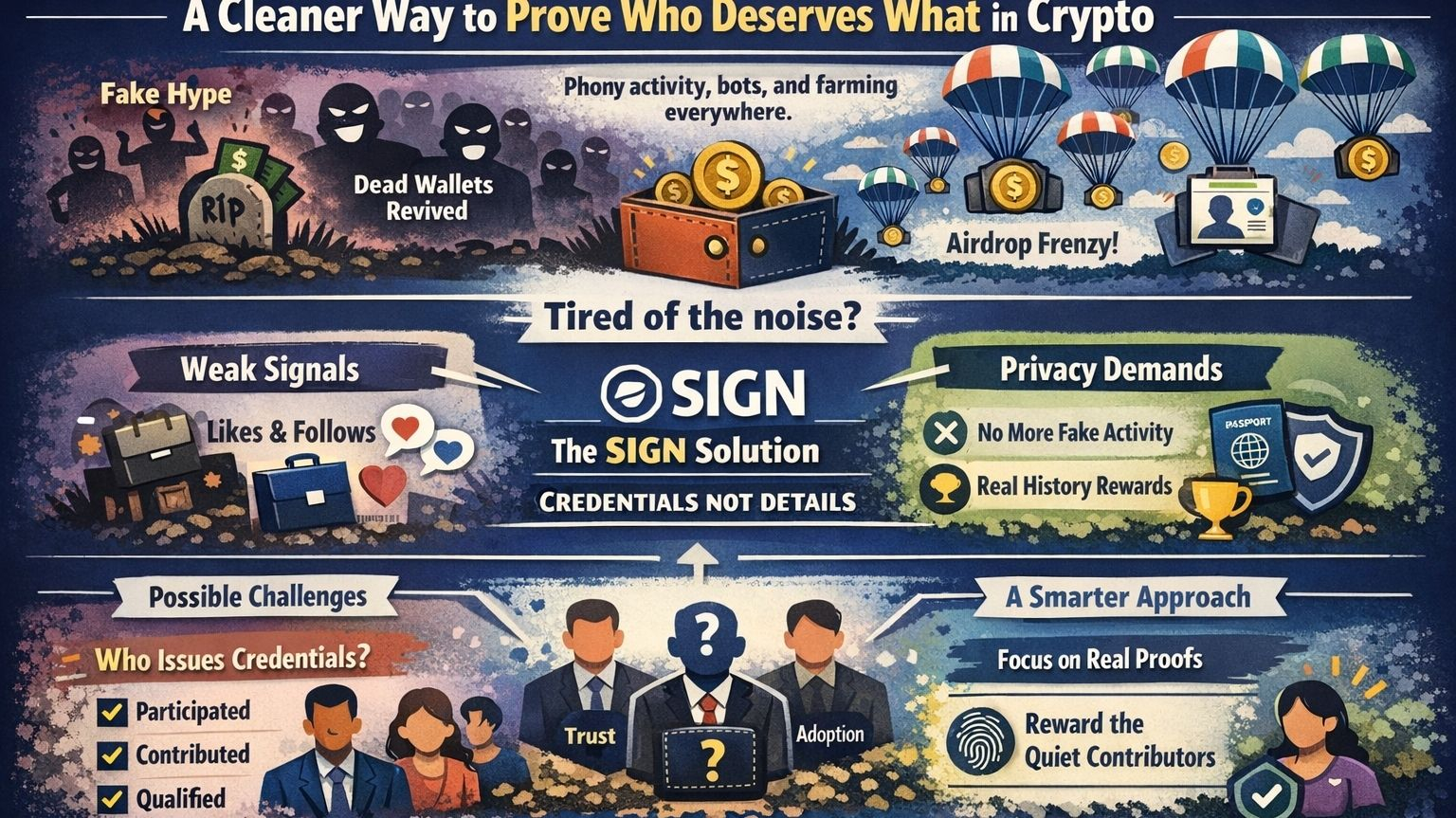
A project teases an airdrop, people start talking, and suddenly the whole space turns into a performance. Wallets that were dead for months come back to life. Timelines fill up with fake enthusiasm. Everyone starts acting like a “community member” because there might be money at the end of it.
And if you’re just using crypto normally, it feels a little stupid.
At some point, the system stopped rewarding real users and started rewarding people who know how to look real.
That’s the part people are tired of.
The problem is, fixing it isn’t easy. Everyone says they want fair distribution, real participation, and better filters for bots and farmers. But in practice, most teams are still using weak signals. A few transactions here, a social follow there, maybe some Discord activity. None of that really tells you much.
If you push harder and ask for identity, that gets messy too.
Most people don’t want to upload personal documents or hand over private information just to qualify for a token. That’s understandable. Crypto was supposed to reduce that kind of dependency, not bring it back in a different form.
So we end up in this awkward place where nobody trusts the signals, but nobody likes the alternatives either.
That’s why SIGN is at least interesting.
Not because it sounds exciting. Honestly, it doesn’t. And that may be the point.
It’s trying to solve one of those dry infrastructure problems that most people ignore until it starts affecting money, access, or reputation.
In simple terms, SIGN is built around credentials.
That just means proof. Proof that you joined something, contributed to something, qualified for something, or were recognized by a project for a certain action. Instead of making every team reinvent the same messy process, SIGN gives them a way to issue those proofs in a cleaner and more reusable form.
The important shift is this: you may not need to reveal everything about yourself. You just need a way to prove the part that matters.
That’s where the idea becomes useful.
For users, it could mean less random grinding just to be seen. Less pressure to perform fake activity. If you actually participated somewhere, that record can follow you in a more meaningful way.
For projects, it gives them a better shot at rewarding people based on real history instead of surface-level noise.
And that matters, because crypto has gotten way too comfortable with fake traction.
Still, I wouldn’t oversell it.
The first question is adoption. A lot of crypto tools make sense on paper and then quietly disappear because nobody bothers integrating them. If projects don’t use SIGN in a real way, then none of the design matters.
The second issue is trust. Who gets to issue these credentials? Who decides what counts? Because if the answer is “a small group of approved players,” then we may just be rebuilding the same gatekeeping system with better branding.
And then there’s the obvious one: people will try to game it.
They always do. If a credential gives access to tokens, status, or opportunity, someone will find a way to farm it, fake it, or manufacture just enough legitimacy to pass. That doesn’t mean the idea is bad. It just means the market behaves like the market.
So no, this doesn’t magically fix distribution.
It doesn’t remove human incentives, and it doesn’t make crypto suddenly fair. But it does feel like a more thoughtful approach to a problem that keeps coming back every cycle.
Most of the space has been obsessed with visibility for years. More activity, more volume, more impressions, more noise.
Maybe the more useful direction is quieter than that.
Maybe it’s less about proving you were loud, and more about proving you were actually there.