
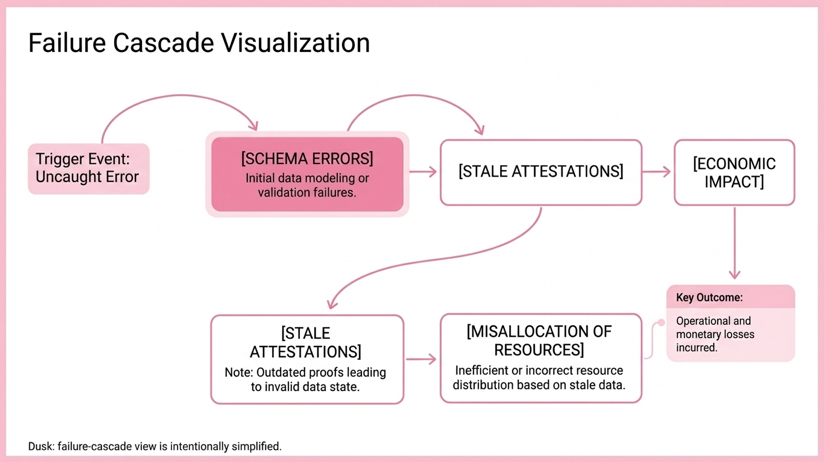
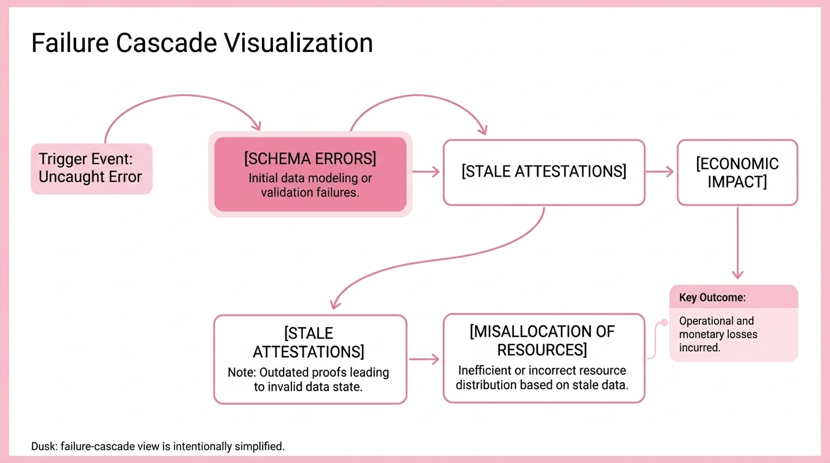
This part shows up earlier than people think.
Not at the attestation.
Not at the record.
Before that.
While the decision is still being written.
I keep getting stuck on that stage because it’s where the real shift begins, and it’s subtle enough that most teams don’t even notice it happening. The moment a team knows the outcome won’t stay local — that whatever they write will live somewhere structured, searchable, and retrievable later — the way they write it starts changing.
That awareness doesn’t sit quietly. It reshapes the output before it even becomes official, long before anything is signed or stored in Sign.
Not the decision itself.
The way it gets written.
A messy internal note becomes a structured field. A conditional outcome gets tightened into something more definitive. Language that was supposed to carry limits gets reduced to something that fits neatly into a schema. Not because the situation is simple, but because the record is expected to be.
The system is designed for clarity later, so teams begin creating clarity earlier — even when that clarity doesn’t fully exist yet. That’s where the distortion starts, and it starts before anything is signed, stored, or queried.
It doesn’t wait for misuse.
It starts at creation.
Picture a routine internal queue — nothing dramatic, just operations or compliance pushing decisions through. The team knows the output won’t disappear after this step. It will show up again. Another system will read it, reporting will aggregate it, and someone later will rely on it without seeing how it was originally discussed.
So they adjust. Not dramatically, just enough to avoid friction later. They avoid leaving awkward phrasing behind. They avoid encoding uncertainty into something that will later appear authoritative. Because once it’s signed, it stops looking like a draft and starts looking like a decision others will trust.
So they clean it — right there, before it becomes official.
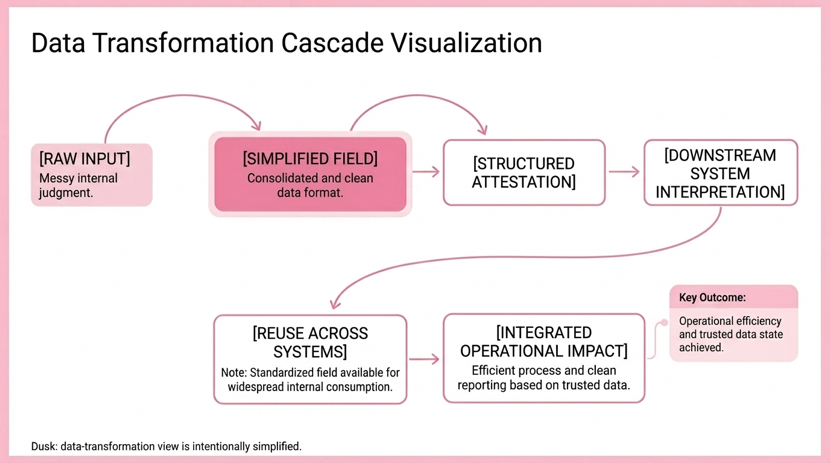
This isn’t generic data cleanup. It’s specific to systems like Sign where records are durable and portable by design. Once teams know the output will travel, they stop writing purely for the case in front of them and start writing for the version of the case that will survive being seen later.
The same people are making the same decisions, but the representation of those decisions changes. It becomes cleaner, more stable-looking, easier to process — and in small but important ways, less accurate.
Cleaner record.
Narrower truth.
Because the original case is rarely clean. It carries edge conditions, temporary allowances, internal understanding that never fully fits into a structured field. That nuance still exists — in notes, conversations, someone’s memory — but it doesn’t make it into the final object that gets signed and reused.
The field gets the version that looks stable. The version that won’t trigger questions later, won’t slow another team down, won’t require explanation. That version survives, gets signed, and becomes the one that moves forward into every downstream system.
And from that point on, it’s the only version that exists for anyone else.
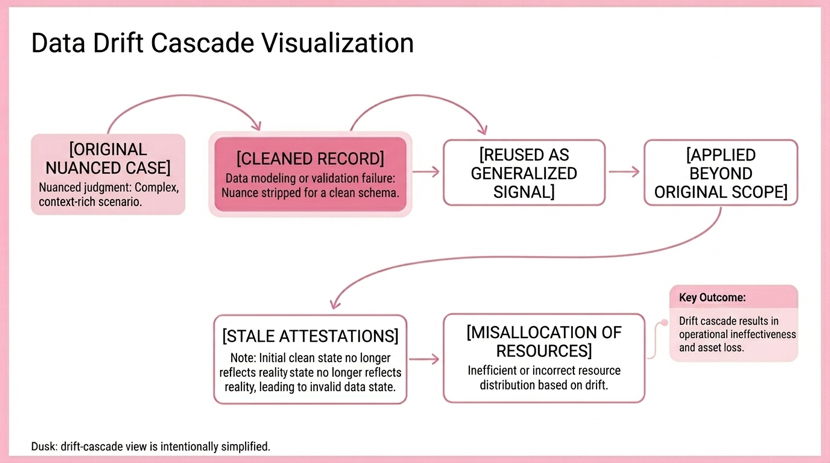
Downstream systems don’t inherit hesitation or context. They inherit a label. They see something that resolves cleanly, something that appears complete, something that looks definitive — even if the original decision never fully was.
That’s the uncomfortable part. Because when things go wrong later, it’s easy to blame the system that interpreted the record. But the first shift didn’t happen there. It happened earlier, when the record was shaped to look acceptable for future use.
The first compromise isn’t interpretation.
It’s preparation.
A team chooses the version of truth that will move smoothly through systems later. That choice removes friction, but it also removes meaning. And once meaning is removed at the source, nothing downstream can reconstruct it.
The system itself keeps working perfectly. The record resolves, the attestation checks out, everything is structured and consistent. From the outside, it looks correct — and that’s exactly why it’s hard to challenge.
But structural correctness doesn’t guarantee that the record fully represents what actually happened. It only guarantees that whatever was recorded can be processed consistently across systems.
Consistency travels.
Context doesn’t.
And that consistency can carry a simplified version of reality very far — far enough to influence decisions, reporting, and policy without anyone realizing what was lost along the way.
That’s why the idea that queryability only matters when someone runs a query feels incomplete. It matters much earlier. The knowledge that something will be queried later is already shaping how it gets written now, long before any dashboard or external system ever touches it.
That future presence sits quietly in the room while the record is being formed. No dashboard needed, no external system required. Just the expectation of visibility is enough to change behavior.
And that expectation pushes teams toward outputs that are easier to reuse, easier to read, easier to trust — even if they are less precise than the situation they came from.
Which creates a strange outcome. The system preserves exactly what it was given, but what it was given was already adjusted to fit future expectations. The preservation is accurate, but the input wasn’t fully honest to the original complexity.
And that kind of shift is almost invisible later. The final record looks perfectly reasonable — structured, signed, clean. There’s no indication that anything was simplified earlier, no trace of what was removed, no marker for what was softened.
It just looks like a solid decision.
And that’s what makes it dangerous. Because downstream systems treat it as a faithful capture. They act on it, group it, build logic around it — all based on something that was shaped for readability before it was shaped for accuracy.
By the time anyone notices, it’s too late to separate the two. The record is stable, the nuance is gone, and there’s no way to recover what was lost.
That’s the part that keeps bothering me — not the system itself, but the behavior it quietly introduces before the record even exists.
Sign doesn’t just preserve decisions. It changes how those decisions are written in the first place.
Good for structure.
Not always good for truth.