
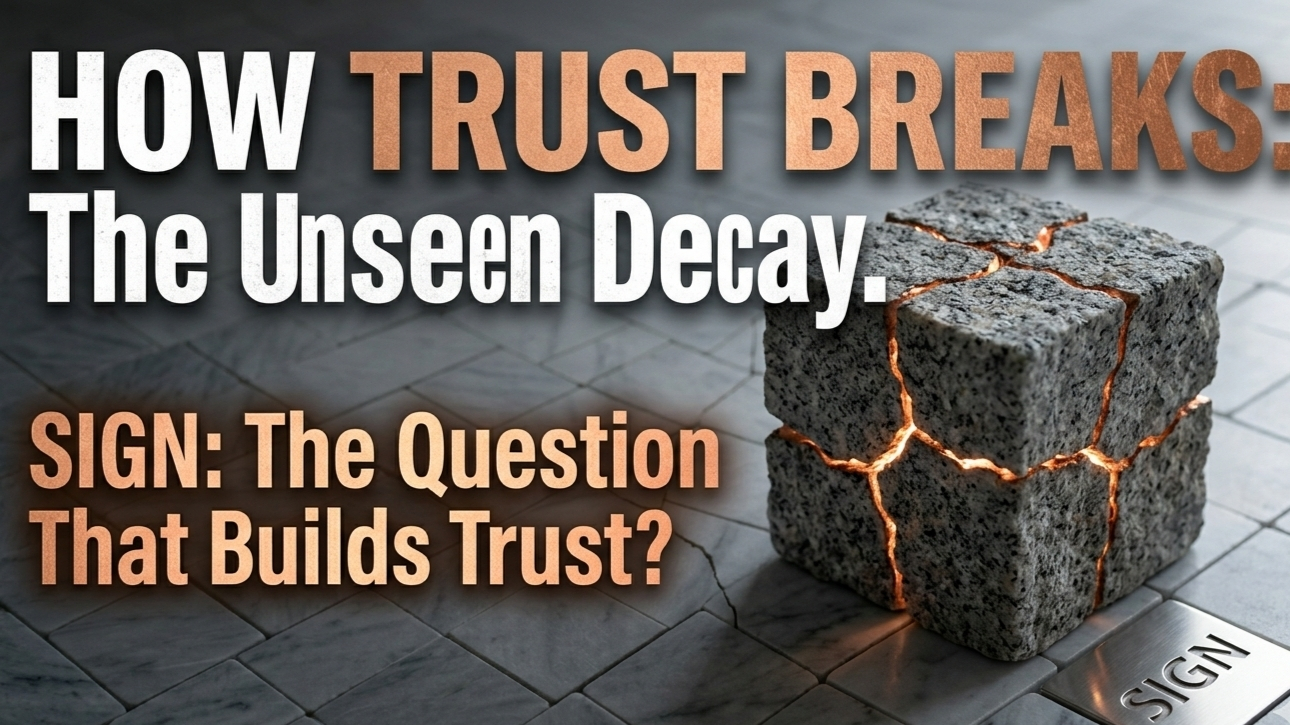
@SignOfficial #SignDigitalSovereignInfra
I’ve learned to be careful around things that sound complete before they’ve been tested. The language is usually clean, the promses prcise, the vision easy to repeat. It all feels setled—until it meets the weight of actual use. That’s where most ideas begin to show their seams.
I’ve watched systems built on certainty unravel in quiet ways. Not with damatic failure, but with small inconistencies that acumulate. A proces that works in theory but stalls when people hestate. A rule that seems fair until it meets an exception no one antcipated. Over time, the gap between intenion and reality widens, and what once felt solid starts to feel perfomative.
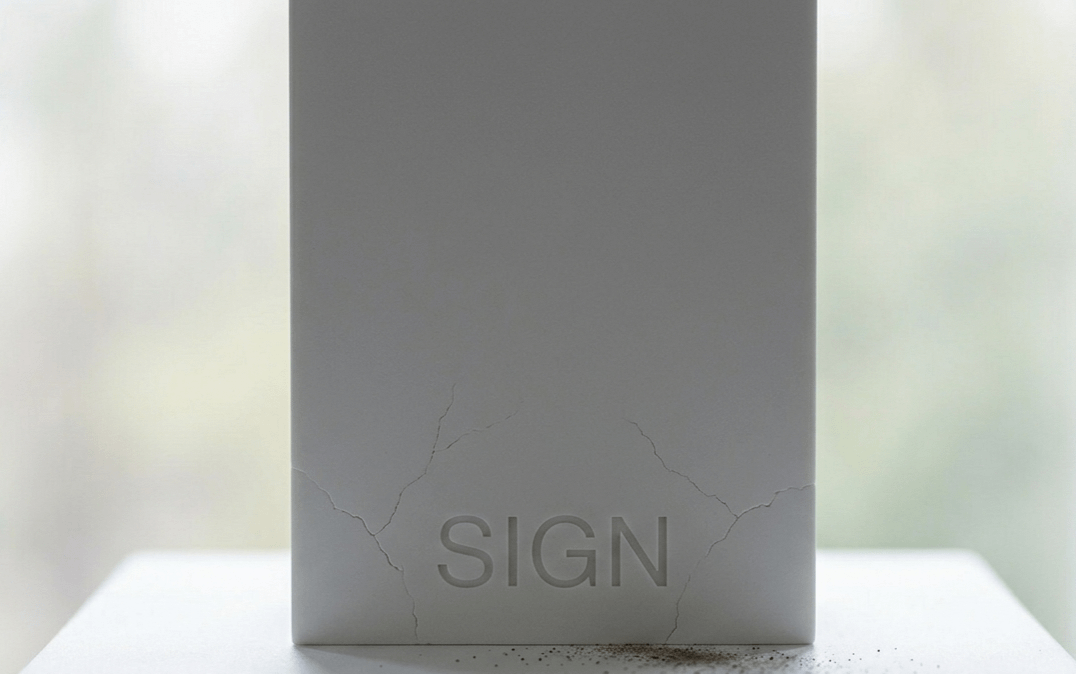
Trust is often treated like an atmosphere—something you either feel or don’t. But that’s never how it actually works. Trust behaves more like a record. It builds slowly, through repeted intractions that hold up under scrutiny. It can be measured, even if not perfectly. It can also decay, often faster than it forms. And once it fractures, it rarely returns in the same shape.
I’ve come to think that most systems fail not because they lack intelligence, but because they underestimate how difficult it is to prove anything over time. It’s one thing to claim reliability. It’s another to demonstrate it across changing conditions, across different actors, across moments when no one is watching closely.
Identity sits quietly at the center of all of this, though it’s rarely acknowledged as the problem it is. Not identity in the abstract sense, but the practical question of who is acting, who is responsible, and who can be relied upon. These questions don’t resolve cleanly. They create friction. They slow things down. They introduce doubt where speed was expected.
And yet, removing that friction doesn’t solve the problem—it just hides it. Systems that make identity too loose tend to lose accountability. Systems that make it too rigid tend to exclude or suffocate participation. I’ve seen both extremes, and neither holds for long.
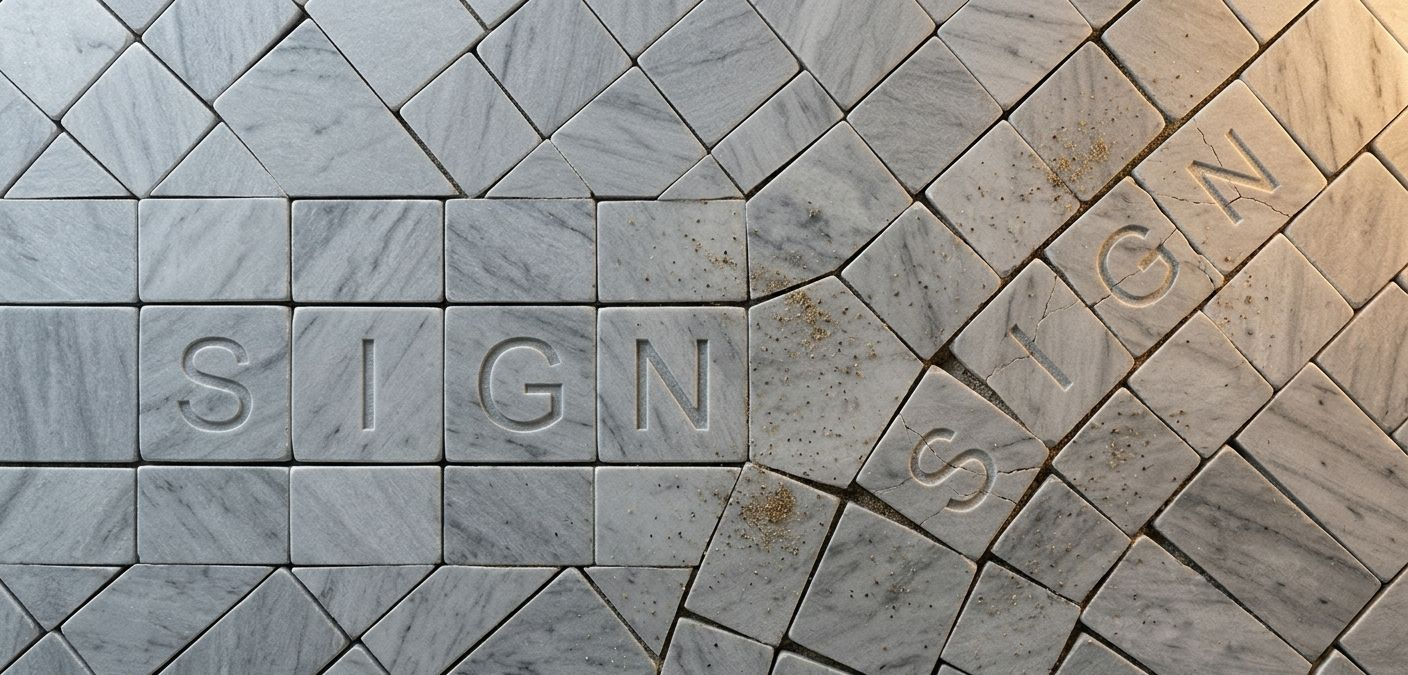
There’s a similar tension with visibility. On one side, there’s the belief that everything should be open—that transparency alone will create trust. On the other, there’s the instinct to conceal—to protect, to simplify, to avoid exposure. But in practice, both positions break down. Total openness overwhelms and confuses. Total concealment invites suspicion.
What seems to work, if anything does, is something less absolute. A kind of selective disclosure. Not everything revealed, not everything hidden—just enough shared, at the right time, with the right context. It’s harder to design, and harder still to maintain. It requires judgment, not just rules.
I notice that the more refined a system looks on paper, the more unpredictable it becomes in reality. Clean designs assume consistency. Real environments produce variation. People interpret things differently. Institutions impose constraints that weren’t part of the original vision. Processes that looked efficient become tangled as edge cases multiply.
And still, people adapt. They work around the system, reshape it, sometimes undermine it without meaning to. Behavior doesn’t follow design; it negotiates with it. That negotiation is where most outcomes are actually decided.
I’ve stopped expecting coherence from systems that operate at scale. What I look for instead is resilience—the ability to absorb irregularity without collapsing. That doesn’t come from elegance. It comes from iteration, from constraint, from a kind of quiet persistence that rarely gets recognized.
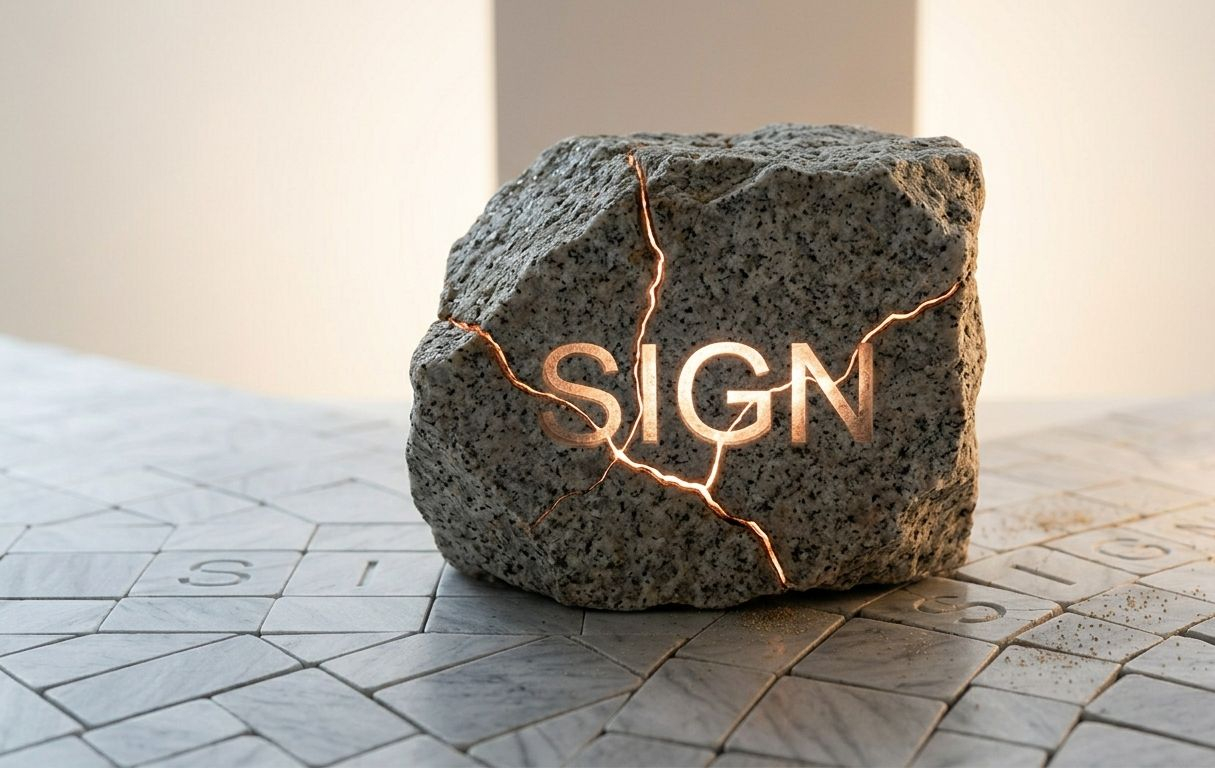
There’s something unremarkable about systems that endure. They don’t announce themselves. They don’t depend on attention. They function in the background, adjusting slowly, carrying the weight of repeated use. By the time they’re understood, they’ve already become part of the structure they were meant to support.
I think that’s why something like SIGN feels less like a statement and more like a question—an ongoing attempt to deal with things that don’t resolve neatly. Not just how to verify, or how to distribute, but how to do both in a way that survives contact with reality.
I’m not sure there’s a final answer to any of this. Every system eventually encounters its limits, its contradictions, its moments of strain. The interesting part isn’t avoiding those moments, but seeing what remains intact afterward… and what quietly changes shape without anyone quite noticing.