In today's fast-evolving digital world, traditional systems for verifying identities, credentials, and distributing digital assets have become major challenges. These systems are often slow, centralized, and vulnerable to fraud, creating obstacles for individuals, employers, and organizations alike.
This is where a global infrastructure for credential verification and token distribution plays a transformative role. This innovative approach aims to redefine how we verify identity and exchange value, leveraging decentralized networks and secure digital frameworks to build a more trusting and efficient digital ecosystem.
Key Pillars of Global Digital Infrastructure
The infrastructure for credential verification and token distribution is built upon three key pillars:
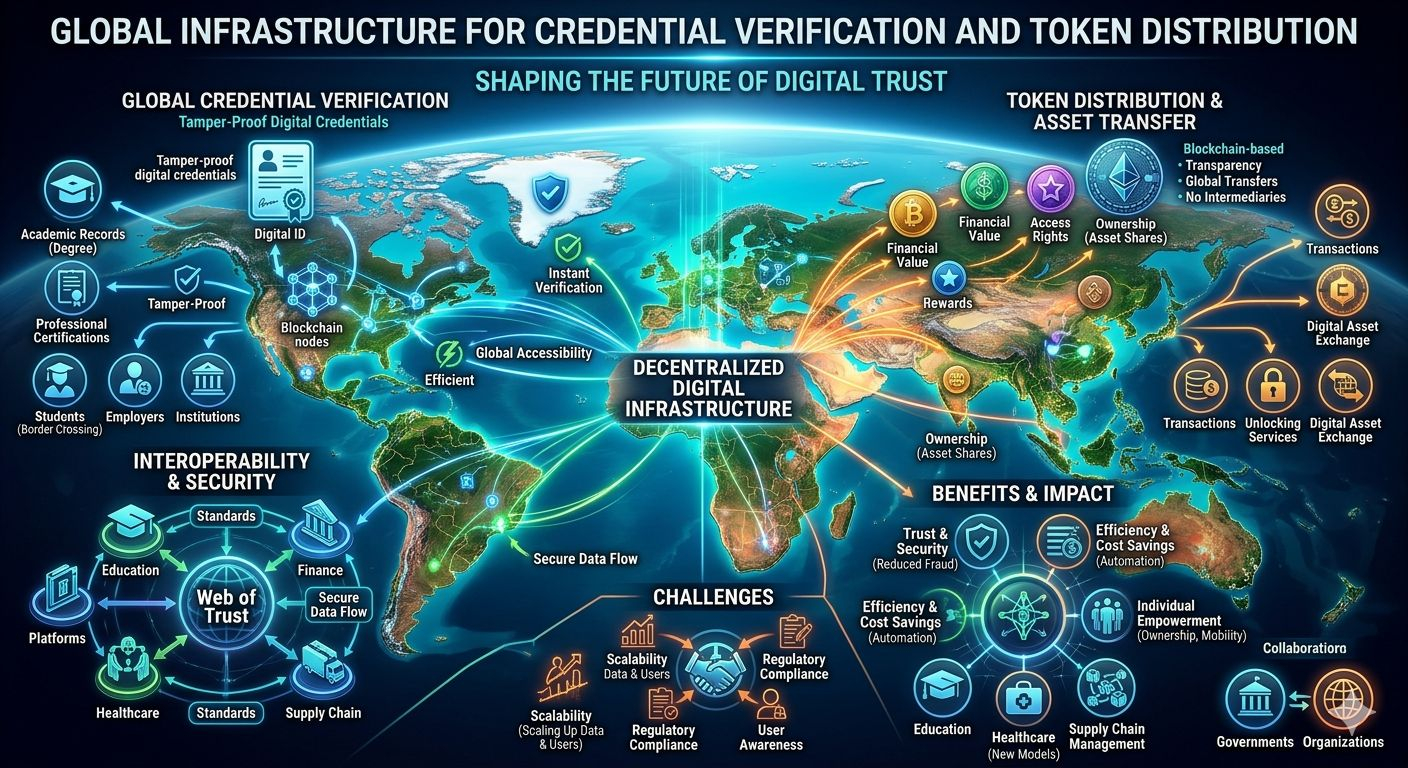
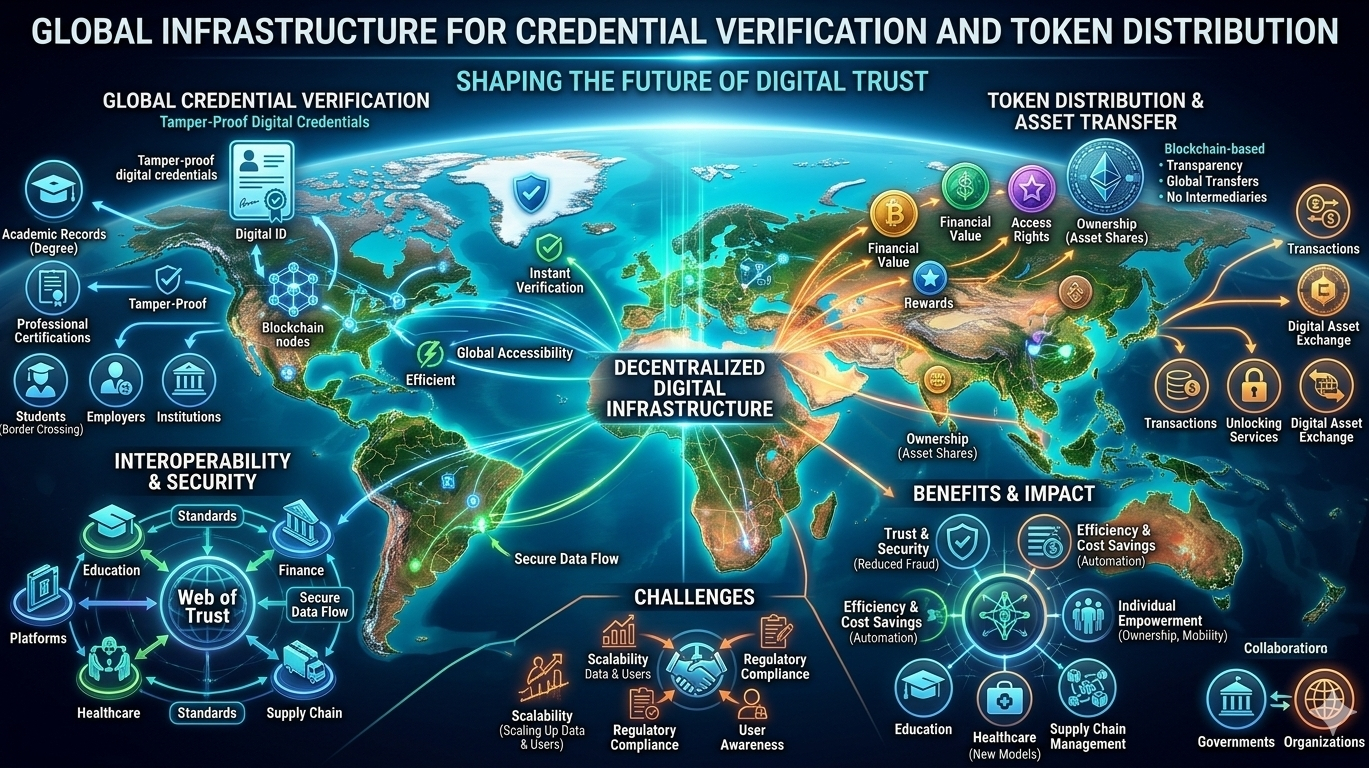
Credential Verification: Digital credentials like academic records, professional certifications, and personal identities are stored on decentralized networks, making them tamper-proof, easily accessible, and instantly verifiable worldwide. This eliminates the need for manual checks, repeated proof of qualifications, and reliance on third-party institutions.
Token Distribution: Token distribution systems enable the seamless and secure transfer of digital assets. Tokens can represent financial value, access rights, rewards, ownership, and more. Blockchain-based distribution ensures transparency, efficiency, and allows for global transfers without intermediaries.
Interoperability and Security: To be truly effective, this global infrastructure must be interoperable across different platforms, sectors, and jurisdictions. Governments and organizations must collaborate to develop and adopt standards that ensure security, privacy, and smooth data exchange.
Benefits and Impact Across Industries
The implementation of a global infrastructure for credential verification and token distribution offers numerous benefits:
Trust and Security: Tamper-proof digital credentials and transparent token distribution systems reduce fraud and enhance trust in digital interactions.
Efficiency and Cost Savings: Automated verification processes, instantaneous transfers, and the elimination of intermediaries significantly improve efficiency and reduce costs.
Accessibility and Global Reach: Verified credentials and tokens can be easily accessed and transferred globally, creating a more inclusive digital economy.
Empowerment for Individuals: Individuals gain greater control over their identities, credentials, and digital assets, empowering them to pursue opportunities globally.
Innovation and Economic Growth: The creation of new digital services and business models based on secure and efficient verification and distribution systems fosters innovation and economic growth.
The impact of this infrastructure is already being felt across various sectors:
Education: Students can carry verified degrees across borders, and academic institutions can easily verify student credentials.
Finance: Financial transactions become faster, more transparent, and secure, with reduced risk of fraud.
Healthcare: Patient records can be securely stored and shared among healthcare providers, improving quality of care.
Supply Chain Management: Supply chains become more transparent and traceable, ensuring product authenticity and reducing logistics challenges.
Overcoming Challenges for Widespread Adoption
While the potential of a global infrastructure for credential verification and token distribution is significant, challenges remain for widespread adoption:
Scalability: The infrastructure needs to scale effectively to accommodate a growing number of users, transactions, and data.
Regulatory Compliance: Clear and consistent regulations are needed across different jurisdictions to address legal, privacy, and security concerns.
User Awareness and Adoption: Education and outreach programs are crucial to raise awareness among individuals, employers, and organizations about the benefits and safe use of this technology.
Conclusion
A global infrastructure for credential verification and token distribution is shaping the future of digital trust. By combining security, transparency, and efficiency, it has the potential to redefine how we verify identity and exchange value in a connected world. While challenges remain, the potential to create a more inclusive, trustworthy, and efficient digital ecosyste