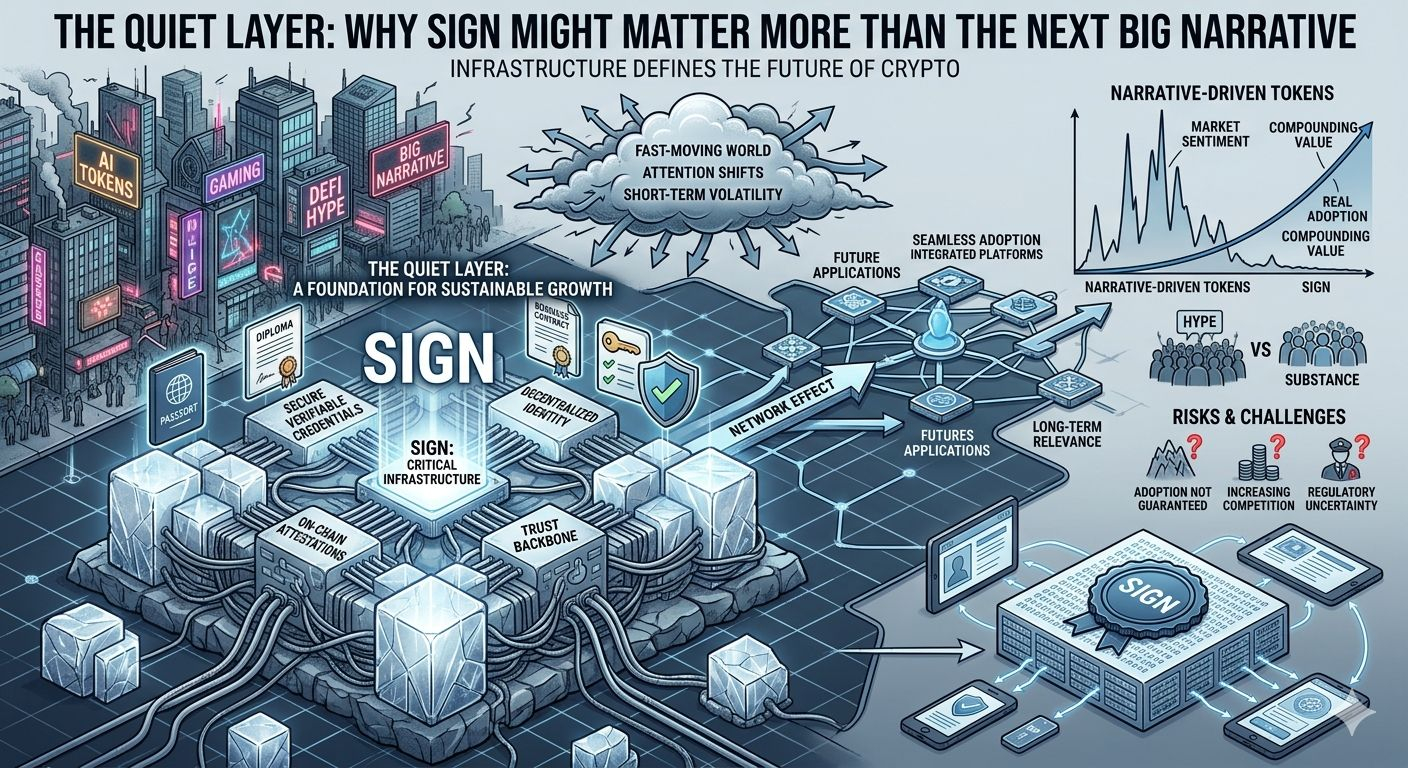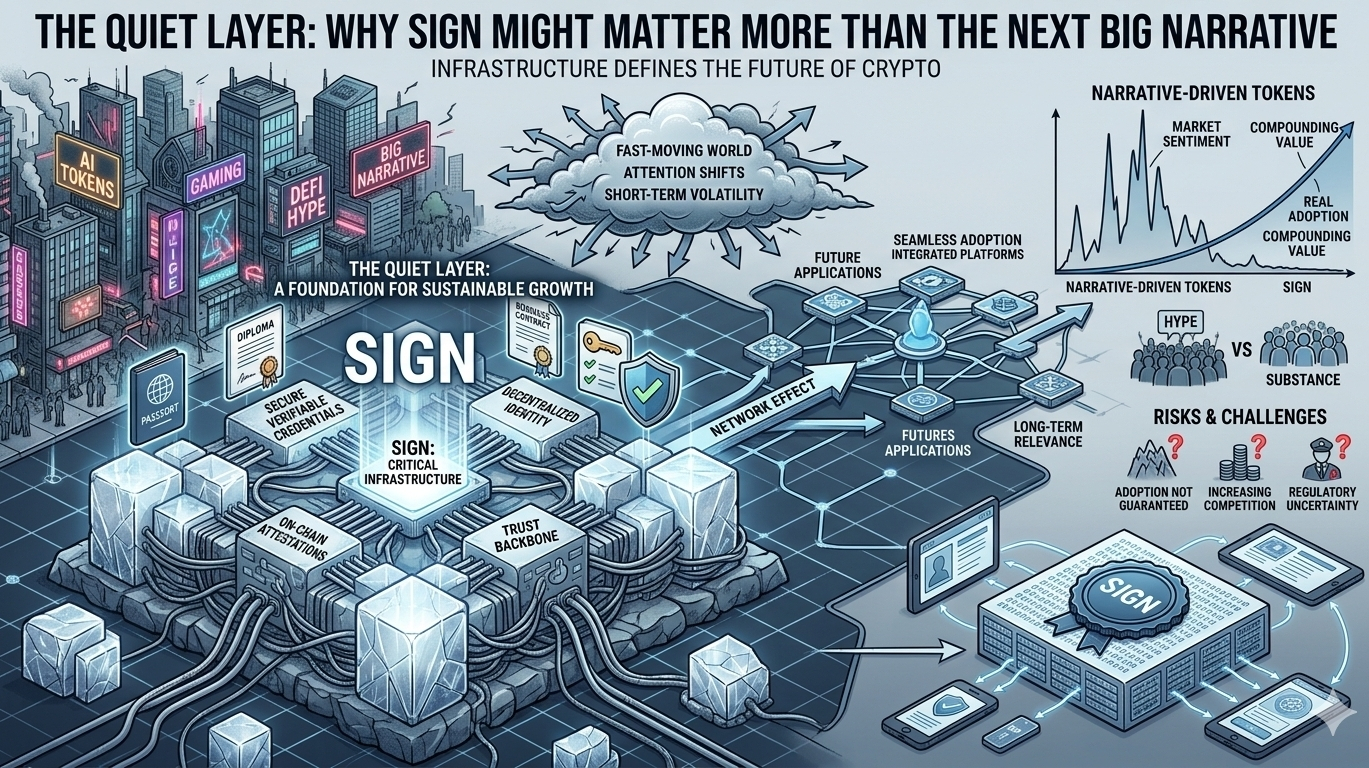
In the fast-moving world of crypto, attention often shifts from one “big narrative” to another—AI tokens today, gaming tomorrow, and something entirely new the next week. Amid this noise, quieter projects are often overlooked. Yet, history shows that the most impactful innovations are not always the loudest. This is where SIGN enters the conversation—not as hype, but as infrastructure.
SIGN operates in what can be called the “quiet layer” of the ecosystem. It focuses on credential verification, identity, and trust—areas that are fundamental but rarely trend on social media. While traders chase volatility, infrastructure projects like SIGN quietly build the backbone that future applications depend on.
The importance of verifiable credentials is growing rapidly. In a decentralized world, proving who you are, what you’ve achieved, or what you own becomes critical. SIGN aims to simplify this by enabling secure, on-chain attestations. This means users and institutions can verify information without relying on centralized authorities, reducing friction and increasing trust.
What makes SIGN particularly interesting is its potential network effect. As more platforms adopt its verification standards, its value doesn’t just grow linearly—it compounds. Each new integration strengthens the ecosystem, making it more useful for everyone involved. This is very different from narrative-driven tokens that rely heavily on market sentiment.
From a market perspective, SIGN may not always lead in short-term price action. However, its positioning suggests long-term relevance. Infrastructure projects often lag in hype cycles but outperform when real adoption begins. If the industry continues to move toward decentralized identity and credential systems, SIGN could become a critical layer in that stack.
There are, of course, risks. Adoption is never guaranteed, and competition in the identity and verification space is increasing. Regulatory uncertainty also plays a role, especially when dealing with identity-related data. But these challenges apply to the entire sector, not just SIGN.
In conclusion, while the market chases the next big story, projects like SIGN quietly build the foundation for sustainable growth. The real question is not whether SIGN will trend next week—but whether it will still be relevant years from now. If infrastructure truly defines the future of crypto, then the quiet layer may matter far more than the loudest narrative.
#GoogleStudyOnCryptoSecurityChallenges