
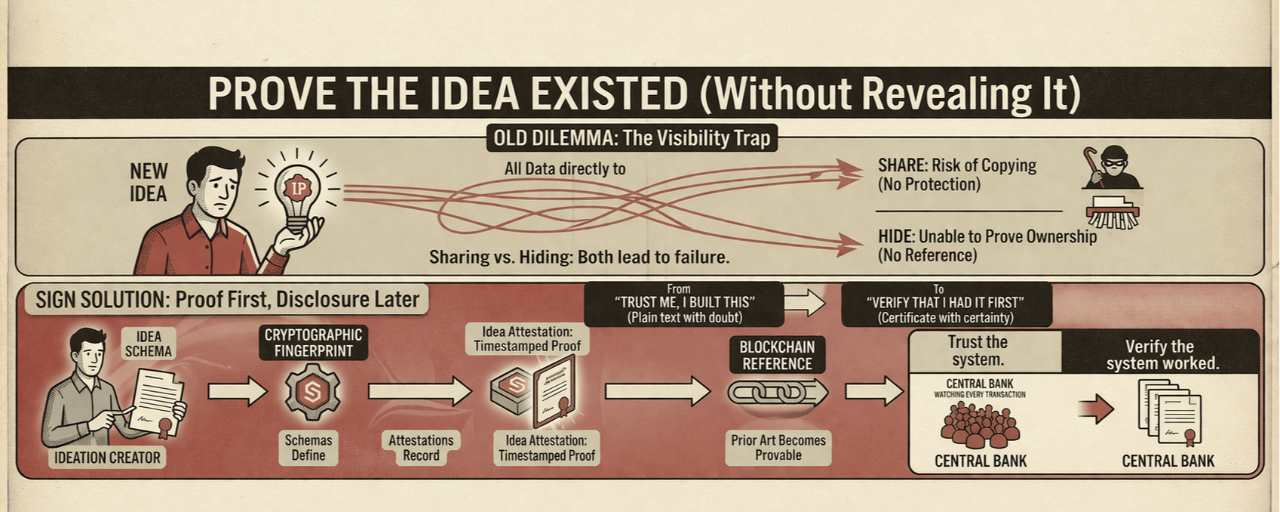

Most crypto projects try to move money faster. I think SIGN is trying to fix something deeper, how trust actually works.
That difference matters. Because speed is easy to upgrade. Trust infrastructure is not.
What makes SIGN stand out to me is how it’s structured. Instead of being just another protocol, it feels like a full system. Money, identity, and capital all connected through a shared evidence layer. Not separate tools, but one coordinated stack.
And that’s where I think the real value is.
Today, every system I use rebuilds trust from scratch. New KYC, new verification, new checks. It’s slow, repetitive, and easy to break. SIGN flips that model. Once something is proven, it becomes reusable. Not just stored, but verifiable anywhere.
That changes how systems can be designed.
For example, money can follow rules tied to identity, not just wallets. Identity can prove something without exposing everything. Capital can be distributed based on verified contributions, not guesswork.
It’s not just about putting things on-chain. It’s about making them provable across systems.
I also like that it doesn’t try to force everything into one place. Instead of one identity or one database, it connects proofs through structure. That feels closer to how the real world actually works. Messy, distributed, but still verifiable.
Of course, this only works if execution holds up. Cross-system coordination, schema design, and reliable attesters are not easy problems.
But that’s exactly why I take it seriously.
SIGN isn’t trying to win a narrative cycle. It’s trying to become the layer that makes everything else trustworthy.
And if it works, I don’t just get faster crypto. I get systems I can finally trust.
@SignOfficial | #SignDigitalSovereignInfra | $SIGN
