#signdigitalsovereigninfra $SIGN @SignOfficial

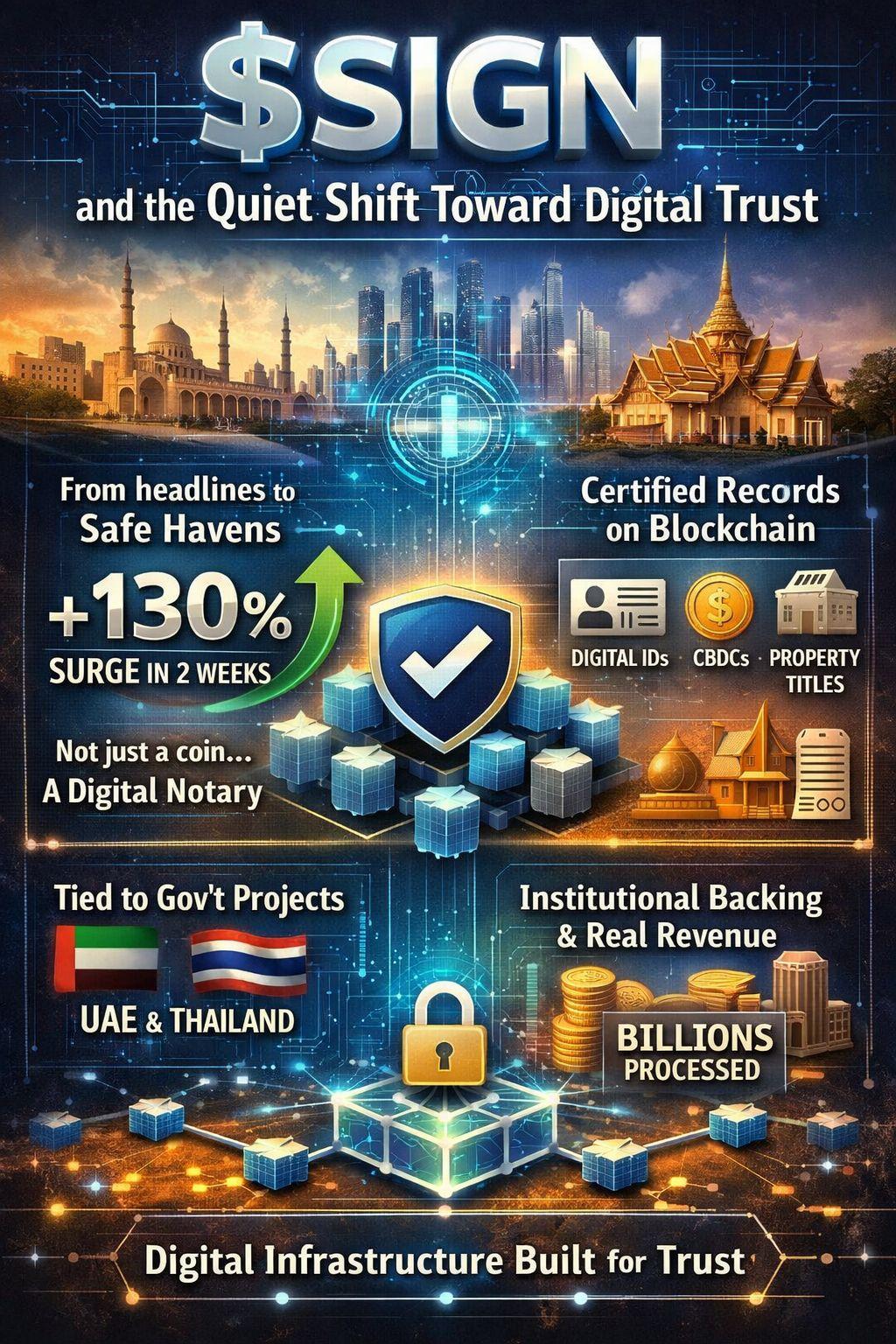
In letzter Zeit hat das Geräusch aus dem Nahen Osten mehr getan, als nur Schlagzeilen zu erschüttern – es bewegt Geld. Wenn die Unsicherheit steigt, sucht Kapital nach Sicherheit oder zumindest nach etwas, das sich geerdet anfühlt. Das ist der Punkt, an dem $SIGN plötzlich ins Rampenlicht tritt. Ein Anstieg von 130 % in zwei Wochen ist nicht subtil, insbesondere wenn es beginnt, das Handelsvolumen an Orten wie Südkorea zu dominieren. Natürlich fragen die Leute: warum das und warum jetzt?
Auf den ersten Blick ist es einfach, es als einen weiteren Krypto-Anstieg abzutun. Aber $SIGN verhält sich nicht wie eine typische Meme-Münze, die Hype-Zyklen reitet. Die Kernidee ist eigentlich ziemlich einfach: wie ein digitaler Notar zu agieren. Statt nur Geld zu bewegen, beweist es Dinge – Eigentum, Identität, Transaktionen – auf eine Weise, die später nicht leicht verändert werden kann.
Das mag technisch klingen, aber denken Sie darüber so nach. Im Moment leben die meisten unserer wichtigen Aufzeichnungen in verstreuten Systemen—Regierungsbehörden, Banken oder sogar Papierdateien. $SIGN versucht, das in eine verifizierbare Schicht zu bringen. Dinge wie CBDCs, digitale IDs oder Immobilienaufzeichnungen werden nicht nur gespeichert—sie werden on-chain zertifiziert. Das ist ein großes Ding, wenn es wie beabsichtigt funktioniert.
Was es interessanter macht, ist, dass dies nicht nur Theorie ist. Es gibt bereits Projekte, die mit Regierungen in Ländern wie den VAE und Thailand verbunden sind. Das verleiht ihm eine andere Art von Glaubwürdigkeit. Es verfolgt keine Trends; es baut langsam Infrastruktur auf. Und Infrastruktur bewegt sich von Natur aus nicht schnell—aber sie hält lange.
Die Zahlen fügen der Geschichte eine weitere Ebene hinzu. Zehntausende Millionen an institutioneller Unterstützung, Milliarden verarbeitet und echte Einnahmen. Dennoch fühlt sich die Bewertung im Vergleich zu dem, was sie zu bewältigen behauptet, relativ klein an. Diese Lücke ist genau das, was Aufmerksamkeit und Spekulation anzieht.
Natürlich ist es nicht risikofrei. Eine hohe Token-Konzentration kann Momentum über Nacht in einen scharfen Rückgang verwandeln. Und mit Regierungen zu arbeiten? Das ist selten schnell oder reibungslos. Der Fortschritt kann schmerzhaft langsam erscheinen.
Dennoch macht in einem chaotischen globalen Moment die Anziehungskraft von $SIGN Sinn. Es verspricht keinen sofortigen Erfolg. Es positioniert sich als etwas Stabileres, fast wie eine digitale Infrastruktur, die man nicht bemerkt, bis man sie braucht.
Ob es diesem Konzept gerecht wird, ist eine andere Frage. Aber für jetzt ist es eines dieser Projekte, das Sie leise innehalten lässt—und ein wenig genauer hinschauen lässt.