
It’s tempting to assume that putting activity “on-chain” automatically creates trust, accountability, or meaningful coordination. Years of observing crypto cycles suggest otherwise. NFTs, privacy coins, DAOs, and on-chain governance promised to transform digital economies, yet most faltered when confronted with real-world complexity. Extreme transparency exposed sensitive operations, while extreme secrecy made systems unreliable for institutions. Neither approach alone solved the problem of recognizing true contribution.
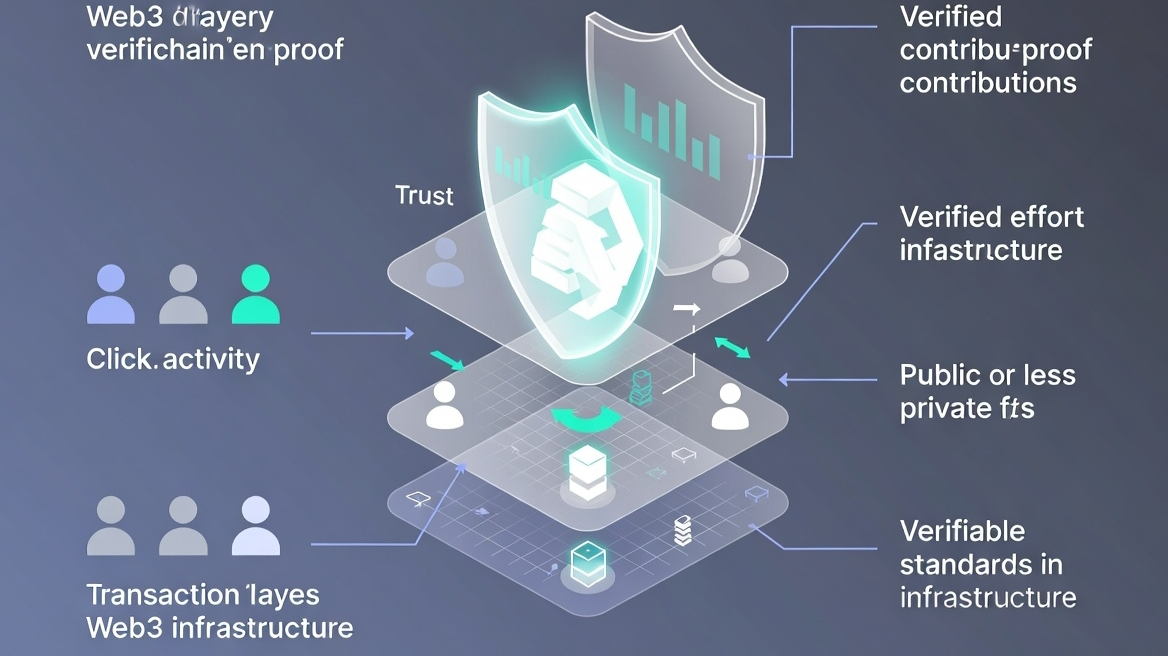
The underlying challenge is structural. Web3 infrastructure projects attract long-term capital when they solve a simple yet profound problem: how to verify what counts as legitimate contribution without revealing every underlying detail. Businesses, regulators, and developers rarely need full disclosure. What they need is assurance that effort, compliance, or participation is genuine. Without such verifiable standards, incentives often reward noise rather than meaningful activity.
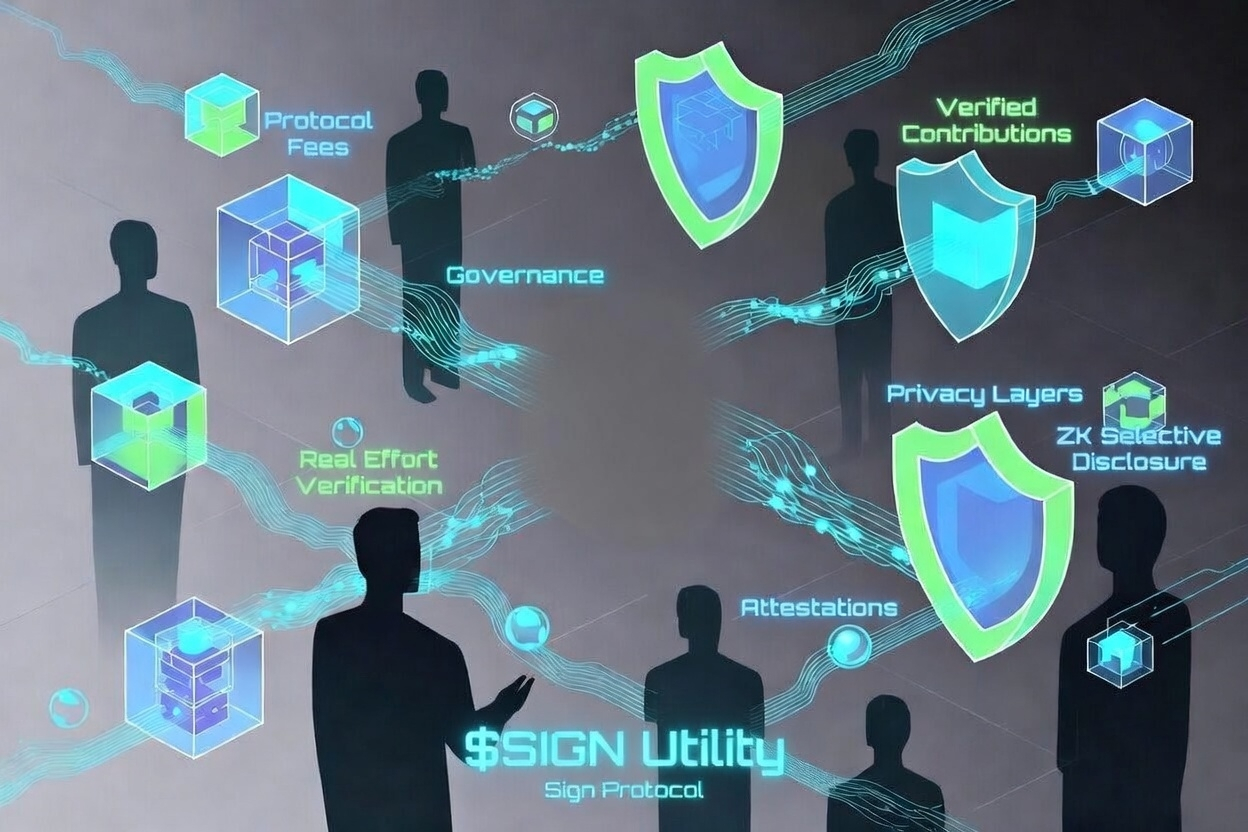
Sign official ($SIGN ) represents an attempt to bridge this gap. Its model relies on controlled disclosure and selective proof, allowing systems to verify truth while protecting sensitive data. Concepts like privacy layers, partner chains, zero-knowledge verification, and programmable privacy enable applications to decide which information is public and which remains private. In this environment, blockchain provides neutral verification, shared records, and auditability without forcing every interaction into a fully public archive.
The practical implications are significant. Institutions can maintain transparency without overexposing operations. Verification costs can fall, accountability can improve, and decentralized systems can integrate with regulated environments. Yet challenges remain. Adoption is gradual, developer complexity is real, regulatory frameworks are uncertain, and even well-designed systems can fail if they do not fit existing workflows.
Ultimately, the question of who decides what counts as contribution in Web3 is inseparable from how we verify it. If models like sign official succeed in creating verifiable standards that balance transparency and privacy, blockchain could move from narrative experimentation toward real infrastructure. But as with much in crypto, the outcome remains uncertain ,worth watching, but never guaranteed.#SignDigitalSovereignInfra @SignOfficial $SIGN