Digital identity on blockchain sounds impressive on paper. You hold a verifiable credential, an attestation that proves who you are or what you own. But here’s the rub: most of it stops there. Ownership exists, yet the real payoff plugging that identity straight into everyday transactions remains elusive. This gap between having proof on-chain and actually using it is where many projects falter. SIGN Token steps in quietly, focusing on making the bridge simple, functional, and built for the long haul rather than flashy headlines.
The problem is practical. Governments, businesses, and users can issue tamper-proof records easily enough these days. Yet turning those records into something actionable approving a loan, verifying residency for services, or settling a cross-border deal often requires clunky workarounds, multiple chains, or trusted middlemen. The friction kills momentum. SIGN’s approach cuts through it with an omni-chain attestation layer that keeps things straightforward. Credentials aren’t just stored; they’re designed to be queried and applied directly where it counts. It’s not revolutionary hype it’s infrastructure that feels refreshingly no-nonsense.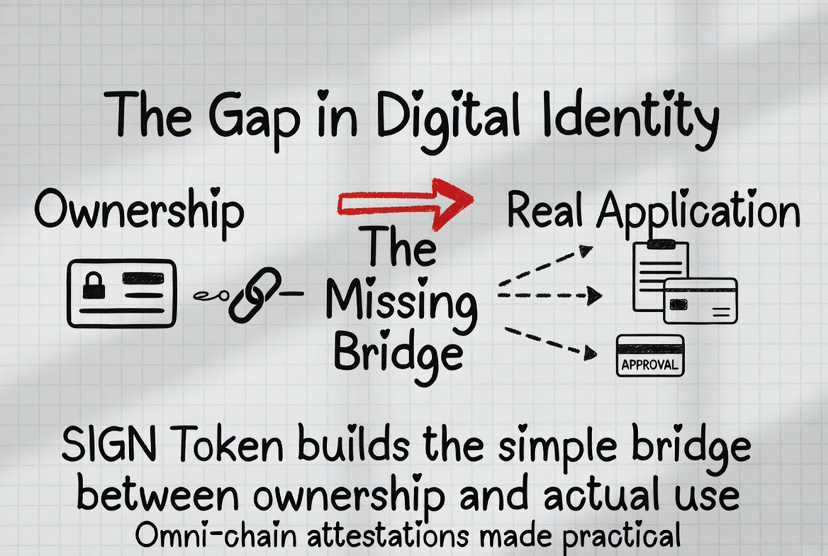
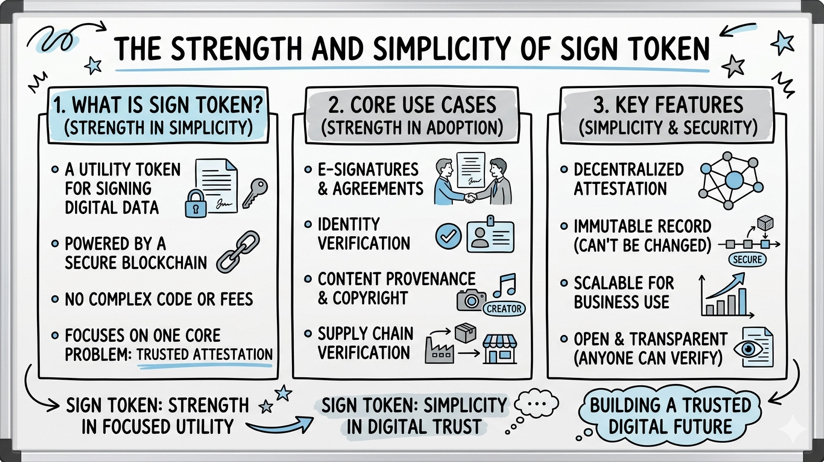
What gives SIGN real substance is how it prioritizes utility over speculation. The token powers attestations and programmable distributions at scale, turning abstract identity into something that actually moves value. In a space crowded with tokens chasing quick flips, this focus on bridging ownership to application stands out. It isn’t about promising moonshots; it’s about creating the quiet plumbing that lets digital identity work in the real economy.
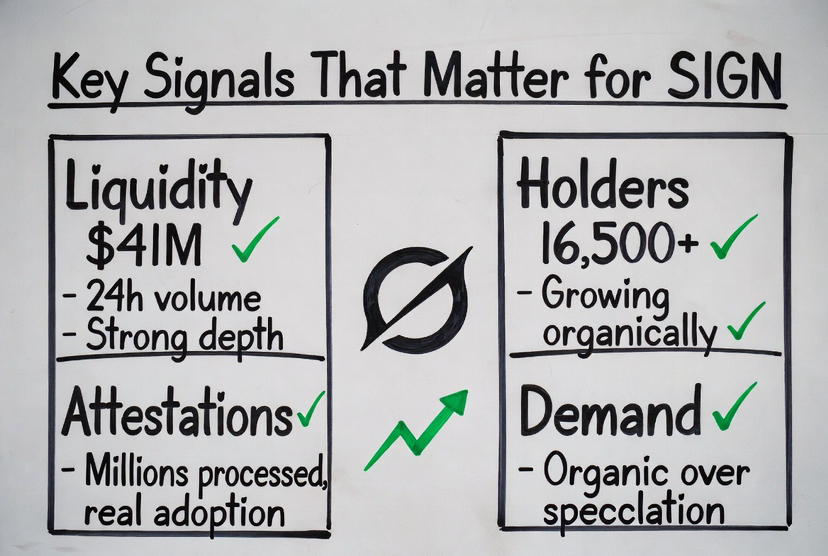
Market signals reinforce this grounded view. Liquidity has proven resilient, with 24-hour trading volumes frequently hitting levels that represent a healthy slice of the roughly $55 million market cap. That kind of depth matters it means participants can move in and out without wild slippage, which supports actual usage rather than just speculative swings. Thin spots exist during quieter periods, sure, and volatility can still sting, but the overall setup favors those betting on sustained interest instead of hype cycles.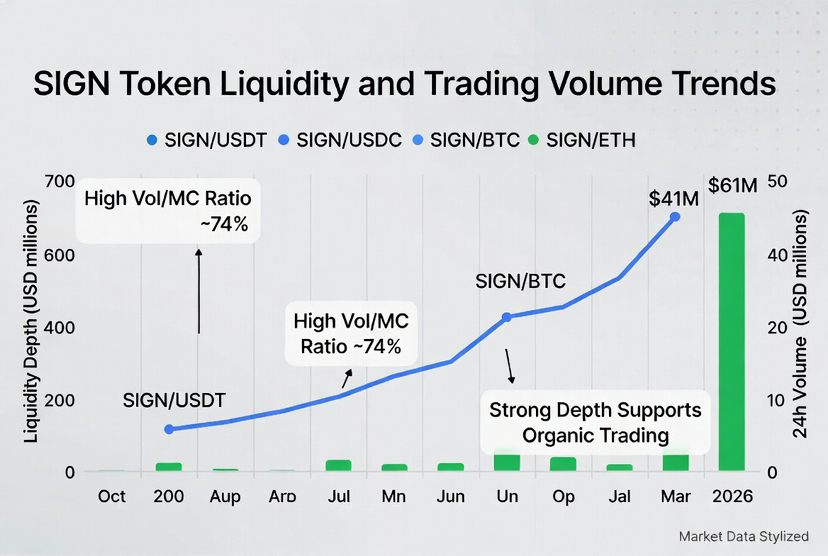
Holder distribution adds another layer of credibility. Around 16,500 unique wallets hold the token, and targeted incentives for self-custody have helped spread ownership beyond a handful of large players. This isn’t perfect decentralization overnight, but it signals intent: build a base that sticks around because the token has work to do, not because it’s riding a wave. Organic demand driven by actual need for attestations and distributions will ultimately decide its staying power. Speculation can juice prices short-term, but without real usage, tokens like this fade. SIGN’s track record of processing millions of attestations and billions in compliant distributions suggests the foundation is there.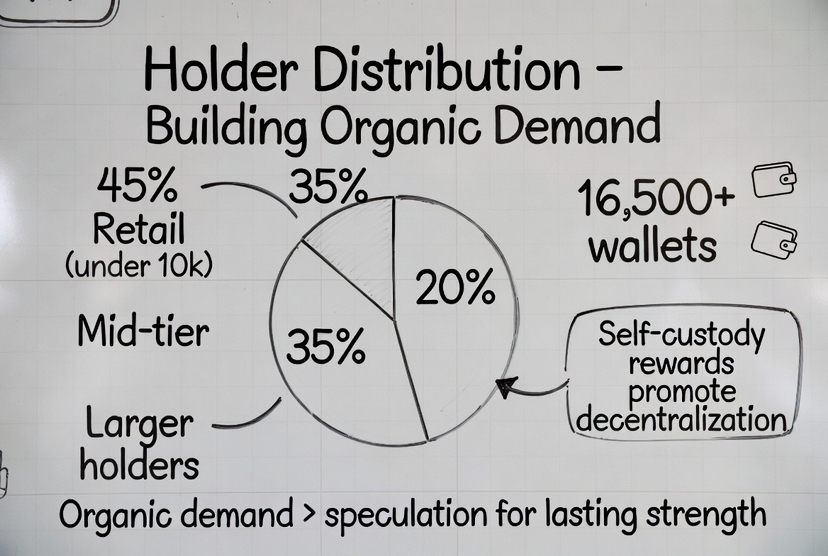
Critically, though, the test ahead is straightforward. High volume is promising, but is it mostly traders chasing momentum or users and institutions actually tapping the protocol? The circulating supply sits at about 1.64 billion out of a 10 billion max, leaving room for unlocks that could pressure prices if demand doesn’t keep pace. SIGN’s strength lies in its simplicity easy attestations, seamless verification, no unnecessary complexity but execution matters. If governments and enterprises start routing real identity and capital programs through it, the gap closes for good.
In the end, SIGN Token quietly demonstrates what thoughtful blockchain infrastructure can look like: strong enough to handle sovereign-grade needs, simple enough to actually get adopted. It doesn’t shout about revolutionizing everything. Instead, it focuses on the unglamorous but vital work of connecting ownership to application. Liquidity that holds, holders who stay engaged, and demand rooted in utility these are the signals that separate lasting projects from the rest. In a market often driven by noise, that’s worth paying attention to.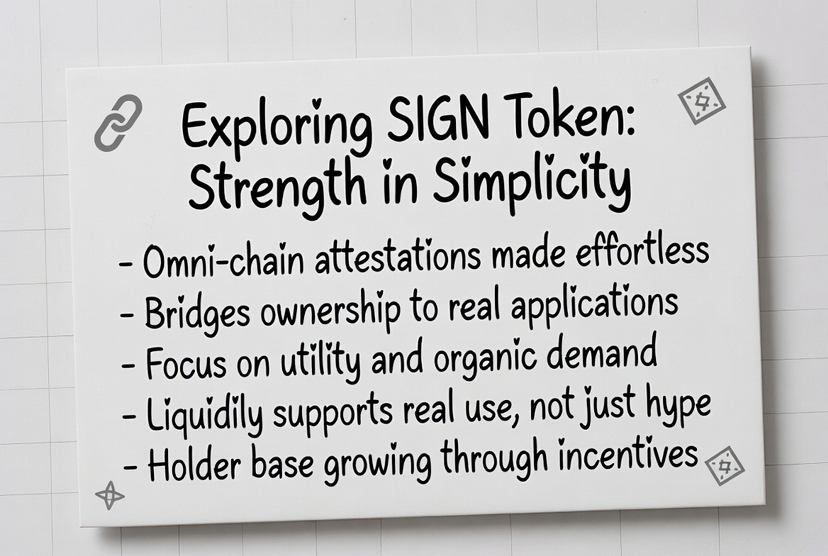
The broader relevance is clear. As digital systems mature, the ability to verify identity and move value without friction isn’t a nice-to-have it’s table stakes for everything from public services to global finance. SIGN’s model, with its emphasis on verifiable credentials that actually get used, points toward a more practical future. It won’t happen overnight, and skepticism is healthy in crypto. But if the market signals hold and organic demand builds, this could be one of the quieter successes that actually delivers on blockchain’s early promises.