
Senator Richard Blumenthal ratcheted up pressure on Binance on April 1, sending a follow‑up letter to co‑CEO Richard Teng that demands answers about apparent contradictions between the exchange’s Senate testimony and recent media investigations into Iran‑linked transactions. The New Haven Democrat warned that Binance may have provided “misrepresentations or misleading information to the Subcommittee and to the public,” and asked for the documents and records the company used to prepare its earlier responses. The letter was prompted by reporting from Fortune and The New York Times that traced roughly $1.7 billion in flows from Binance‑linked accounts to entities with ties to Iran — far exceeding the $110,000 figure Binance disclosed last year for what it described as direct transactions with four major Iranian exchanges. Blumenthal said that discrepancy, together with what he called partial or delayed production of materials to the Senate Permanent Subcommittee on Investigations (PSI), raised “further alarms about its candor and compliance with Congressional oversight.” What Blumenthal is asking for - Confirmation of whether any Binance accounts sent or received funds to/from a set of Iran‑linked wallets identified in the reporting, plus the wallet addresses. - A full year‑over‑year accounting of transactions between Binance and known Iranian exchanges, and a detailed explanation of how Binance arrived at the $110,000 figure — including whether transfers later linked to Iranian exchanges were counted. - Exact dates for when implicated accounts were opened, when they began moving funds to Iranian intermediaries, when those activities were reported to U.S. law enforcement, and when the accounts were suspended or removed — along with explanations for any delays between notification and action. Compliance and internal‑control questions Blumenthal pressed Binance on changes to internal controls, asking whether it has removed, weakened, or relaxed detection, screening, freezing, or reporting mechanisms since January 1, 2025 — specifically tools meant to spot illicit indirect transfers. He also asked whether Binance ever declined to investigate, suspend, or remove accounts tied to individuals inside Iran, including accounts using VPNs or so‑called “drop accounts” (KYC‑verified accounts that are bought, shared, or stolen). The senator probed personnel and reporting practices as well, seeking to know whether Binance disciplined compliance staff who raised concerns or shared information with law enforcement or external partners — a reference to reports that employees were dismissed for “unauthorized disclosure.” Allegations of delayed action Blumenthal criticized what he described as slow or inadequate responses to law enforcement warnings. In his letter he cites cases where Binance allegedly took two months to respond to warnings about suspected terrorist financing by entities such as Hexa Whale, two months to remove an implicated shell entity, and at least five months to remove Blessed Trust as a vendor after being warned about its role in suspected terrorist financing. He also said internal account tags such as “Don’t block. Internal accounts” appear to have shielded some accounts from enforcement instead of flagging them for scrutiny. Deadline and next steps Invoking Senate rules, Blumenthal gave Binance until April 14 to produce the requested records. The request heightens congressional scrutiny of the world’s largest crypto exchange and puts new focus on how exchanges detect, report, and remediate illicit flows — especially those tied to sanctioned jurisdictions. The PSI’s line of questioning and the media investigations underscore renewed regulatory and political pressure on crypto platforms to demonstrate robust compliance and transparent cooperation with oversight. Read more AI-generated news on: undefined/news

Artikel
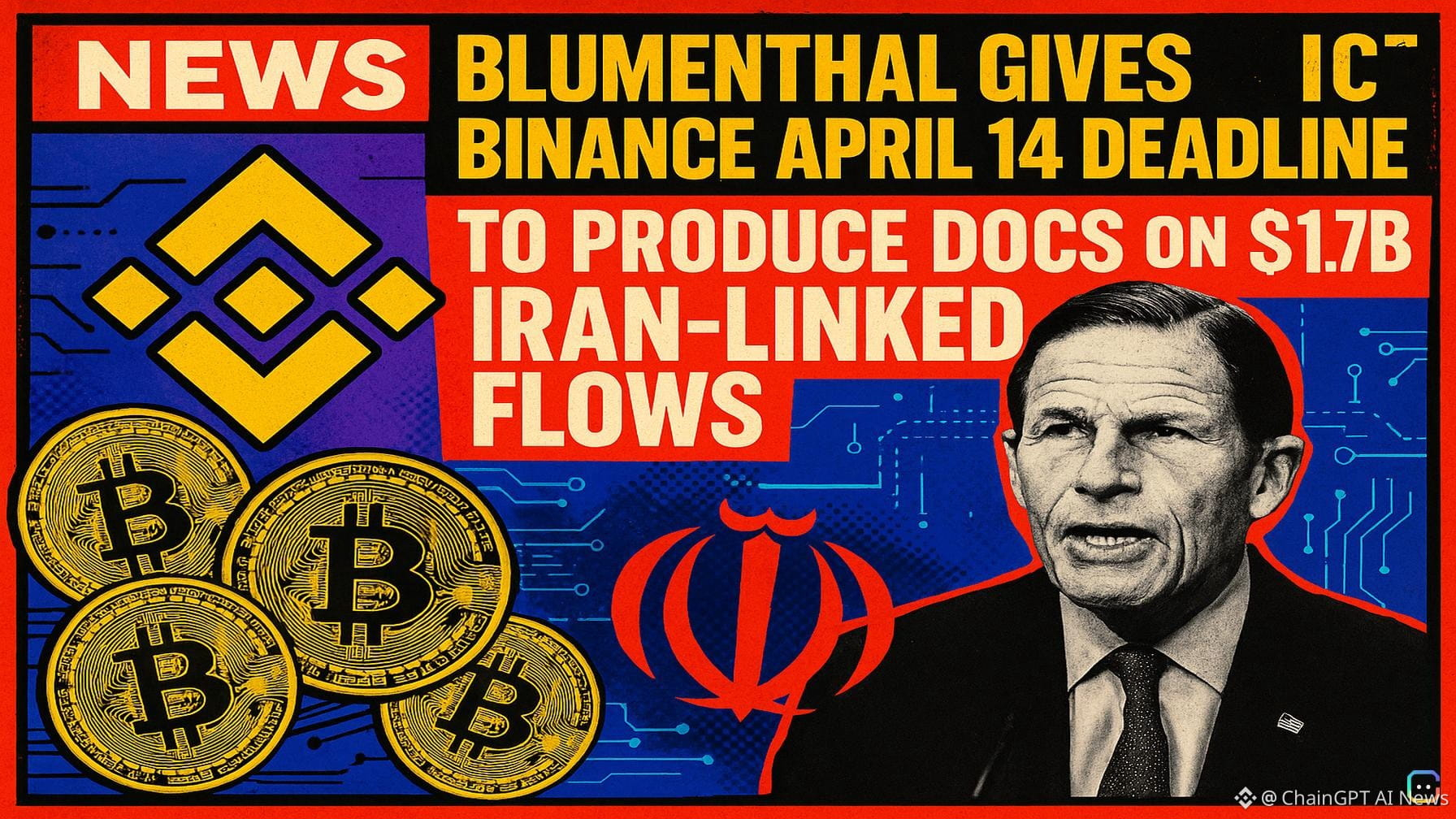
Blumenthal Gives Binance April 14 Deadline to Produce Docs on $1.7B Iran‑Linked Flows
Haftungsausschluss: Die hier bereitgestellten Informationen enthalten Meinungen Dritter und/oder gesponserte Inhalte und stellen keine Finanzberatung dar. Siehe AGB.