
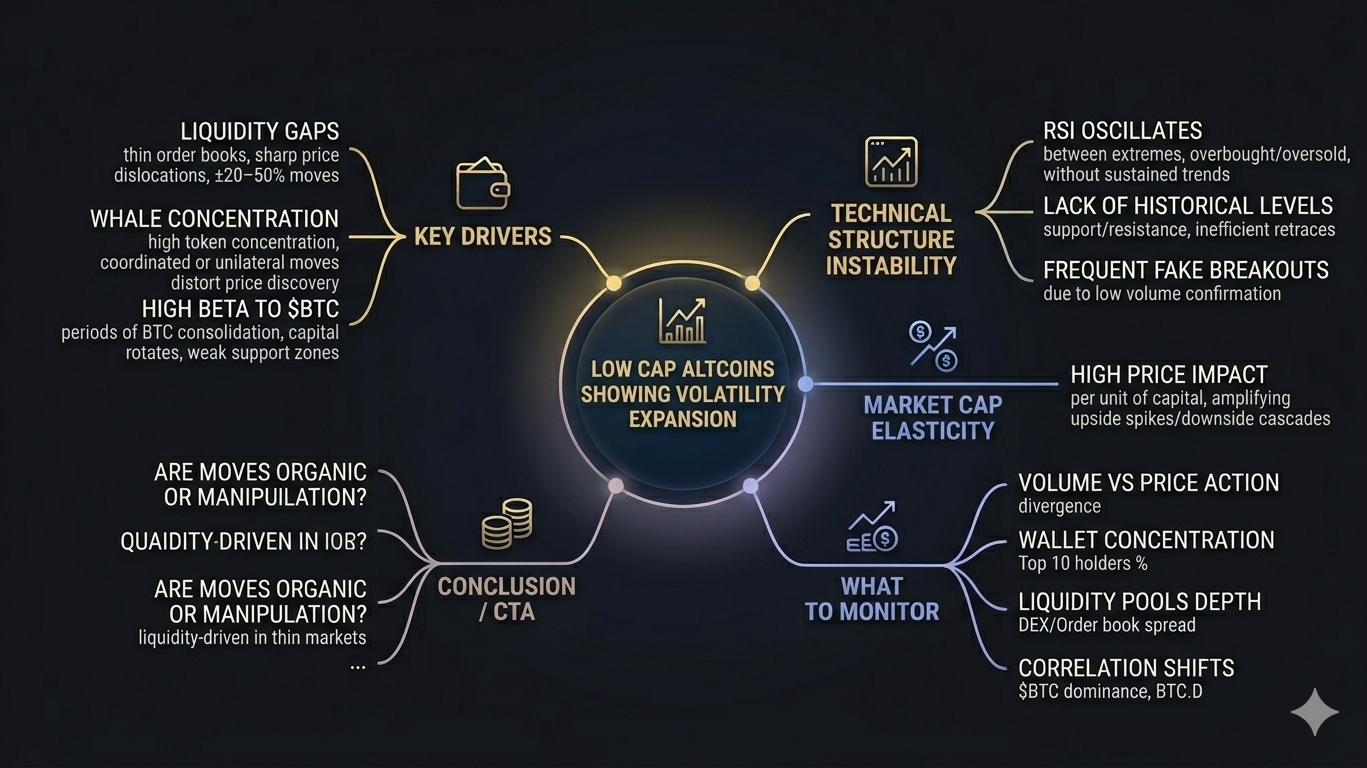
Volatility in low market cap altcoins is currently accelerating due to thin order books and fragmented liquidity, creating conditions for sharp price dislocations.
Key drivers behind this behavior:
Liquidity Voids:
Low-cap tokens typically lack depth across order books. Small inflows/outflows can trigger outsized moves (±20–50%) without significant capital deployment.Whale Concentration:
On-chain data often shows high token concentration in top wallets, enabling coordinated or unilateral moves that distort price discovery.High Beta to BTC:
In periods of BTC consolidation, capital rotates into higher-risk assets, increasing volatility. However, any downside move in Bitcoin tends to trigger overextended drawdowns in low caps due to weak support zones.Technical Structure Instability:
RSI frequently oscillates between extremes (overbought/oversold) without sustained trends
Lack of historical support/resistance levels leads to inefficient retraces
Frequent fake breakouts due to low volume confirmation
Market Cap Elasticity:
With smaller market caps, price impact per unit of capital is significantly higher, amplifying both upside spikes and downside cascades.
What to monitor:
Volume spikes vs. price action divergence
Wallet concentration metrics (Top 10 holders %)
Liquidity pools depth (DEX/Order book spread)
Correlation shifts with BTC dominance (BTC.D)
Are current low-cap altcoin moves a result of organic accumulation, or primarily liquidity-driven manipulation in thin markets?
#Altcoins #CryptoTrading #Volatility #OnChainAnalysis $BTC $ETH


