
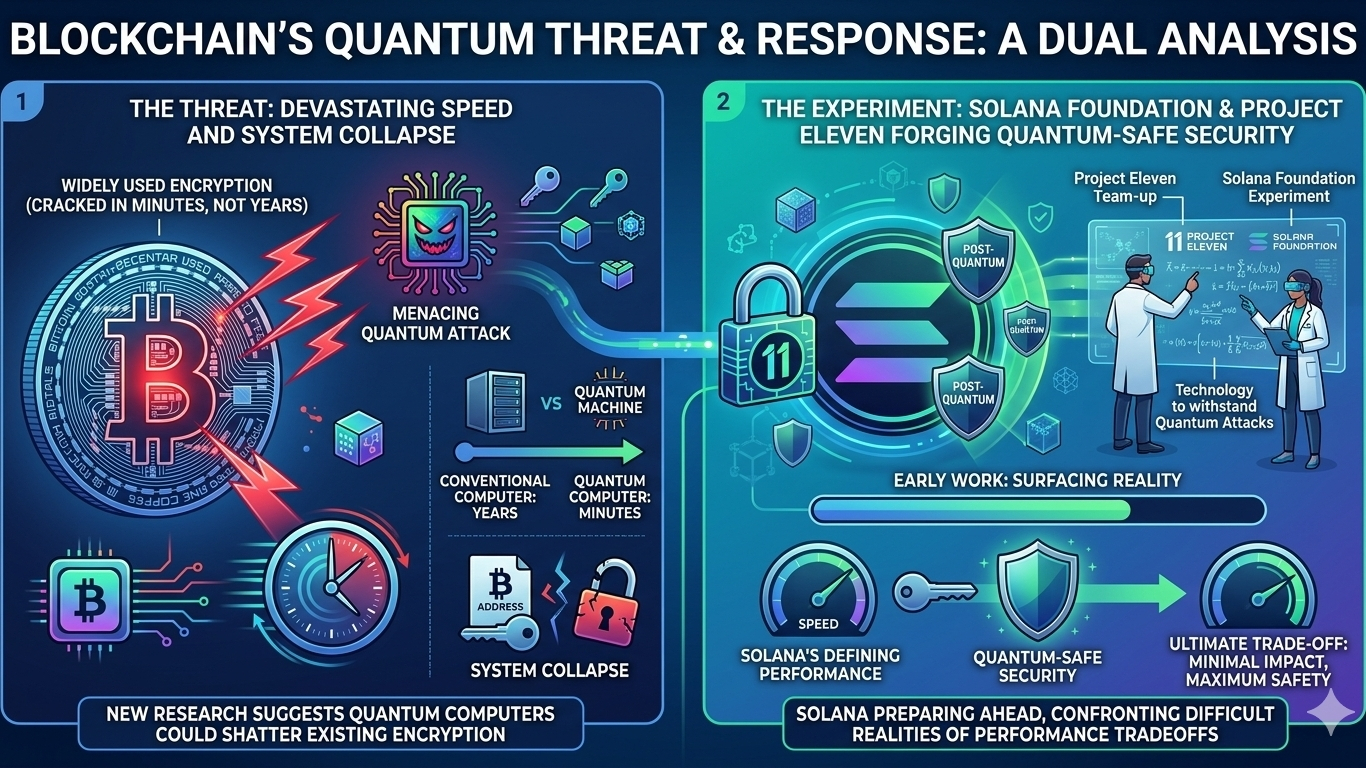
$SOL $BTC While Bitcoin developers scramble to find a solution and Ethereum prepares for 'Q-day,' Solana is trying to get ahead of that scenario.
By Margaux Nijkerk|Edited by Aoyon Ashraf
The Solana Foundation is working with Project Eleven to test quantum-resistant cryptography as concerns grow that future quantum computers could break current blockchain security.
Early tests show major tradeoffs: quantum-safe signatures are up to 40x larger and made the network roughly 90% slower, raising questions about scalability.
Discussions around post-quantum cryptography have intensified across the industry in recent weeks, especially after new research from Google and academic collaborators suggested that such systems could one day break widely used encryption, potentially cracking systems like Bitcoin’s in minutes rather than years.
While Bitcoin developers scramble to find a solution and Ethereum prepares for the event, Solana is trying to get ahead of that scenario.
Cryptography firm Project Eleven has teamed up with the Solana Foundation to experiment with post-quantum security, technology designed to withstand quantum attacks that could render today’s cryptography obsolete. The early work is already surfacing a difficult reality: making Solana quantum-safe may come at the expense of the performance that defines it
