
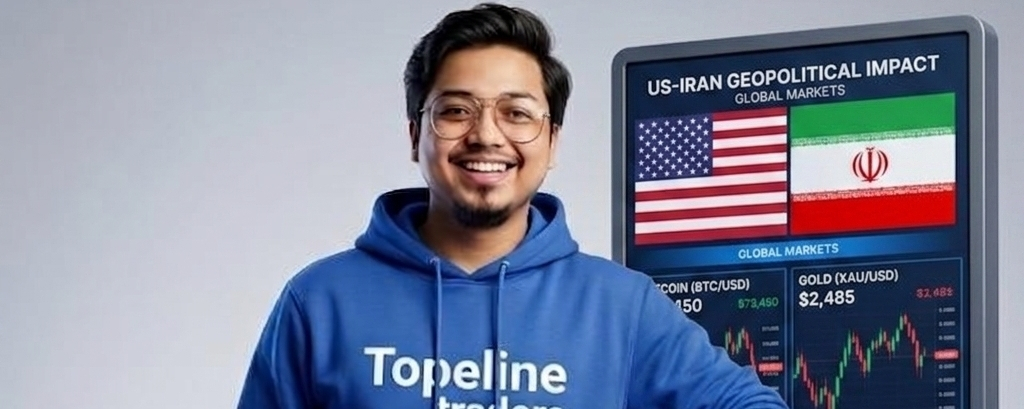
The global financial markets are currently breathing a sigh of relief as a temporary two-week ceasefire between the United States, Israel, and Iran holds steady. For crypto investors, these geopolitical shifts have become the primary driver of price action in April 2026.
The Current Landscape
Following a period of intense military friction that saw Bitcoin dip to the $63,000 range in late February, the recent de-escalation efforts in Islamabad have brought a sense of "cautious optimism" back to the desks.
Key highlights impacting the market:
The 14-Day Truce: The current ceasefire has led to a sharp drop in crude oil prices, which is historically favorable for risk assets like Bitcoin.
Market Liquidation: Recent stability triggered over $420M in short liquidations, pushing BTC back toward the $71,000 - $73,000 resistance zone.
The "Hormuz" Factor: Iran’s control over the Strait of Hormuz remains a critical watchpoint. Any permanent reopening or trade agreement could be the catalyst for BTC to test the $80,000 psychological barrier.
What This Means for Traders
Geopolitics and Crypto are now inseparable. While the "Fear and Greed Index" has moved from 'Fear' to 'Neutral' (around 49 points), the market remains sensitive.
Bullish Case: If the peace talks in Pakistan resume successfully and the ceasefire is extended, we could see a massive short squeeze as institutional confidence returns.
Bearish Case: Any breakdown in negotiations or renewed strikes in the region could send BTC back to retest the $62,000 support levels.
Final Thought: In times of high-stakes diplomacy, volatility is your only constant. Keep a close eye on the headlines coming out of the Middle East—they are currently more influential than any technical indicator.
#CrytoNews #Bitcoin #Geopolitics #BinanceSquare #US #Iran #Israel