
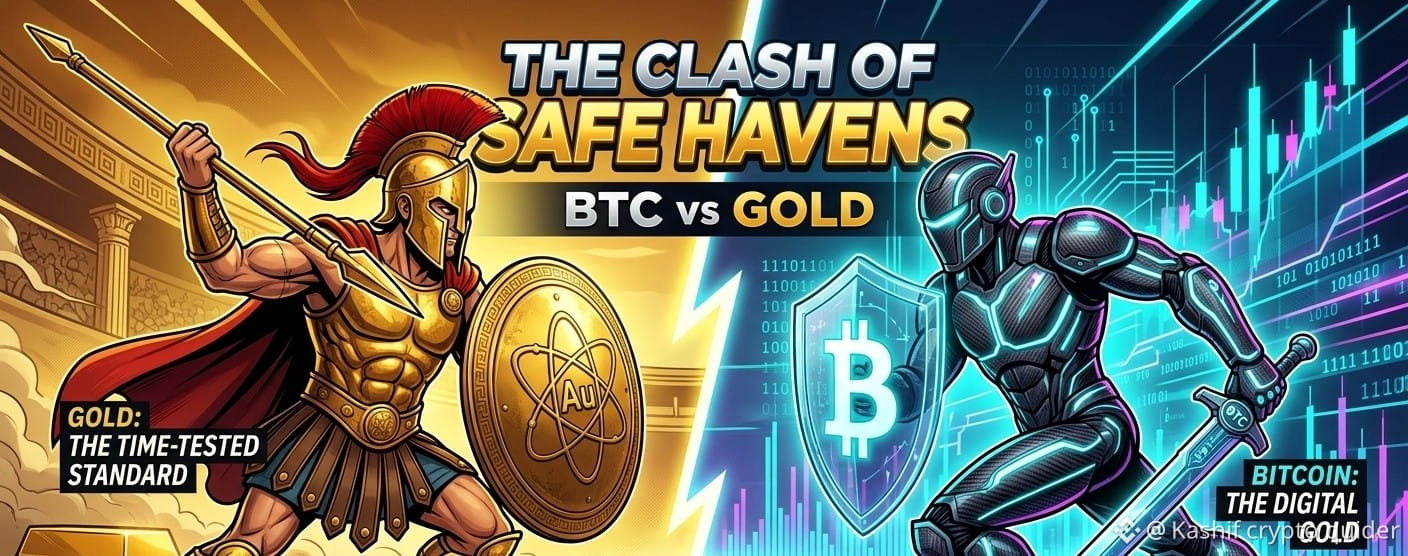
## $BTC BTC vs $XAU Gold: The Clash of Safe Havens
In the ever-evolving landscape of finance, investors are constantly seeking safe havens to protect their wealth during uncertain times. For centuries, gold has held the mantle of the ultimate store of value, a tangible asset that has weathered countless economic storms. However, the rise of Bitcoin (BTC) has introduced a new contender to the ring, a digital alternative that is challenging gold's dominance. This article delves into the classic debate: BTC vs Gold, exploring their characteristics, advantages, disadvantages, and potential roles in a diversified portfolio.
### Gold: The Time-Tested Standard
Gold has a long and storied history as a store of value and medium of exchange. Its physical scarcity, durability, and intrinsic value have made it a preferred asset for generations. Here are some of gold's key strengths:
1. **Physical Scarcity:** Gold is a finite resource, mined from the earth. This scarcity contributes to its long-term value.
2. **Durability:** Gold is resistant to corrosion and does not degrade over time.
3. **Universally Recognized:** Gold is accepted and valued worldwide, making it highly liquid.
4. **Historical Track Record:** Gold has proven its ability to preserve purchasing power over centuries, particularly during periods of high inflation and geopolitical instability.
**Disadvantages of Gold:**
1. **Storage and Security:** Physical gold requires secure storage, which can be costly and inconvenient.
2. **Transferability:** Transporting large amounts of gold can be difficult and expensive.
3. **Divisibility:** Gold is not easily divisible into small units for everyday transactions.
4. **Counterfeit Risk:** Fake gold can be difficult to detect without specialized equipment.
### Bitcoin: The Digital Gold
Bitcoin, often referred to as "digital gold," shares some characteristics with its physical counterpart but introduces unique advantages derived from its digital nature. Here are BTC's key strengths:
1. **Digital Scarcity:** Bitcoin has a hard cap of 21 million coins, creating a predictable and verifiable scarcity.
2. **Portability:** Bitcoin can be transferred across borders quickly and cheaply, regardless of amount.
3. **Divisibility:** Bitcoin can be divided into tiny fractions (Satoshis), making it suitable for transactions of any size.
4. **Decentralization:** Bitcoin operates on a decentralized blockchain network, meaning it is not controlled by any government or central bank.
5. **Transparency:** All Bitcoin transactions are recorded on a public ledger, providing unmatched transparency.
**Disadvantages of Bitcoin:**
1. **Volatility:** Bitcoin's price is notoriously volatile, making it a risky short-term investment.
2. **Regulatory Uncertainty:** The regulatory landscape for cryptocurrencies is still evolving, which can create uncertainty and impact its value.
3. **Security Risks:** While the blockchain is secure, individual holders are responsible for securing their private keys. If these keys are lost or stolen, the Bitcoin is gone forever.
4. **Technological Dependence:** Bitcoin relies on technology and internet connectivity.
### The Head-to-Head Comparison
| Feature | Gold | Bitcoin |
|---|---|---|
| **Physical/Digital** | Physical | Digital |
| **Scarcity** | Natural Scarcity | Programmatic Scarcity (21M cap) |
| **Durability** | High | Digital (depends on blockchain) |
| **Portability** | Low | High |
| **Divisibility** | Low | High |
| **Storage** | Costly & Inconvenient | Digital Wallet (requires security) |
| **Control** | Physical Possession | Decentralized Network |
| **Volatility** | Moderate | High |
| **History** | Thousands of Years | ~15 Years |
### Which is the Better Safe Haven?
The answer to this question depends on an investor's individual risk tolerance, investment horizon, and personal preferences.
**Gold** remains a solid choice for conservative investors who value stability and a proven track record. Its physical nature provides a sense of security that digital assets cannot. However, its lack of portability and divisibility can be a drawback in a rapidly digitizing world.
**Bitcoin** appeals to more risk-tolerant investors who see its potential as a high-growth asset and a hedge against fiat currency debasement. Its digital nature makes it highly portable and divisible, making it more suited for a globalized digital economy. However, its volatility and regulatory uncertainty can be significant drawbacks.
### Conclusion
The debate between BTC and Gold is not a matter of one being inherently better than the other. Both assets have distinct advantages and disadvantages. Gold is the time-tested standard, while Bitcoin is the digital challenger. A well-diversified portfolio may include both assets, as they offer different types of protection against economic and geopolitical risks. As the digital economy continues to evolve, it will be interesting to see how the roles of these two safe havens play out in the years to come. Ultimately, the best choice depends on each investor's unique circumstances and financial goals.
**Disclaimer:** This article does not constitute financial advice. Investors should do their own research before making any investment decisions. The cryptocurrency market is highly volatile and carries significant risk.