
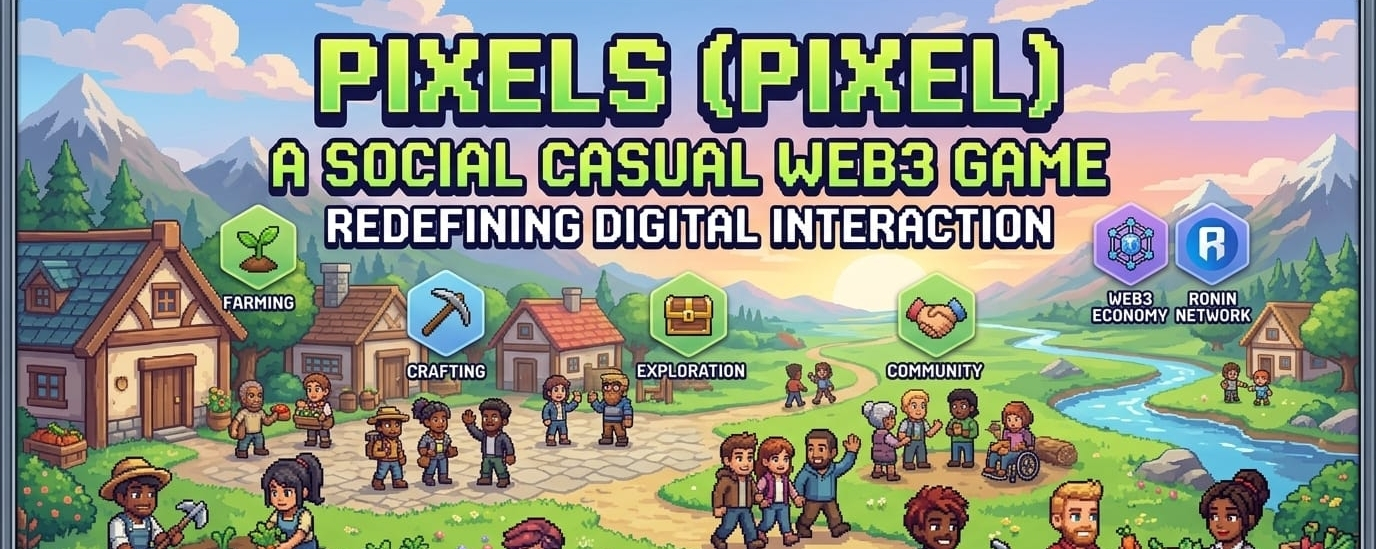
The world of gaming has been evolving rapidly, especially with the introduction of blockchain technology. While many Web3 games focus heavily on complex systems and token mechanics, Pixels (PIXEL) takes a different and refreshing path. It brings gaming back to what it should be at its core—fun, engaging, and social—while quietly integrating blockchain in a way that enhances the experience rather than overwhelming it.
Pixels is built on the Ronin Network, a blockchain designed specifically for gaming. This foundation allows the game to deliver a smooth, fast, and low-cost experience, which is something that has often been missing from earlier blockchain-based games. Instead of dealing with slow transactions or expensive fees, players can simply enjoy the game without constantly thinking about the technology behind it. This balance between performance and innovation is one of the reasons Pixels has gained attention in both gaming and crypto communities.
At first glance, Pixels presents itself as a charming pixel-art open world. The visuals are simple but appealing, creating a nostalgic feel that reminds many players of classic games. However, beneath this simplicity lies a surprisingly deep and interactive environment. Players are not just moving through a static world—they are actively shaping it through their actions.
One of the main activities in Pixels is farming. Players can plant crops, take care of them, and harvest resources over time. This process is intentionally designed to be relaxing rather than stressful. There are no harsh penalties or intense competition forcing players to rush. Instead, the game encourages a slower pace, allowing players to enjoy the process. Farming becomes more than just a mechanic; it becomes a routine that players can return to daily, building a sense of progression and ownership over time.
Exploration is another key part of the experience. The game world is open and filled with different areas, each offering unique resources and opportunities. Players are encouraged to move around, discover new locations, and interact with what they find. This sense of discovery keeps the gameplay fresh and prevents it from feeling repetitive. It also creates opportunities for interaction, as players often cross paths while exploring.
Creation plays a major role as well. As players gather resources, they can craft tools, items, and upgrades that help them progress further. This adds a layer of strategy and personalization. Each player can choose how they want to develop their character and their land, leading to a wide variety of playstyles. Some may focus heavily on farming, while others might prioritize crafting or trading.
What truly sets Pixels apart, however, is its social nature. Many games today include multiplayer features, but Pixels builds its entire experience around community interaction. Players are constantly engaging with one another, whether through trading resources, collaborating on tasks, or simply spending time together in the game world. This creates a living environment where the actions of players influence the overall experience.
The social aspect is not forced or artificial. It happens naturally as players pursue their own goals. For example, someone who has an abundance of crops might trade with another player who specializes in crafting tools. These interactions build connections over time, turning the game into more than just a solo experience. It becomes a shared space where relationships and cooperation matter.
Behind all of this lies blockchain technology, which gives players true ownership of certain in-game assets. Unlike traditional games where items exist only within the system controlled by developers, Pixels allows players to have more control over what they earn. This is where the PIXEL token comes into play. It serves as a key part of the game’s economy, enabling transactions, rewards, and participation in various activities.
The use of blockchain in Pixels is subtle but meaningful. Players who are not familiar with crypto can still enjoy the game without needing to understand every detail. At the same time, those who are interested in Web3 can take advantage of the deeper economic systems. This dual approach is important because it opens the door for a wider audience.
Another strength of Pixels is its accessibility. Many blockchain games require a significant upfront investment or a steep learning curve, which can discourage new players. Pixels avoids this by offering a low barrier to entry. Players can start playing easily and gradually explore more advanced features if they choose. This makes it appealing not only to experienced gamers and crypto enthusiasts but also to casual players who are simply looking for something enjoyable.
The Ronin Network plays a crucial role in supporting this accessibility. By handling transactions efficiently and keeping costs low, it ensures that players are not constantly interrupted by technical issues. This allows the game to feel more like a traditional online experience, which is important for long-term engagement.
As the game continues to grow, its potential becomes even more interesting. Pixels has the ability to expand its world, introduce new features, and deepen its gameplay systems. The community itself also plays a role in shaping the future of the game. Since interaction and collaboration are central to the experience, the direction of the game is influenced by how players choose to engage with it.
In many ways, Pixels represents a shift in how Web3 games are designed. Instead of focusing solely on earning or speculation, it emphasizes enjoyment, creativity, and connection. This approach makes it more sustainable and appealing in the long run. Players are more likely to stay engaged when they are having fun and building relationships, rather than just chasing rewards.
There is also a broader impact to consider. Games like Pixels demonstrate that blockchain technology can be integrated in a way that feels natural and beneficial. They challenge the perception that Web3 gaming is overly complex or purely financial. By showing that it can be simple and enjoyable, Pixels helps move the industry forward.
At its heart, Pixels is about creating a digital world where players feel comfortable spending time. It offers a balance between relaxation and progression, individuality and community, simplicity and depth. Whether someone is planting crops, exploring new areas, or trading with other players, they are contributing to a shared experience that continues to evolve.
As more players discover the game, its community will likely grow stronger, bringing new ideas and interactions into the world. This ongoing development is what keeps the experience dynamic and engaging. It is not just about what the game is today, but what it can become in the future.
Pixels (PIXEL) stands as a strong example of how Web3 gaming can be done right. It removes many of the barriers that have held the space back and replaces them with something more inviting. By focusing on gameplay first and technology second, it creates an experience that feels both modern and familiar.
In the end, Pixels is not just another blockchain game. It is a living, social environment where players can relax, create, and connect, all while being part of a growing digital ecosystem.