
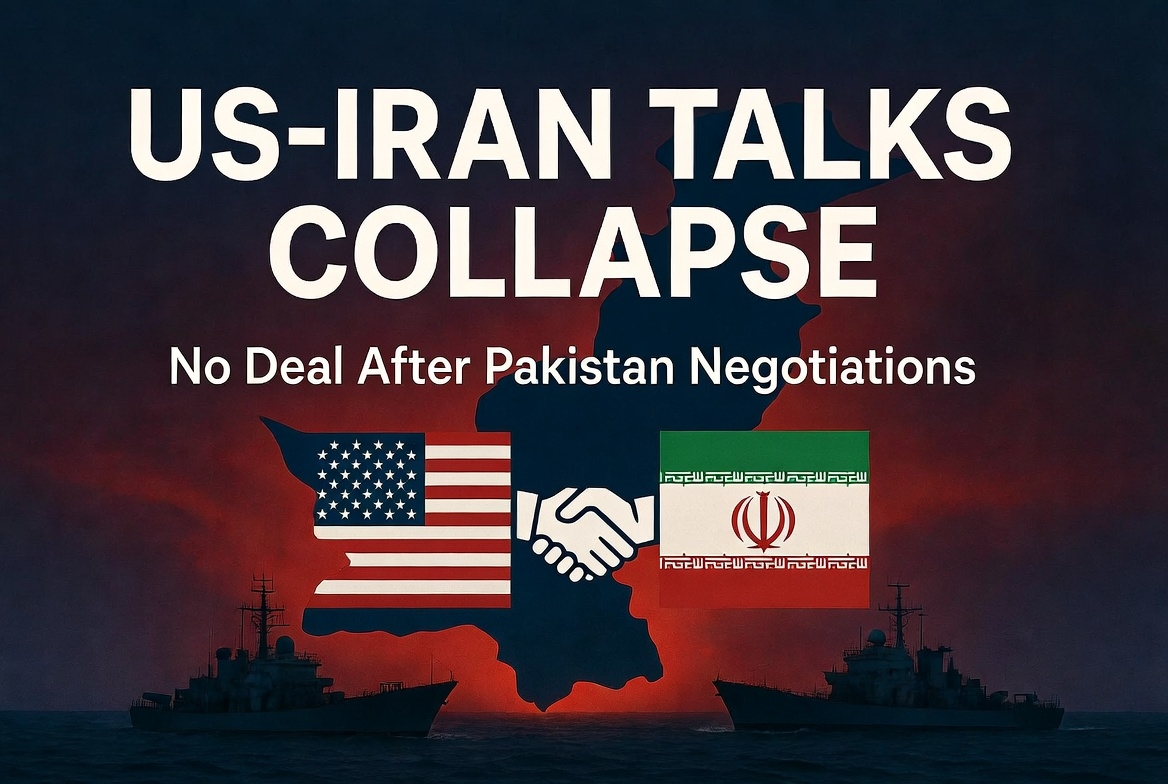
The much-anticipated US-Iran peace negotiations, hosted in Pakistan over the past week, have officially ended without any agreement. 🤝❌
Both sides engaged in intense discussions for several days, but deep differences prevented any breakthrough. Iran demanded immediate and full lifting of all US sanctions, recognition of its legitimate regional security interests, and no further restrictions on its nuclear program beyond the original JCPOA framework. 🇮🇷 On the other hand, the US insisted on verifiable limits to Iran’s nuclear activities, complete IAEA access, and an end to Tehran’s support for regional proxy groups. 🇺🇸
After repeatd deadlocks, the American delegation has returned home, while the Iranian side is still in Islamabad for internal consultations.
The failure is already causing ripple effects: oil prices have spiked, adding pressure on global energy markets. Countries heavily dependent on imported oil — such as Pakistan, India, and parts of Europe — are likely to feel the biggest economic strain in the coming weeks.
For Pakistan, the outcome is mixed. Hosting the talks brought some diplomatic visibility, but the lack of a deal means no major economic or strategic gains. In fact, the rising oil prices could hurt Pakistan’s economy more than it helped.
The situation remains fluid, and further rounds of talks are not ruled out.
⚠️ NOTE: Not financial advice
#USIranTalks #StraitOfHormuz #Geopolitics #MiddleEastCrisis #PakistanDiplomacy