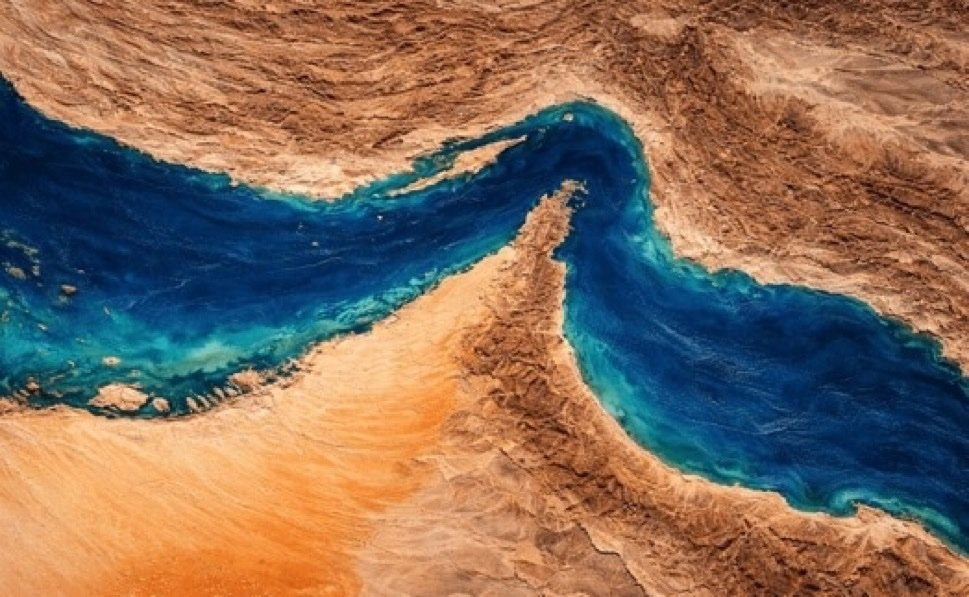
Why is there so much oil and gas in the Persian Gulf compared to the region?
Author, Scott L. Montgomery
Position, Professor of International Studies, University of Washington, USA
It is said that the countries of the Persian Gulf are both a blessing and a curse due to their vast oil and gas wealth.
Geological processes spanning millions of years have made this region a global energy hub and this is why the outbreak of any major conflict like the current war creates an energy crisis worldwide.
As a petroleum geologist who has studied this region, I am still amazed by the vastness of its hydrocarbon reserves.
For example, there are more than 30 oil-rich areas around the Persian Gulf, which are called ‘supergiants’, and each one contains at least five billion barrels of crude oil.
In addition, the wells in this region produce oil daily, which is two to five times more than the best wells in the North Sea or Russia.
Modern geological science has identified several factors in rocks that make a region rich in oil, including the ability to produce and preserve hydrocarbons.
All of these factors are present in their optimal or near-optimal levels in the Persian Gulf region. Due to its immense wealth and easy production, the Persian Gulf region is practically far ahead, with no rival for a long time.
A Brief History
Humans have known about the presence of hydrocarbons in this region since the floods formed the Persian Gulf at the end of the last ice age, about 14,000 to 6,000 years ago.