
A lot of Web3 games have one big problem. They talk about tokens, networks, and digital ownership so much that people forget they’re supposed to be games. Pixels doesn’t fall into that trap as much. That’s part of why it stands out.
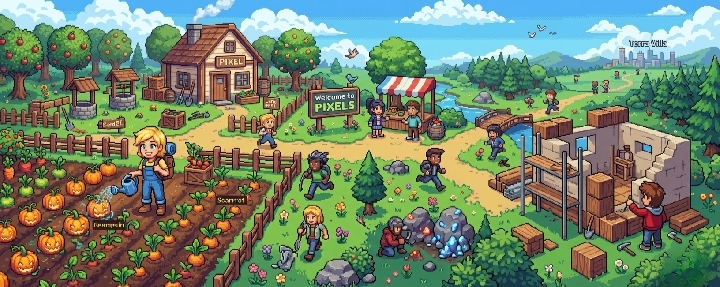
Pixels is a social casual game built on the Ronin Network. It takes a simple idea and makes it enjoyable: farming, exploring, building, and sharing a world with other players. It doesn’t try to overwhelm you right away. Instead, it gives you a colorful open world, a relaxed pace, and enough things to do that you keep wanting to come back.
What I like about Pixels is that it feels easy to get into. You don’t need to sit there and figure out a hundred complicated systems just to enjoy it. You can jump in, start farming, move around the world, collect things, and slowly understand how everything connects. That makes a big difference, especially for people who are curious about Web3 gaming but don’t want something that feels complicated or cold.
What kind of game is Pixels?
At its core, Pixels is built around farming, exploration, and creation. Those are the three things that shape the whole experience.
The farming side is probably the easiest part to understand. You plant crops, wait for them to grow, collect them, and use what you earn to keep progressing. It’s a simple loop, but it works because it feels satisfying. There’s something nice about checking in on your farm, collecting what you worked on, and seeing steady progress.
Exploration makes the game feel bigger than just a farming simulator. You’re not stuck in one corner doing the same task forever. You can move around, discover new places, gather materials, and find more opportunities in the world. That helps keep the game from feeling repetitive too quickly.
Then there’s creation. This part gives players a feeling that they’re actually building something, not just following instructions. Over time, your effort starts to feel personal. You’re not only clicking through tasks. You’re shaping your own progress in the world.
Why people find it easy to like
Pixels has a very relaxed style, and honestly, that works in its favor. Not every game needs to be intense or competitive all the time. Sometimes people just want to log in, do a few things, make progress, and enjoy themselves without pressure.
That’s one of the strongest things about this game. It feels casual without feeling empty.
You can spend a short amount of time in it and still feel like you got something done. Maybe you plant crops, collect resources, or explore a little. Even small sessions feel worthwhile. At the same time, the game also has enough going on to keep you around longer than you planned. That kind of balance is hard to get right.
It has that familiar feeling where you tell yourself you’ll only play for a few minutes, then one task leads to another. First you check your farm. Then you gather something. Then you explore a little. Then you notice another player nearby or find something useful, and suddenly you’ve spent much more time in the game than you expected.
The farming loop is simple, but that’s the point
Some people hear “farming game” and think it sounds boring. But farming systems stay popular for a reason. They give players a calm and steady sense of progress.
In Pixels, farming is not just there to fill space. It connects to the rest of the game. What you grow and collect helps with crafting, building, and moving forward. So even though the actions are simple, they still feel meaningful.
That slower pace is also part of the game’s charm. It gives you room to breathe. You don’t feel rushed every second, and that makes the experience more comfortable. In a time when a lot of games seem desperate to keep your attention with nonstop noise, Pixels feels surprisingly calm.
And sometimes calm is exactly what people want.
The social side makes the world feel alive
Pixels is more enjoyable because it’s not just about doing everything alone. It’s a social game, and that changes the mood of the whole world.
When other players are moving around the same space, the game feels more alive. You see people farming, exploring, gathering materials, and doing their own thing. Even if you’re focused on your own progress, the shared world adds energy to everything.
That matters more than it sounds. A lot of games have good systems but still feel empty. Pixels benefits from having other people around because it turns the world into a place instead of just a map. It feels more active, more lived in, and more real.
Small moments can make a difference too. Seeing how others play, crossing paths while exploring, or just noticing that the world is busy can make the experience much more enjoyable. It gives the game a community feeling, even during ordinary moments.
The Web3 part doesn’t completely take over
This is where Pixels feels smarter than many other blockchain games.
A lot of Web3 titles focus so heavily on the tech side that they forget the average player just wants a good game. People don’t usually stay because of fancy terms. They stay because the experience feels fun, rewarding, and worth returning to.
Pixels seems to understand that. It doesn’t throw the whole identity of the game onto the blockchain angle. Instead, it lets the gameplay speak first. That makes it much easier for normal players to give it a chance.
That doesn’t mean the Web3 side is unimportant. It’s still part of the game’s identity. But it feels more like a layer behind the experience rather than the only reason the game exists. That’s a much better approach.
For many people, that makes Pixels feel more welcoming. You don’t need to be deeply involved in crypto culture to enjoy farming, collecting resources, and exploring a shared world.
Why Ronin fits this game well
Pixels runs on the Ronin Network, which has become well known in blockchain gaming. That matters because the network behind a game affects how smooth and accessible the experience feels.
For a casual social game like Pixels, players don’t want technical frustration getting in the way. They want something that feels simple to jump into and easy to stick with. A game like this needs the background system to support the experience, not distract from it.
Most players probably won’t spend much time thinking about the network itself, and that’s actually a good thing. Usually, when the tech works well, people barely notice it. They just enjoy the game.
The art style gives it a lot of personality
The pixel art in Pixels is one of the first things people notice, and it helps the game a lot.
The world feels colorful, warm, and friendly. It doesn’t try to look ultra realistic, and that’s actually part of the charm. The simple visual style makes the game feel more approachable. It also suits the relaxed nature of the gameplay.
There’s something about pixel art that can make a game feel more inviting. Maybe it’s the nostalgia. Maybe it’s the simplicity. Either way, when it’s done well, it gives a world character.
In Pixels, the visuals help turn ordinary tasks into something more enjoyable. Walking around, checking crops, and exploring the map all feel a little more pleasant because the game has a soft and recognizable style. It’s not just about looking nice. It’s about creating a mood that people want to spend time in.
Exploration helps keep things fresh
If Pixels were only about farming, it might start to feel limited after a while. That’s why exploration matters so much.
The open world gives players reasons to move around, discover new places, and gather different kinds of resources. It breaks up the routine and adds variety to the experience. Instead of doing the same actions in the same space over and over, you get a sense that there’s always something else to check out.
That feeling of movement is important. It keeps the game from shrinking into a repetitive loop too quickly. Exploration adds curiosity, and curiosity is what keeps many players engaged.
Even simple discovery can make a big difference in a game like this. When the world feels open, the gameplay feels more alive.
Creation gives the game a personal touch
One thing that helps Pixels feel more rewarding is the sense that your progress belongs to you.
When players can build, improve, and shape their own part of the world, the game becomes more personal. You stop feeling like someone who is only following a set of tasks. Instead, you start feeling connected to what you’re building.
That kind of connection matters. It makes the work you put in feel more valuable. Farming, gathering, and crafting become more meaningful when they help you create something you care about.
This is one of the reasons people often stay with games like Pixels longer than expected. The systems may be simple, but the feeling of ownership grows over time.
Why Pixels gets so much attention
Pixels gets attention because it combines things that already work well. It has the comfort of a farming game, the freedom of exploration, the fun of a shared online world, and the extra interest that comes from being part of the Web3 space.
That mix gives it broad appeal.
Some people are drawn to the cozy gameplay. Some are interested in blockchain gaming and want something more approachable. Others just want a casual online game that doesn’t feel stressful. Pixels manages to meet all of those groups somewhere in the middle.
That’s not easy to do. A lot of games end up feeling too narrow. Pixels feels more open, and that’s a big part of why people keep talking about it.
It understands that not every game has to feel like work
Maybe the best thing about Pixels is that it seems to understand something very simple: people enjoy games that are pleasant to play.
That sounds obvious, but a lot of games forget it. They turn everything into pressure, speed, competition, or endless grind. Pixels goes in a softer direction. It gives players goals and progress, but it still leaves room for comfort.
That makes it easier to return to. You don’t have to prepare yourself for it. You can just open the game, spend some time in the world, and enjoy the routine.
There’s real value in that kind of design. Games don’t always need to be loud to be memorable. Sometimes they just need to feel good to play.
Final thoughts
Pixels stands out because it feels like a game people can genuinely enjoy, not just a project built around Web3 ideas. It offers farming, exploration, creation, and social interaction in a way that feels simple, inviting, and easy to understand.
Its world has charm. Its pace feels relaxed. Its systems are approachable. And most importantly, it gives players a reason to care about the game itself.
That’s what makes it work.
Pixels may be part of the blockchain gaming space, but the reason it connects with people is more basic than that. It’s enjoyable. It feels alive. And it gives players a world that’s comfortable to come back to.
That’s something a lot of games aim for.
Not all of them get there.