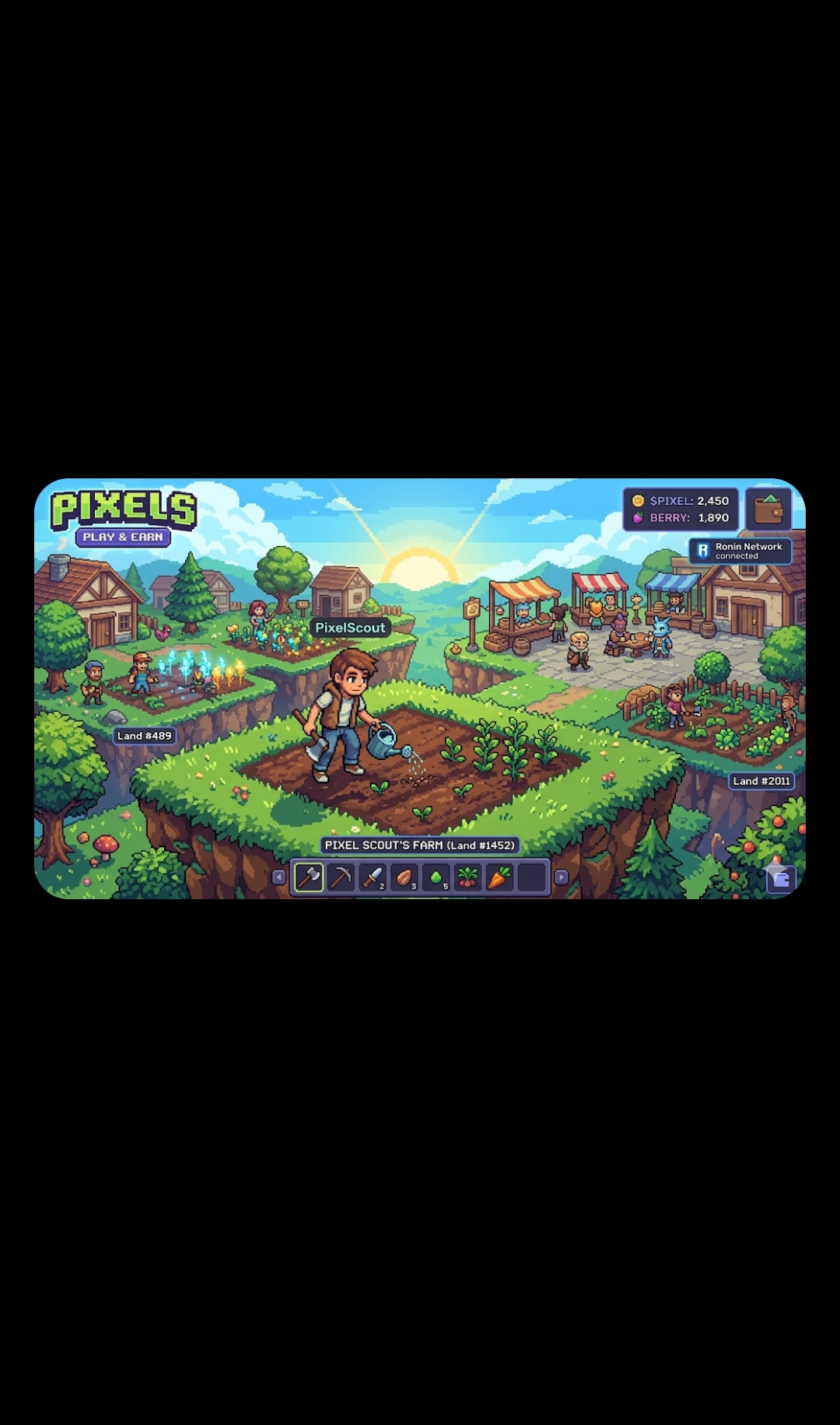
I’ll be honest—I almost skipped Pixels… and that would’ve been a mistake.
You know that feeling when you’ve seen one too many “next big Web3 game” posts and your brain just checks out?
That was me.
Every week it’s the same cycle—new farming game, new metaverse, new play-to-earn promise. Different branding, same expectations. So when Pixels kept popping up, I didn’t rush in. I assumed I already knew how it would go.
Turns out… I didn’t.
Not in some dramatic, life-changing way. Just quietly wrong.
A Game That Doesn’t Try Too Hard
The first thing that stood out?
Pixels doesn’t overwhelm you.
No complicated onboarding. No instant “connect your wallet” pressure. You just enter the world and exist.
Walk around. Plant something. Explore.
It reminded me of old browser games you’d open just to pass time—not to optimize profits. And honestly, that feeling hits harder than any flashy feature.
That’s where Pixels wins its first battle.
It doesn’t feel like it’s trying to impress you.
Web3 in the Background (For Once)
Underneath the simplicity, there’s a full Web3 system running.
Pixels is built on the Ronin Network, but the interesting part is how invisible it feels at the start.
You don’t need to understand wallets, gas fees, or tokens to enjoy the game.
And then slowly, it clicks:
“Oh… this item has value.”
“Oh… people are trading this.”
“Oh… there’s an economy here.”
It unfolds naturally instead of hitting you all at once—and that’s rare.
Utility That Actually Feels Like Gameplay
“Utility” is one of the most overused words in crypto.
Half the time, it just means hold and hope.
Pixels does something better.
Your actions create value.
You farm → crops feed crafting → crafting creates items → items can be used or sold.
At some point, you stop following instructions and start making decisions: What should I grow? What will be useful later?
That shift—from forced mechanics to natural thinking—is where the system starts to feel real.
This isn’t just token utility.
It’s game utility.
Free-to-Play… But Not Equal
I went in expecting the usual trap: free entry, limited progress.
Pixels surprised me.
You can genuinely play without spending money. You can explore, farm, and understand the game before committing anything.
But let’s be honest—it’s not perfectly balanced.
Players with land and assets have clear advantages. If you want efficiency or better earning potential, ownership matters.
Still, the free-to-play experience isn’t pointless—and that alone makes a difference.
Play-and-Earn, Not Play-to-Earn
Yes, you can earn in Pixels.
But it’s not consistent.
Some days feel rewarding. Others feel slow. A lot depends on player activity and the in-game market.
That’s why it makes more sense to call it play-and-earn.
The opportunity is there—but it’s not stable income.
If you come in expecting guaranteed returns, you’ll probably leave disappointed.
NFTs That Actually Matter
I used to be skeptical about NFTs in games.
Most feel like overpriced extras.
In Pixels, they actually affect gameplay.
Land ownership changes how you farm, how efficient you are, and how you participate in the economy.
That said, it creates a gap.
Players with better assets move faster. It’s not impossible to compete without them—but you’ll feel the difference.
Whether that balance holds long-term… is still a question.
A World That Feels Alive
One thing I didn’t expect to care about: other players.
But Pixels makes it feel natural.
You see people moving around. You visit different lands. You notice how others play.
There’s no forced interaction—it just happens.
And somehow, that makes the world feel more alive than most Web3 games.
The Catch: Repetition
As enjoyable as it is, Pixels isn’t endlessly engaging.
The core loop—farming, crafting, repeating—can get repetitive over time.
There are moments where you’re playing out of habit, not interest.
That’s where the game needs to grow: More variety. More depth. More layers.
Right now, its simplicity is both its strength… and its limit.
The Reality of Web3
Even if Pixels gets everything right, it’s still part of Web3.
And Web3 is unpredictable.
Token values change. Player interest shifts. Markets move fast.
Pixels isn’t immune to that.
So while the game feels grounded, the ecosystem around it is always changing.
Why I Keep Coming Back
I don’t grind Pixels for hours.
But I keep returning.
Sometimes just to check in. Sometimes to plan. Sometimes just to wander.
It’s not intense. It’s not demanding.
It’s just easy to come back to.
And that might be its biggest strength.
Final Thoughts
Pixels isn’t perfect.
It’s not revolutionary.
But it’s one of the more honest attempts at blending gaming with Web3.
It doesn’t overpromise.
It respects your time.
And it lets you choose how deep you want to go.
If you’re chasing big earnings, this probably isn’t it.
But if you want a chill game that happens to have an economy attaI’ll be honest—I almost skipped Pixels… and that would’ve been a mistake.
You know that feeling when you’ve seen one too many “next big Web3 game” posts and your brain just checks out?
That was me.
Every week it’s the same cycle—new farming game, new metaverse, new play-to-earn promise. Different branding, same expectations. So when Pixels kept popping up, I didn’t rush in. I assumed I already knew how it would go.
Turns out… I didn’t.
Not in some dramatic, life-changing way. Just quietly wrong.
A Game That Doesn’t Try Too Hard
The first thing that stood out?
Pixels doesn’t overwhelm you.
No complicated onboarding. No instant “connect your wallet” pressure. You just enter the world and exist.
Walk around. Plant something. Explore.
It reminded me of old browser games you’d open just to pass time—not to optimize profits. And honestly, that feeling hits harder than any flashy feature.
That’s where Pixels wins its first battle.
It doesn’t feel like it’s trying to impress you.
Web3 in the Background (For Once)
Underneath the simplicity, there’s a full Web3 system running.
Pixels is built on the Ronin Network, but the interesting part is how invisible it feels at the start.
You don’t need to understand wallets, gas fees, or tokens to enjoy the game.
And then slowly, it clicks:
“Oh… this item has value.”
“Oh… people are trading this.”
“Oh… there’s an economy here.”
It unfolds naturally instead of hitting you all at once—and that’s rare.
Utility That Actually Feels Like Gameplay
“Utility” is one of the most overused words in crypto.
Half the time, it just means hold and hope.
Pixels does something better.
Your actions create value.
You farm → crops feed crafting → crafting creates items → items can be used or sold.
At some point, you stop following instructions and start making decisions: What should I grow? What will be useful later?
That shift—from forced mechanics to natural thinking—is where the system starts to feel real.
This isn’t just token utility.
It’s game utility.
Free-to-Play… But Not Equal
I went in expecting the usual trap: free entry, limited progress.
Pixels surprised me.
You can genuinely play without spending money. You can explore, farm, and understand the game before committing anything.
But let’s be honest—it’s not perfectly balanced.
Players with land and assets have clear advantages. If you want efficiency or better earning potential, ownership matters.
Still, the free-to-play experience isn’t pointless—and that alone makes a difference.
Play-and-Earn, Not Play-to-Earn
Yes, you can earn in Pixels.
But it’s not consistent.
Some days feel rewarding. Others feel slow. A lot depends on player activity and the in-game market.
That’s why it makes more sense to call it play-and-earn.
The opportunity is there—but it’s not stable income.
If you come in expecting guaranteed returns, you’ll probably leave disappointed.
NFTs That Actually Matter
I used to be skeptical about NFTs in games.
Most feel like overpriced extras.
In Pixels, they actually affect gameplay.
Land ownership changes how you farm, how efficient you are, and how you participate in the economy.
That said, it creates a gap.
Players with better assets move faster. It’s not impossible to compete without them—but you’ll feel the difference.
Whether that balance holds long-term… is still a question.
A World That Feels Alive
One thing I didn’t expect to care about: other players.
But Pixels makes it feel natural.
You see people moving around. You visit different lands. You notice how others play.
There’s no forced interaction—it just happens.
And somehow, that makes the world feel more alive than most Web3 games.
The Catch: Repetition
As enjoyable as it is, Pixels isn’t endlessly engaging.
The core loop—farming, crafting, repeating—can get repetitive over time.
There are moments where you’re playing out of habit, not interest.
That’s where the game needs to grow: More variety. More depth. More layers.
Right now, its simplicity is both its strength… and its limit.
The Reality of Web3
Even if Pixels gets everything right, it’s still part of Web3.
And Web3 is unpredictable.
Token values change. Player interest shifts. Markets move fast.
Pixels isn’t immune to that.
So while the game feels grounded, the ecosystem around it is always changing.
Why I Keep Coming Back
I don’t grind Pixels for hours.
But I keep returning.
Sometimes just to check in. Sometimes to plan. Sometimes just to wander.
It’s not intense. It’s not demanding.
It’s just easy to come back to.
And that might be its biggest strength.
Final Thoughts
Pixels isn’t perfect.
It’s not revolutionary.
But it’s one of the more honest attempts at blending gaming with Web3.
It doesn’t overpromise.
It respects your time.
And it lets you choose how deep you want to go.
If you’re chasing big earnings, this probably isn’t it.
But if you want a chill game that happens to have an economy attached to it…
You might enjoy it more than you expect.
I almost skipped it.
Glad I didn’t.ched to it…
You might enjoy it more than you expect.
I almost skipped it.