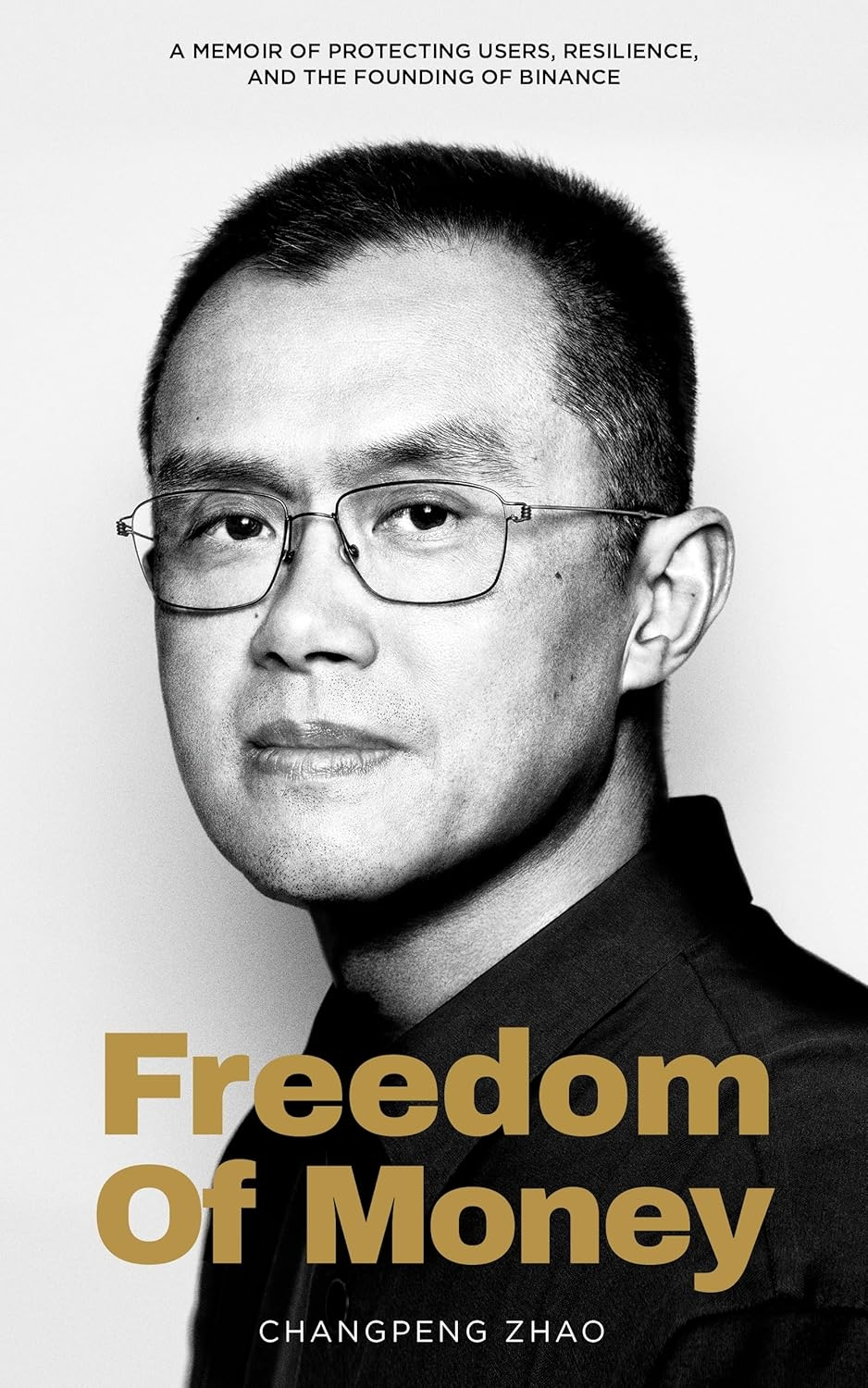
There’s a tendency to read Freedom of Money as just another founder story. Another success, another timeline, another “how it all started.” But that would be missing the entire point. This book is not about a company, and it’s not even just about crypto. It’s about Changpeng Zhao, the decisions he made when nothing was guaranteed, and how those decisions ended up shaping an entire financial era.
What makes CZ’s story different is how unpolished it is. No dramatic exaggeration, no attempt to make things look smoother than they were. He walks you through uncertainty the way it actually feels, messy, fast, and unforgiving. Before Binance became what it is today, it was just an idea moving inside an industry that most people didn’t believe in. Crypto at the time wasn’t “the future.” It was dismissed, misunderstood, and often attacked. And yet, CZ didn’t wait for validation. He moved anyway.
That’s where the real shift begins. Not in the technology, but in the mindset. While others were trying to make crypto fit into traditional systems, CZ approached it differently. He didn’t try to adjust to the system, he built around the user. Accessibility became a priority. Speed became a standard. And suddenly, finance started feeling less like a closed system and more like something people could actually enter.
Reading this, you realize that Binance didn’t just grow fast. It grew with intention. Every move, every expansion, every decision carried weight. It wasn’t about being the biggest for the sake of it. It was about building something that worked at scale, in an environment that was constantly shifting. And that’s something most people underestimate. It’s easy to build when things are stable. It’s different when you’re building while everything is moving under your feet.
The book also doesn’t ignore the pressure that came with that growth. If anything, it highlights it. User protection, for example, isn’t treated as a feature. It’s treated as a responsibility that kept evolving. As millions of people started relying on Binance, the stakes changed. One decision could impact millions. One mistake could break trust instantly. And in an industry where trust is already fragile, that responsibility becomes part of the foundation, not an addition.
Then comes resilience, and this is where CZ’s personality becomes impossible to ignore. Market crashes, regulatory challenges, constant scrutiny, these weren’t side events. They were part of the journey. But what stands out is how they were handled. Not with hesitation, not with panic, but with adaptation. There’s a level of calm decision-making throughout the story that shows you this wasn’t someone reacting to the market. This was someone who understood it deeply enough to move through it.
What Freedom of Money does brilliantly is show how all of this wasn’t happening in isolation. As CZ was building, the industry itself was evolving. What started as a niche space slowly turned into global infrastructure. And Binance didn’t just follow that evolution, it pushed it forward. It set standards, influenced expectations, and in many ways, forced the industry to mature faster than it would have on its own.
But beyond all of that, beyond the strategy, the scale, and the impact, there’s something much simpler at the core of this story. CZ started with nothing extraordinary. No perfect setup, no guaranteed outcome. Just a clear vision, the discipline to execute, and the ability to move when others were still thinking.
And that’s exactly why this book matters.
Because when you read Freedom of Money, you’re not just learning what happened. You’re understanding how one person’s mindset can shift more than just their own life. It can create opportunities for millions of others. It can open access where there was none. It can challenge systems that felt untouchable.
Changpeng Zhao didn’t just build Binance. He built something that changed how people see money, access, and freedom itself. And whether you’re deep into crypto or just starting to understand it, this is exactly the kind of story that makes you see the space differently.
Not as hype. Not as trend. But as something that was built, step by step, by someone who chose to move when it mattered most.
And that’s a story worth reading.