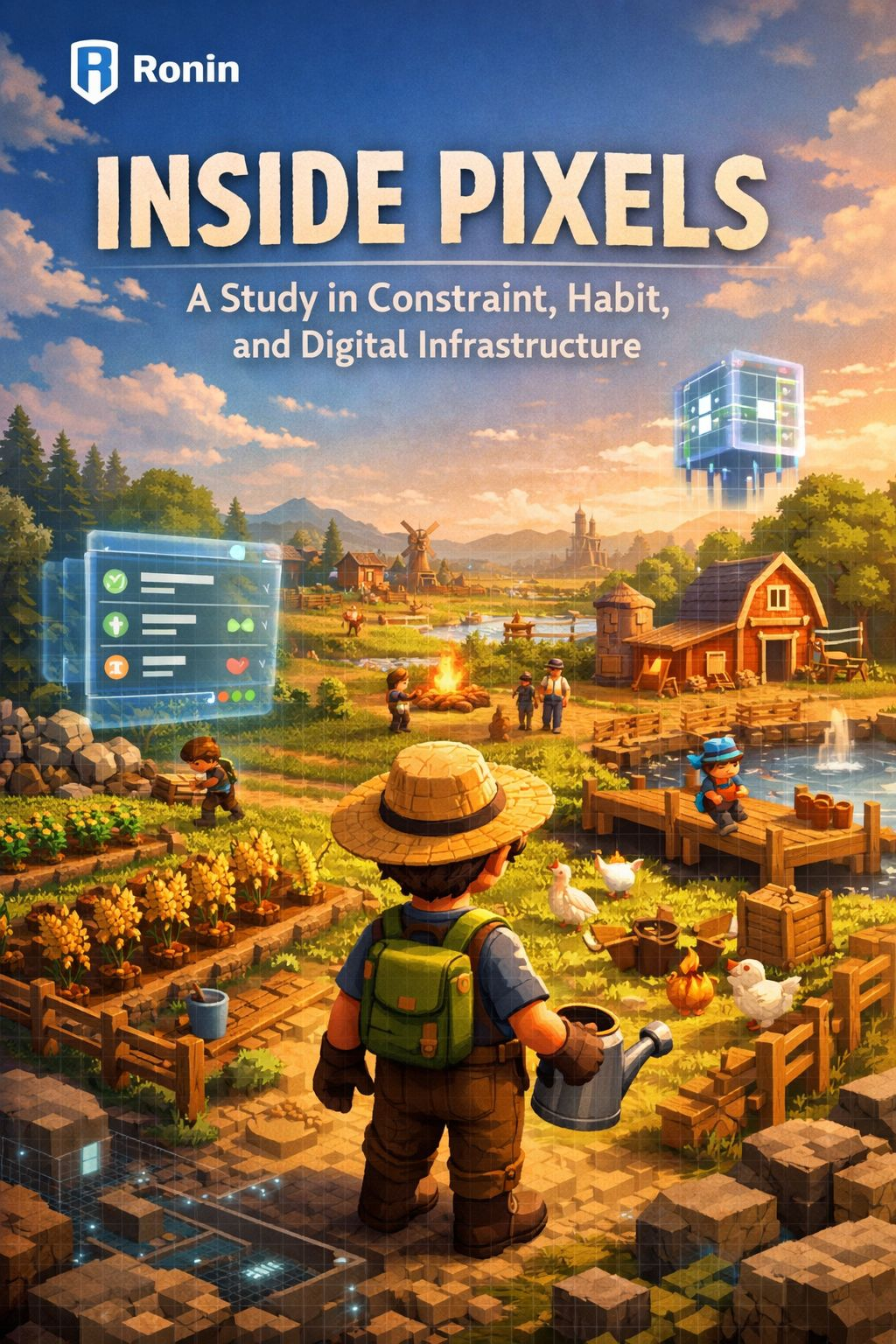
Ich habe genug Zeit mit Pixels verbracht, um nicht mehr zu denken, dass es sich um ein „Spiel“ im herkömmlichen Sinne handelt, sondern es mehr als ein Verhaltenssystem zu sehen, das in einer vertrauten Schnittstelle verpackt ist. Der Farming-Zyklus, die Open-World-Erkundung, sogar die soziale Schicht – das sind alles erkennbare Einstiegspunkte. Was weniger offensichtlich und für mich interessanter ist, ist, wie die zugrunde liegende Struktur leise formt, was die Menschen tatsächlich tun, sobald sie darin sind.
Auf einer oberflächlichen Ebene ist Pixels leicht zu verstehen. Du pflanzt, du erntest, du bewegst dich, du interagierst. Aber was meine Aufmerksamkeit hält, ist, wie absichtlich eingeschränkt diese Handlungen sind und wie diese Einschränkungen eine Art Rhythmus erzeugen, der sich näher an Infrastruktur als an Unterhaltung anfühlt. Es gibt einen Rhythmus der Teilnahme: kleine, wiederholte Handlungen, die an Zeit, Raum und Verfügbarkeit von Ressourcen gebunden sind. Dieser Rhythmus ist wichtiger als jede einzelne Funktion, da er die Bindung regelt, ohne auf Spektakel angewiesen zu sein.
Das Betreiben im Ronin-Netzwerk führt zu einer Reihe praktischer Bedingungen, die ich für zentral halte, wie Pixels funktioniert. Transaktionen sind günstig und schnell genug, dass sie in das Moment-zu-Moment-Gameplay eingebettet werden können, ohne dass Reibung das Erlebnis dominiert. Das klingt nach einem technischen Detail, aber es verändert das Verhalten der Nutzer auf subtile Weise. Wenn die Kosten für die Interaktion mit dem System niedrig sind, hören die Nutzer auf, in Bezug auf diskrete „Transaktionen“ zu denken, und beginnen sich so zu verhalten, als würden sie einfach in einer beständigen Umgebung agieren. Die Blockchain-Ebene tritt zurück, nicht weil sie verschwindet, sondern weil sie vorhersehbar wird.
Diese Vorhersehbarkeit leistet viel Arbeit. In traditionellen Online-Spielen ist das System absichtlich undurchsichtig. Hier, selbst wenn die meisten Nutzer die zugrunde liegenden Mechaniken nicht direkt untersuchen, schafft die Tatsache, dass Aktionen durch ein gemeinsames, konsistentes Backend gelöst werden, eine andere Art von Vertrauen. Nicht ideologisches Vertrauen, sondern operatives Vertrauen. Die Menschen verlassen sich darauf, dass das System morgen genauso funktioniert wie heute. Das ist ein ruhiger, aber wichtiger Wandel.
Was ich besonders interessant finde, ist, wie Pixels Landwirtschaft nutzt – nicht als Thema, sondern als Zeitmechanismus. Landwirtschaft ist von Natur aus mit verzögerter Befriedigung verbunden. Sie pflanzen jetzt etwas, kehren später zurück. Diese Verzögerung zwingt die Nutzer zu einer zeitlichen Beziehung mit dem System. Sie „spielen“ nicht einfach; sie checken ein, sie pflegen, sie planen um Abklingzeiten und Wachstumszyklen. Im Laufe der Zeit schafft dies Gewohnheiten, die näher an Routine als an Unterhaltung liegen.
Hier gibt es einen Kompromiss, der meiner Meinung nach nicht immer anerkannt wird. Indem es sich auf diese langsamen Schleifen stützt, reduziert Pixels die Intensität jeder einzelnen Sitzung. Es ist nicht darauf ausgelegt, tiefes, ununterbrochenes Engagement zu fördern. Stattdessen ermutigt es zu leichtem, aber häufigem Interagieren. Das hat Auswirkungen darauf, wie Nutzer ihre Zeit im System bewerten. Das Spiel wird zu etwas, das sich um ihren Tag fügt, anstatt etwas, das ihre volle Aufmerksamkeit verlangt. In der Praxis macht es es langlebiger, aber weniger sofort fesselnd.
Die soziale Ebene fügt eine weitere Dimension hinzu, aber wieder ist sie mehr strukturell als expressiv. Die Interaktion zwischen Spielern dreht sich nicht nur um Kommunikation; es geht um Koordination. Gemeinsame Räume, Ressourcenwettbewerb und kooperative Verhaltensweisen entstehen nicht, weil sie stark incentiviert sind, sondern weil die Umgebung sie effizient macht. Wenn mehrere Nutzer denselben Raum mit sich überschneidenden Zielen besetzen, bilden sich Muster. Einige Spieler spezialisieren sich, andere beobachten und passen sich an. Das System zwingt keine Rollen auf, sondern drängt sie in die Existenz.
Ich habe bemerkt, dass viel von der bedeutungsvollen Aktivität in Pixels an diesen Rändern geschieht – wo Systeme sich überschneiden, anstatt innerhalb einer einzelnen Mechanik. Zum Beispiel wird die Beziehung zwischen Landnutzung und Zeitmanagement nicht ausdrücklich hervorgehoben, aber sie wird zentral, sobald Sie genug Zeit darin verbracht haben. Wie Sie Raum zuweisen, wann Sie zurückkehren, um zu ernten, wie Sie Aufgaben priorisieren – das sind kleine Entscheidungen, aber sie summieren sich. Im Laufe der Zeit unterscheiden sie die Nutzer nicht nach Fähigkeiten im traditionellen Sinne, sondern nach Konsistenz und Aufmerksamkeit.
Hier wird der infrastrukturelle Rahmen nützlich. Pixels versucht nicht, Spitzenleistungen zu liefern; es versucht, ein Netzwerk laufender Interaktionen aufrechtzuerhalten. Der Erfolg dieses Ansatzes hängt weniger von Neuheit und mehr von Zuverlässigkeit ab. Wenn die Schleifen bestehen bleiben, wenn das System stabil bleibt, werden die Nutzer weiterhin teilnehmen – nicht, weil sie ständig begeistert sind, sondern weil die Kosten für das Abbrechen höher werden als die Kosten für das Verweilen.
Es gibt auch eine interessante Dynamik rund um die Kreation. Das Spiel präsentiert sich als Raum zum Bauen und Anpassen, aber die tatsächlichen Einschränkungen rund um diese Aktivitäten bestimmen, was geschaffen wird. Werkzeuge, Ressourcen und Zeit schränken den Ausdruck auf eine Weise ein, die leicht übersehen werden kann. Infolgedessen streben die meisten Nutzer nicht nach maximaler Kreativität; sie neigen zu funktionalen Setups, die ihre Routinen optimieren. Ästhetischer Ausdruck existiert, aber er ist sekundär gegenüber der Nützlichkeit.
Das mag einschränkend klingen, aber ich denke, es ist absichtlich. Indem die kreative Ebene in praktischen Einschränkungen verankert bleibt, stellt Pixels sicher, dass nutzergenerierte Aktivitäten im breiteren System lesbar bleiben. Nichts fühlt sich vom Kern der Schleifen getrennt an. Jede Ergänzung speist sich in denselben Zyklus von Pflanzen, Ernten und Interagieren zurück. Es ist ein geschlossenes System, aber kein statisches.
Aus der Perspektive eines Entwicklers schafft diese Art von Design eine andere Prioritätenliste. Sie bauen nicht für Spitzenengagement; Sie halten einen stabilen Zustand aufrecht. Änderungen müssen sorgfältig eingeführt werden, da selbst kleine Anpassungen etablierte Routinen stören können. Wenn Sie das Timing, die Verfügbarkeit von Ressourcen oder die Interaktionskosten ändern, justieren Sie nicht nur das Gleichgewicht – Sie formen Gewohnheiten um. Das ist ein delikater Prozess.
Ich denke, das ist eines der weniger gewürdigten Aspekte von Pixels. Die Einfachheit des Systems an der Oberfläche verbirgt eine tiefere Sensibilität für Veränderungen. Da die Nutzer in kleinen, wiederholten Schritten mit ihm interagieren, werden sie sehr empfindlich für jede Reibung. Etwas, das isoliert trivial erscheinen mag, kann sich bedeutend anfühlen, wenn es Dutzende Male am Tag auftritt.
Es gibt auch eine psychologische Ebene, die aus dieser Struktur entsteht. Wenn Fortschritt an konsistente, mühelose Aktionen gebunden ist, beginnen die Nutzer, ein Gefühl von Eigenverantwortung über ihre Routinen zu internalisieren. Das Spiel geht weniger darum, Meilensteine zu erreichen, sondern mehr darum, ein System aufrechtzuerhalten, das sie für sich selbst aufgebaut haben. Dieser Wandel im Denken ist subtil, aber er verändert, wie Menschen zur Umwelt stehen. Sie sind nicht nur Teilnehmer; sie sind Hüter ihrer eigenen Prozesse.
Gleichzeitig führt dieses Design zu einer Obergrenze. Weil das System um inkrementelle Aktionen herum aufgebaut ist, kann es schwierig sein, Momente bedeutungsvoller Eskalation zu schaffen. Es gibt nur so viel Variation, die Sie einführen können, ohne den zugrunde liegenden Rhythmus zu brechen. Infolgedessen kann sich das Erlebnis für Nutzer, die nach Fortschritt im traditionellen Sinne suchen, flach anfühlen. Das System widersteht dieser Art von Beschleunigung.
Ich sehe das nicht so sehr als Fehler, sondern als bewusste Wahl. Pixels ist auf Kontinuität optimiert, nicht auf Intensität. Es tauscht die Höhen und Tiefen dynamischer Systeme gegen einen stetigen, vorhersehbaren Fluss aus. Ob das ansprechend ist, hängt davon ab, was Sie davon erwarten. Aber aus einer infrastrukturellen Perspektive macht es Sinn. Stabilität ist einfacher zu skalieren als Aufregung.
Was ich immer wieder beobachte, ist, wie viel von Pixels Verhalten durch Dinge geprägt wird, die nicht sofort sichtbar sind. Timing-Mechaniken, Transaktionskosten, räumliche Einschränkungen – das sind nicht die Elemente, über die die Leute sprechen, aber sie sind die, die in der Praxis am wichtigsten sind. Sie bestimmen, wie oft Nutzer zurückkehren, wie sie ihre Aufmerksamkeit verteilen und wie sie miteinander interagieren.
Nachdem ich Zeit damit verbracht habe, glaube ich nicht, dass Pixels versucht, zu beeindrucken. Es versucht zu funktionieren. Und in diesem Sinne gelingt es ihm auf eine Weise, die leicht übersehen werden kann. Es schafft einen Raum, in dem Menschen Routinen entwickeln, innerhalb gemeinsamer Einschränkungen interagieren und sich darauf verlassen können, dass das System konsistent funktioniert. Das mag nicht aufregend sein, aber es ist das, was es funktioniert.