
I didn’t think much about @Pixels at first.
From the outside, it looked like every other Web3 game.
Farming, rewards, $PIXEL, basic loops.
Nothing new.
But after spending some time observing it…
something started to feel different.
Not obvious. Not dramatic. Just… off.
At first, I thought it was just another play-to-earn setup.
You play → you earn → you repeat.
But then I noticed something strange.
Two players doing almost the same thing…
getting completely different outcomes.
That shouldn’t happen in a simple reward system.
Unless the system isn’t actually simple.
That’s when I started thinking:
What if this isn’t just a game loop?
What if it’s a filtering system?
In most GameFi projects, rewards are predictable.
More activity = more tokens.
But that model has already failed before.
We’ve seen it.
Bots take over.
Rewards get extracted.
Economy collapses.
But here… it doesn’t fully behave like that.
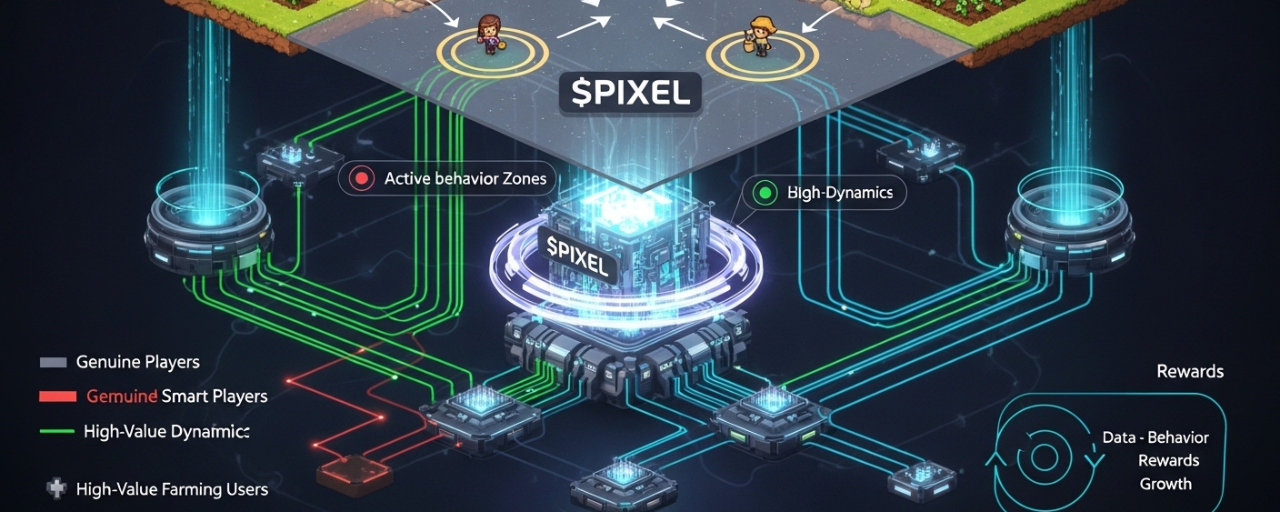
It feels like something is observing behavior.
Not just what you do — but how you do it.
And if that’s even partially true…
then this changes the entire structure.
Because now the advantage is not time.
It’s understanding.
Most players will just follow the obvious path:
farm, collect, repeat.
But a smaller group will start asking better questions:
What actions actually matter?
What triggers better rewards?
What is the system really tracking?
And usually…
those are the players who figure things out earlier.
Then there’s $PIXEL .
At first glance, it looks like a normal reward token.
But if it’s being tied into behavior, systems, and possibly multiple layers…
then it slowly becomes something else.
Not just a reward.
More like a control layer inside the ecosystem.
Of course, there are still questions.
Can this model sustain?
Can it avoid the same fate as others?
Will players adapt… or exploit it again?
No one knows yet.
But one thing feels clear.
Pixels is no longer just trying to be a game.
It’s experimenting with something deeper —
a system where behavior, incentives, and value are all connected.
Most people will just play it.
A few will try to understand it.
And in Web3…
that difference usually matters more than anything else.