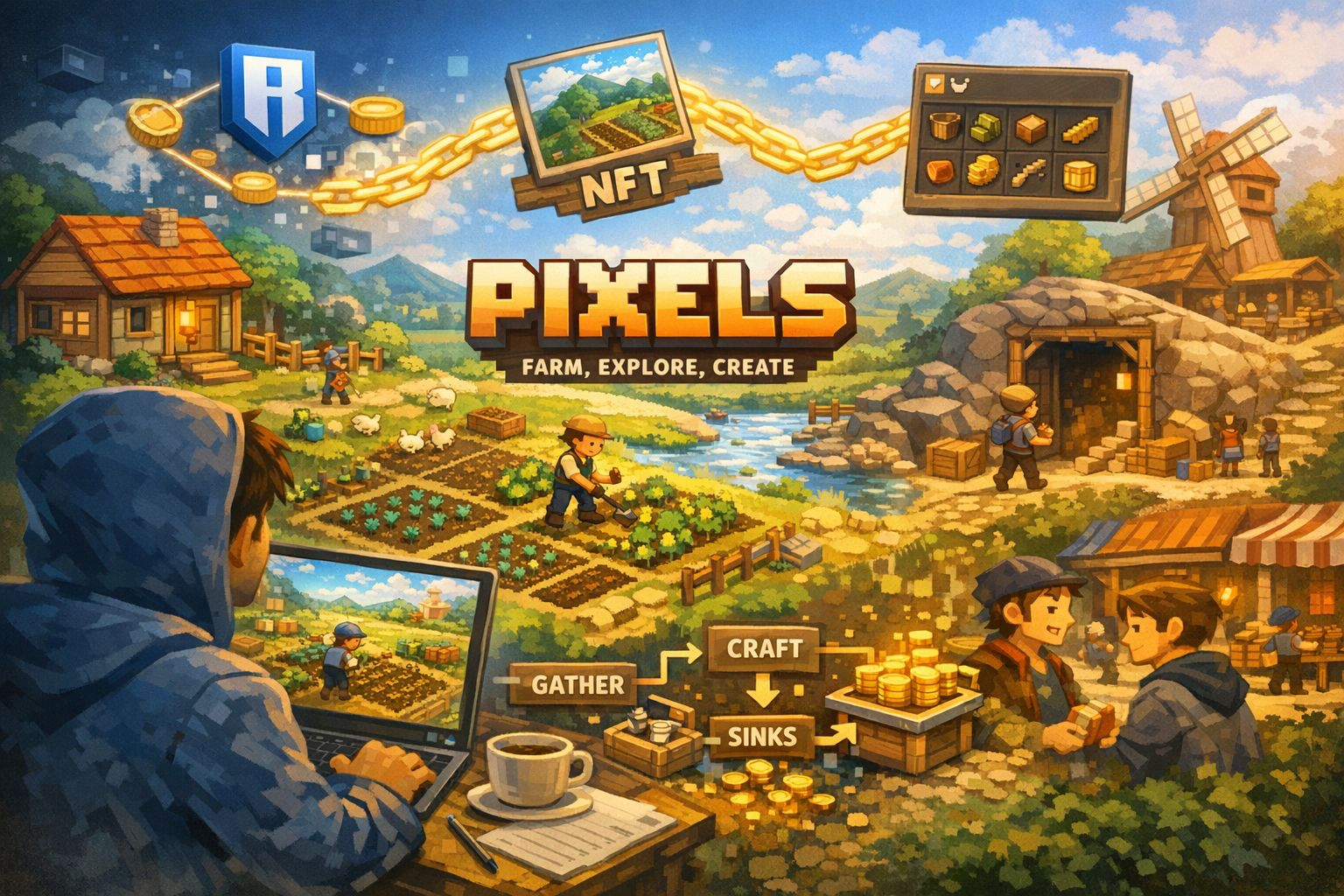
Ich habe genug Zeit damit verbracht, mir On-Chain-Spiele anzusehen, um ein Muster zu erkennen: Die meisten von ihnen verhalten sich nicht wirklich wie Spiele, und sie verhalten sich auch nicht wirklich wie Infrastruktur. Sie befinden sich in einem unangenehmen Mittelweg, wo die Mechanik oberflächlich ist und die darunter liegenden Systeme über-engineered für Spekulationen anstatt für den Gebrauch sind. Was Pixels für mich interessant macht, ist nicht, dass es dieses Muster vollständig durchbricht, sondern dass es sich entschiedener in Richtung eines Systems neigt, das die Menschen tatsächlich bewohnen und innerhalb dessen sie agieren, anstatt etwas zu sein, durch das sie einfach hindurchgehen.
Auf einer oberflächlichen Ebene ist es einfach, Pixels als ein Landwirtschafts- und Erkundungsspiel zu beschreiben. Diese Einordnung ist genau, aber nicht besonders nützlich. Was mehr zählt, ist, wie das Spiel wiederholtes Verhalten strukturiert. Landwirtschaft, Handwerk, Sammeln – das sind nicht nur thematische Entscheidungen, sie sind auch Tempo-Mechanismen. Sie bremsen die Nutzer absichtlich und zwingen zur Interaktion mit Zeit, Ressourcenbeschränkungen und räumlicher Bewegung. Das schafft eine Art Reibung, die die meisten Web3-Anwendungen zu eliminieren versuchen, aber hier wird sie zum Kern der Erfahrung.
Das Arbeiten im Ronin-Netzwerk prägt viele dieser Verhaltensweisen auf eine Weise, die leicht übersehen werden kann. Niedrige Transaktionskosten und schnelle Bestätigungen sind nicht nur technische Annehmlichkeiten; sie beeinflussen direkt, wie oft Spieler bereit sind zu handeln. Wenn jede Handlung – Pflanzen, Ernten, Handeln – ohne spürbare Kosten aufgezeichnet oder auf der Chain reflektiert werden kann, wird es möglich, Schleifen zu entwerfen, die auf häufigen, inkrementellen Updates beruhen. Das verändert die Psychologie der Nutzer. Anstatt Entscheidungen zu bündeln oder die Chain als Abrechnungsebene zu behandeln, beginnen die Spieler, sie als Teil der Umgebung selbst zu betrachten.
Das hat Konsequenzen dafür, wie sich Besitz anfühlt. In vielen Blockchain-Spielen ist der Besitz nominal. Vermögenswerte befinden sich in Wallets, aber das Gameplay hängt nicht wesentlich von diesem Besitz ab, abgesehen von Zugang oder Wiederverkauf. In Pixels gibt der wiederholte Einsatz von Vermögenswerten in täglichen Aktionen ihnen ein anderes Gewicht. Werkzeuge, Land und Gegenstände werden nicht nur gehalten; sie werden verwendet, abgenutzt und durch Systeme zirkuliert. Diese ständige Interaktion schafft eine subtile, aber wichtige Unterscheidung: Wert entsteht weniger aus Knappheit allein und mehr aus Nützlichkeit über die Zeit.
Ich denke, eine der weniger geschätzten Designentscheidungen ist, wie das Spiel mit Aufmerksamkeit umgeht. Pixels verlangt nicht die kontinuierliche Konzentration, wie es traditionelle Spiele tun könnten, erlaubt aber auch keine vollständige Distanzierung. Pflanzen brauchen Zeit. Ressourcen erscheinen wieder. Systeme setzen in Intervallen zurück. Das schafft einen Rhythmus, der irgendwo zwischen Idle-Mechaniken und aktivem Spiel sitzt. Aus einer Infrastrukturperspektive leistet dieser Rhythmus echte Arbeit. Er verteilt die Netzwerkaktivität über die Zeit, vermeidet Überlastungsspitzen und fördert die gewohnheitsmäßige Interaktion, ohne intensive Sitzungen zu verlangen.
Es gibt auch eine interessante Einschränkung, wie Komplexität eingeführt wird. Die Systeme sind geschichtet, aber nicht alles auf einmal. Frühe Interaktionen sind einfach – Pflanzen, Ernten, grundlegendes Handwerk – aber im Laufe der Zeit stoßen die Spieler auf mehr Abhängigkeiten. Rezepte erfordern mehrere Eingaben. Erkundungen liefern Materialien, die in Landwirtschafts- oder Handwerkszyklen zurückfließen. Dieser allmähliche Anstieg der Systemtiefe spiegelt wider, wie Nutzer in komplexere Infrastrukturen allgemein eingearbeitet werden. Man präsentiert nicht die gesamte Oberfläche auf einmal; man lässt die Interaktion sie offenbaren.
Für Entwickler und Designer schafft dies ein anderes Set von Anreizen. Anstatt isolierte Funktionen zu erstellen, die einzeln vermarktet werden können, besteht der Druck, sich mit bestehenden Schleifen zu integrieren. Eine neue Mechanik muss sich nicht durch Neuheit rechtfertigen, sondern durch die Art und Weise, wie sie in den laufenden Zyklus von Aktionen passt, die die Spieler bereits ausführen. Das führt tendenziell zu kohärenteren Systemen, bremst jedoch auch das Experimentieren. Nicht jede Idee kann einfach in eine lebendige, voneinander abhängige Umgebung eingefügt werden, ohne das Gleichgewicht zu brechen oder unbeabsichtigte Engpässe zu schaffen.
Die wirtschaftliche Schicht ist der Bereich, in dem die Infrastruktur-Rahmenbedingungen am offensichtlichsten werden. Ressourcen gelangen durch die Aktivitäten der Spieler in das System und verlassen es durch Verbrauch, Handwerk oder andere Senken. Das Gleichgewicht zwischen diesen Flüssen ist nicht nur ein Gameplay-Anliegen; es ist ein Stabilitätsproblem des Systems. Wenn zu viele Ressourcen ohne ausreichende Senken ansammeln, verlieren Aktionen an Bedeutung. Wenn Senken zu aggressiv sind, fühlen sich die Spieler eingeschränkt oder bestraft. Dieses Gleichgewicht aufrechtzuerhalten, erfordert kontinuierliche Anpassungen, und diese Anpassungen werden direkt von den Nutzern in ihren täglichen Aktionen spürbar.
Was ich bemerkenswert finde, ist, wie sichtbar diese Dynamiken für die Spieler sind. In vielen digitalen Systemen sind die zugrunde liegenden Wirtschaftsstrukturen abstrahiert. Hier werden sie direkt erlebt. Wenn eine Ressource schwerer zu beschaffen wird, zeigt sich das sofort in der Zeit, die benötigt wird, um eine Aufgabe zu erledigen. Wenn sich die Nachfrage verschiebt, spiegelt sich das darin wider, wie die Spieler ihre Anstrengungen zuweisen. Diese Transparenz kann unangenehm sein, weil sie die Unvollkommenheiten des Systems offenlegt, aber sie schafft auch eine Art von Bildung unter den Nutzern. Sie beginnen zu verstehen, nicht nur was zu tun ist, sondern auch warum bestimmte Aktionen zu einem bestimmten Zeitpunkt mehr oder weniger effektiv sind.
Es gibt auch eine soziale Schicht, die sich aus gemeinsamen Einschränkungen ergibt. Da die Spieler innerhalb derselben Ressourcensysteme und Zeitzyklen operieren, beginnen sich ihre Verhaltensweisen auf vorhersehbare Weise auszurichten. Bestimmte Bereiche werden aktiver. Bestimmte Aufgaben werden in Schüben erledigt. Das schafft Muster, die organisch erscheinen, aber tatsächlich das Ergebnis zugrunde liegender Regeln sind. Aus einer Infrastrukturperspektive ist das wertvoll. Es bedeutet, dass das System Verhalten lenken kann, ohne explizite Koordination, einfach durch die Gestaltung der Bedingungen, unter denen Nutzer handeln.
Ein Kompromiss, zu dem ich immer wieder zurückkomme, besteht zwischen Zugänglichkeit und Tiefe. Pixels ist relativ einfach zu beginnen, aber je länger man bleibt, desto mehr begegnet man Reibungen in Form von Zeit-, Ressourcenabhängigkeiten und Optimierungsherausforderungen. Das ist nicht zufällig. Es filtert für Nutzer, die bereit sind, sich mit dem System zu seinen eigenen Bedingungen auseinanderzusetzen. Das Risiko besteht natürlich darin, dass einige Nutzer disengagieren, wenn die Reibungen ihr Interesse überwiegen. Aber der Vorteil ist eine stabilere Basis von Teilnehmern, die das System verstehen und innerhalb dessen arbeiten, anstatt zu versuchen, es zu umgehen.
Ein weiterer subtiler Effekt ist, wie das Spiel Erwartungen bezüglich Besitz und Aufwand gestaltet. Da der Fortschritt an wiederholte Aktionen über die Zeit gebunden ist, gibt es eine klare Beziehung zwischen Input und Ergebnis. Dies steht im Gegensatz zu Systemen, in denen Ergebnisse stark zufällig oder extern gesteuert sind. Im Laufe der Zeit internalisieren die Spieler diese Beziehung. Sie erwarten, dass das, was sie in das System investieren – Zeit, Aufmerksamkeit, Ressourcen – einen vorhersehbaren Einfluss hat. Diese Erwartung kann sich darauf übertragen, wie sie mit anderen On-Chain-Systemen interagieren, was ein Teil dessen ist, was Pixels wie Infrastruktur und nicht wie eine geschlossene Erfahrung erscheinen lässt.
Ich denke auch, dass es erwähnenswert ist, was das Spiel nicht tut. Es versucht nicht, seine Mechanik hinter Spektakeln zu verstecken. Die visuellen Elemente sind einfach, die Interaktionen sind unkompliziert und die Systeme sind offen statt verborgen. Das kann es auf den ersten Blick weniger beeindruckend erscheinen lassen, aber es macht es auch einfacher, darüber nachzudenken. Für ein System, das die Menschen über längere Zeiträume bewohnen sollen, ist diese Klarheit ein Vorteil. Sie reduziert die kognitive Belastung und ermöglicht es den Nutzern, sich auf die Muster zu konzentrieren, die tatsächlich wichtig sind.
Nachdem ich Zeit damit verbracht habe, sehe ich Pixels nicht als fertiges Produkt oder als definitives Modell für On-Chain-Spiele. Was ich sehe, ist ein System, das die Einschränkungen der Blockchain ernst nimmt und darum herum aufbaut, anstatt zu versuchen, sie zu umgehen. Das Ergebnis ist etwas, das sich weniger wie eine Ausstellung anfühlt und mehr wie ein Ort, an dem Aktionen sich ansammeln, Muster entstehen und die zugrunde liegenden Regeln Verhalten auf Weisen formen, die nicht immer offensichtlich sind, aber konstant spürbar sind.