
Didn’t expect an update to feel final.
Tier 5 doesn’t read like more content.
Feels like the whole system shifting.
Quiet. Intentional.
On paper it’s a drop.
Nine industries. Land overhaul. Deconstruction.
Forestry and animal buffs. Taskboard exclusives.
Lots of pieces.
Underneath is the pattern.
Not more to do.
Tighter loop. Every action feeds something else.
Land isn’t static anymore.
You owned it. Used it. Tweaked it.
Now it’s a living layer of strategy.
Nine industries isn’t about the number.
It’s about overlap. About trade-offs.
Can’t max all nine without thinning out.
That tension is where real choices show up.
Time becomes cost.
Dynamic land means you choose what _not_ to do.
That absence creates value.
Playing more isn’t the goal. Choosing better is.
Deconstruction changes the game.
Looks simple. Break rare items. Get materials back.
Under it, the economy shifts.
Before: earn item, use item, replace item. One way.
Now: item reverses into materials. Back into production.
A loop.
Second market appears.
Not just finished goods. Components inside them.
One rare item drops three to five materials.
Those materials feed multiple industries.
Scarcity isn’t just drop rates anymore.
It’s player behavior. Hold. Recycle. Liquidate.
Why industries matter.
More demand vectors for the same pool.
One component hits forestry, animal care, two production chains.
Competition rises without artificial limits.
Natural pressure.
Taskboard tweaks carry weight.
Tier 5 exclusives. Controlled entry points.
Not everyone gets everything at once.
Slows saturation. Rewards stay uneven.
Uneven keeps the economy from flattening.
Matches the market now.
Liquidity is thin. Attention is split.
Loud projects aren’t winning.
Quiet loops are. Systems where one action triggers two or three effects.
Those hold users longer than flat rewards.
Buffs are multipliers.
Forestry 15 percent up isn’t just more output.
It’s more input for the whole system.
More materials. More choices. Use. Trade. Deconstruct.
At scale, the system self-balances.
Too many in one industry, supply up, price down, attention shifts.
Slow feedback. Feels earned.
Risks are real.
Complexity pushes people away.
Not everyone wants to track resource flows while playing.
Deconstruction can flood materials. Inflation.
Too tight, and it’s useless.
Players will find edges. Question is whether the edge breaks it or becomes part of it.
Progression feels different.
Was vertical. Tier up. Better tools. Bigger rewards. 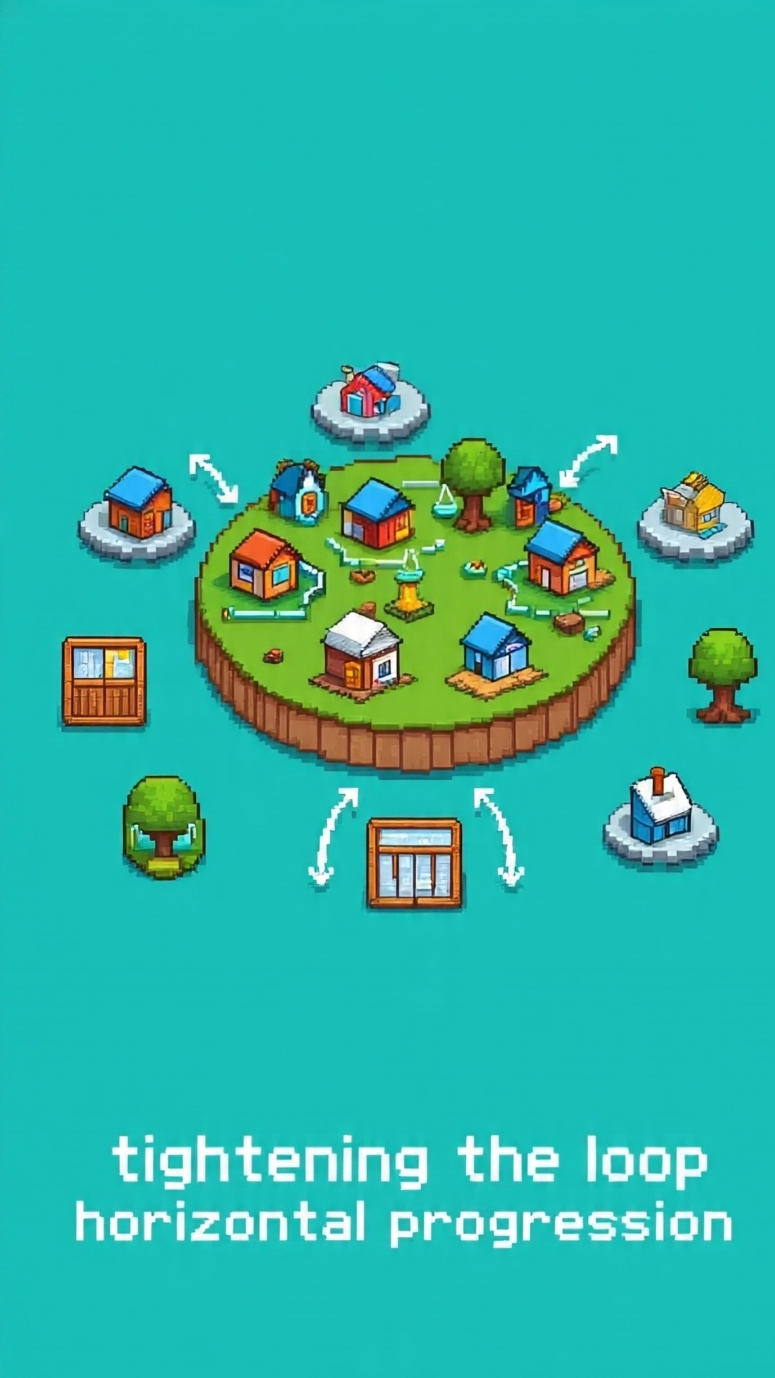
Now it’s horizontal. Expand across systems.
Progress is connection, not just strength.
Time feels less repetitive.
Actions feed multiple systems.
Outcomes aren’t isolated.
Farming isn’t just farming.
Output hits industry. Industry hits materials. Materials hit land.
Circles back.
That loop is the endgame.
Not Tier 5 itself.
The way everything feeds everything else.
Direction for play-to-earn.
Less rewards as endpoints.
More systems that recycle value inside.
Extract less. Sustain more.
Harder problem. Only one that lasts.
Because systems don’t live on what they give you.
They live on reasons to stay.
