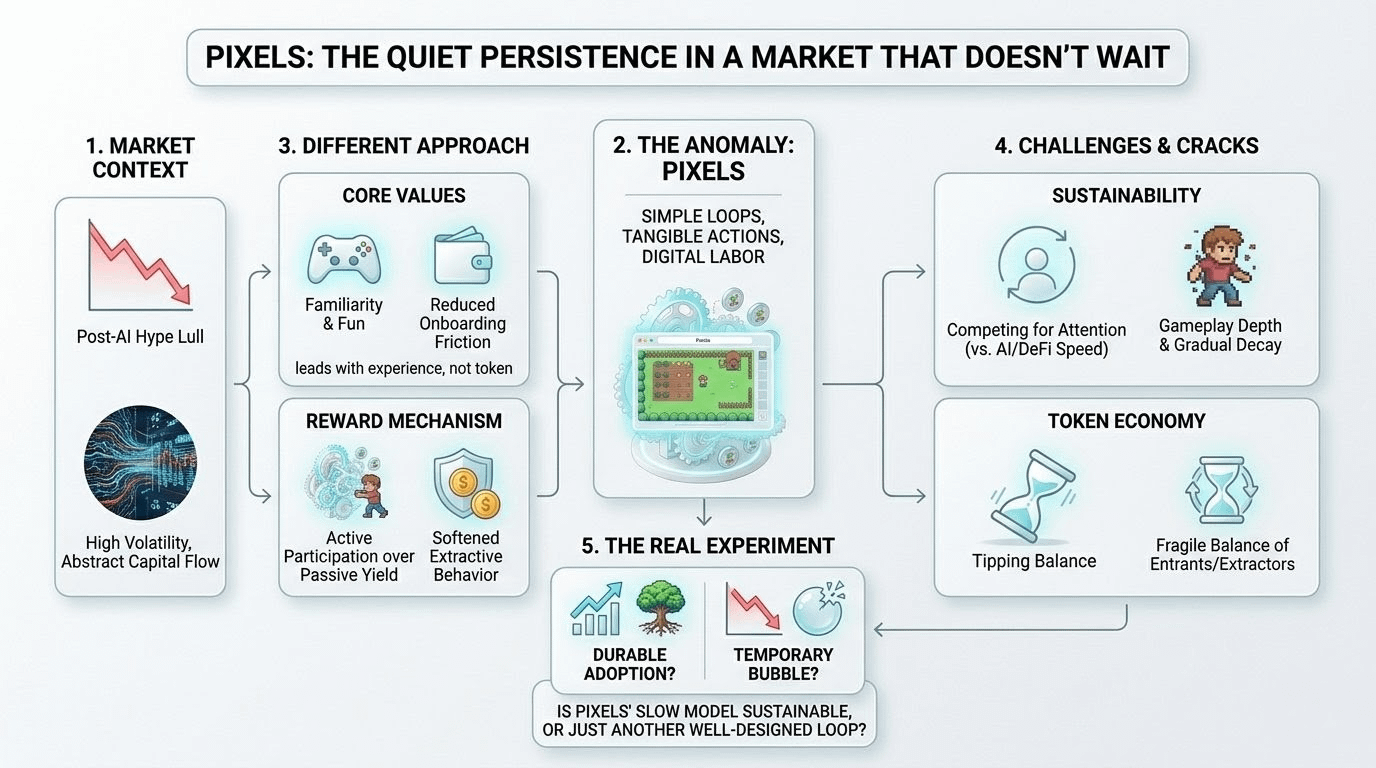

I found Pixels in the middle of a very different rabbit hole.
I was tracking where attention was leaking after the latest AI mini-cycle cooled off. You could feel it less froth, fewer overnight runners, more hesitation in risk. People rotating, not out of conviction, but because they’re bored or stuck. That in-between phase where nothing feels early anymore, but nothing feels truly dead either.
Somewhere in that drift, Pixels kept showing up.
Not trending. Not dominating timelines. Just there. Screens of little farms, avatars wandering around, people talking about crops like it actually mattered. It didn’t fit the mood of the market at all. Which is probably why I clicked.
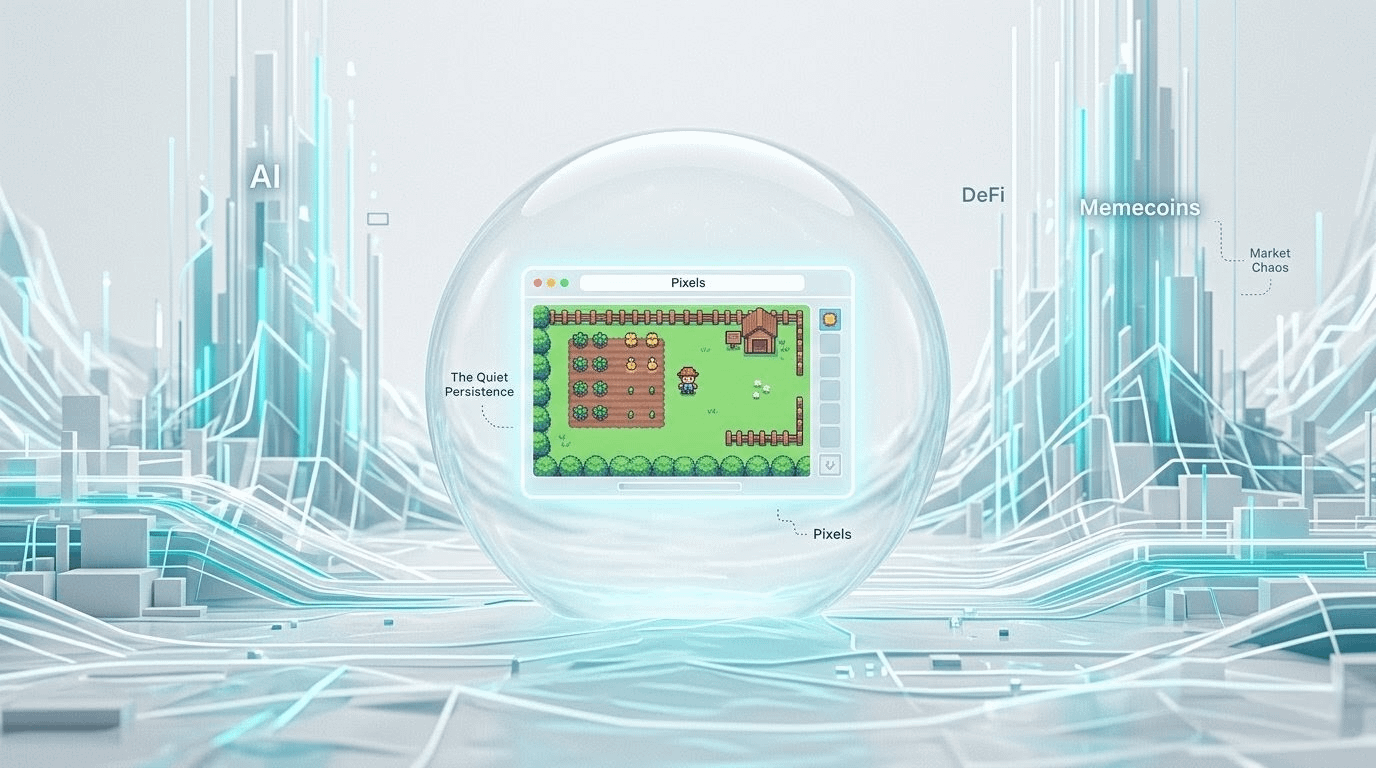
On the surface, it’s almost disarmingly simple. A browser-based world where you farm, gather resources, explore, craft items. It leans into that slow, repetitive loop that most modern crypto users claim they don’t have patience for anymore. And yet, people are playing it. Not just logging in for rewards, but actually engaging.
That alone raises a question. Why this, and why now?
Because if you zoom out, the problem Pixels is trying to solve isn’t new it’s just one the industry keeps failing at. How do you make a Web3 game that people would play even if the token didn’t exist?
That’s been the quiet graveyard of this space. We’ve built economies before we’ve built reasons to stay.
Pixels seems to approach it differently. It doesn’t lead with the token. It leads with familiarity. The mechanics feel like something you’ve already played ten years ago, which lowers the friction instantly. You don’t need onboarding tutorials explaining wallets or gas. You just start clicking, planting, moving.
Underneath that simplicity, though, the crypto layer is still there. Assets have ownership. Progress ties into a broader economy. There’s a token loop that rewards activity, but it’s not aggressively shoved in your face from minute one.
That balance feels intentional.
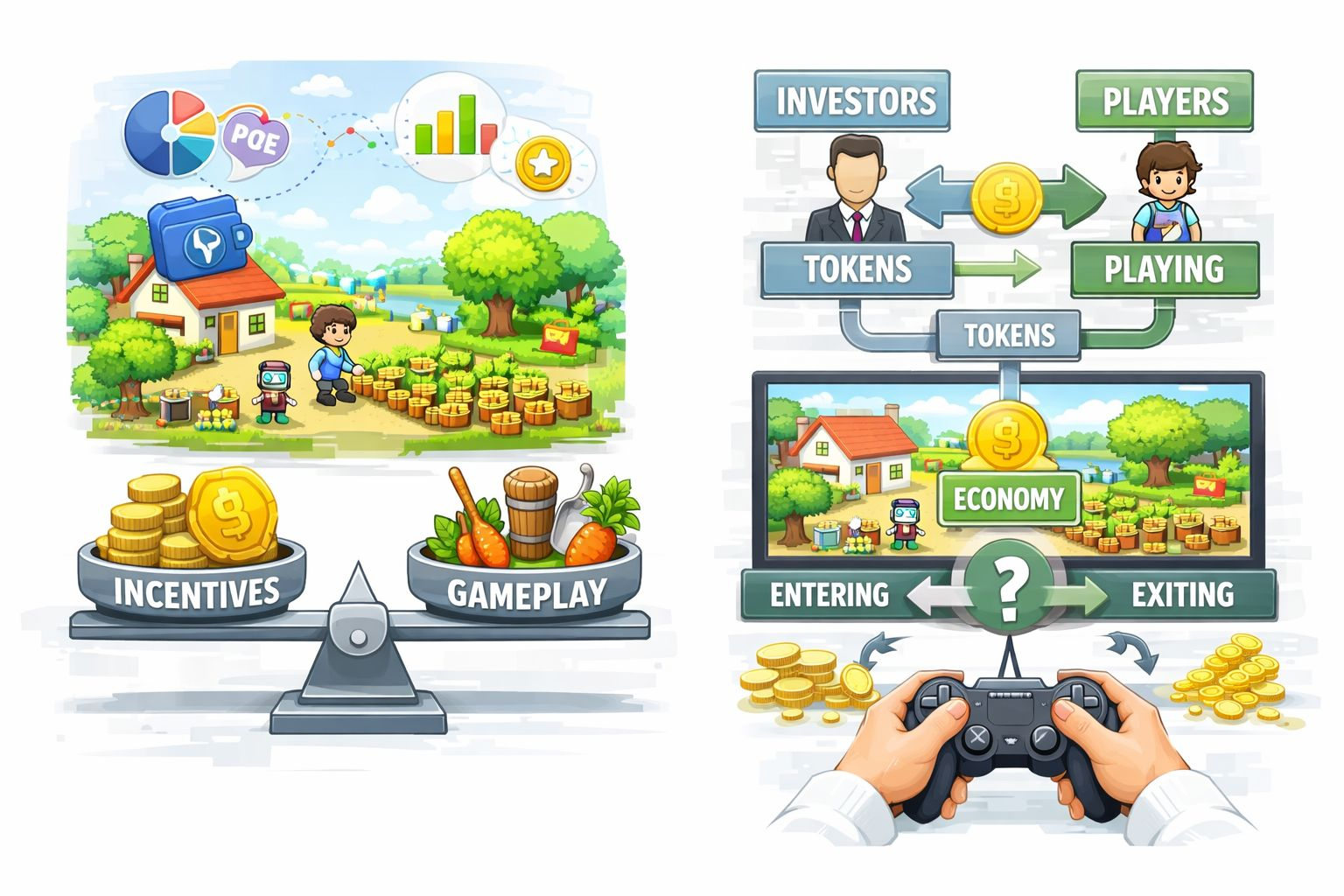
Because the market has already shown what happens when incentives dominate design. You get extractive behavior. People optimizing for yield instead of enjoyment. And the moment yields drop, they disappear.
Pixels doesn’t eliminate that dynamic, but it tries to soften it.
The token model leans on participation. You earn through playing, through contributing to the in-game economy, through time. It’s not passive. And that matters, because passive systems in crypto tend to collapse under their own weight.
Still, let’s not pretend this is purely organic.
There’s always a layer of farming just a different kind. Instead of liquidity mining, it’s time mining. People running optimized loops, calculating output, figuring out the most efficient way to extract value. That behavior never really leaves this space. It just changes form.
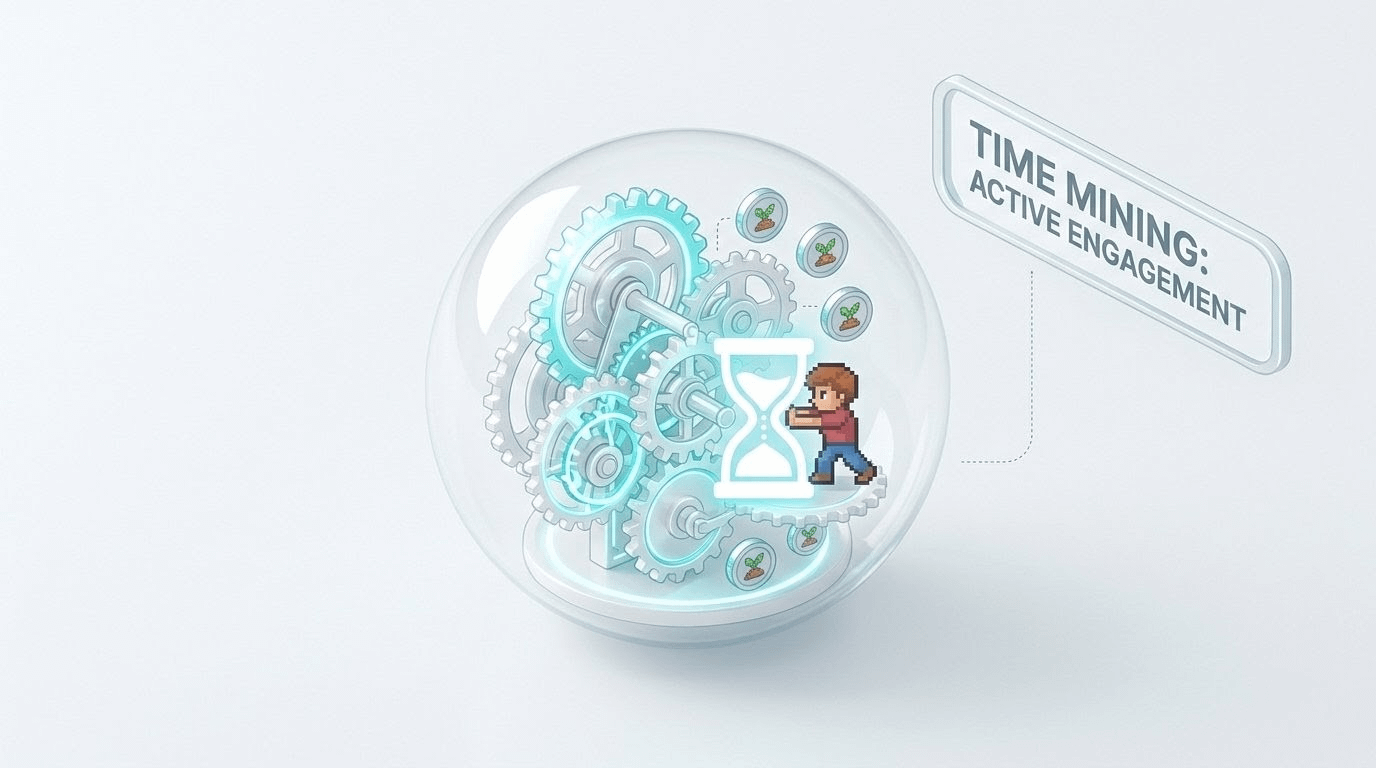
What’s interesting is that Pixels seems to tolerate that without being fully defined by it.
Part of that is the environment it’s built in. The Ronin ecosystem already has a history with gaming. Not all of it positive, but enough to create a user base that understands the basics. Wallets aren’t a barrier. Transactions don’t feel like friction. That foundation matters more than people think.
It’s not just about tech. It’s about muscle memory.
And you can feel a difference when adoption happens in a place where users already know how to exist.
But there are cracks, or at least pressure points.
The biggest one is sustainability. Not in the abstract sense, but in the very real question of attention. Can a game built around slow loops hold users in a market that constantly rewards speed?
Because right now, everything is competing for the same thing time and capital. AI tools promise productivity. DeFi promises yield. Even memecoins offer instant feedback loops. Pixels asks for something different. It asks you to stay.
That’s a harder sell than it sounds.
There’s also the question of depth. Familiarity brings people in, but it doesn’t always keep them. If the gameplay doesn’t evolve fast enough, if the world starts to feel repetitive, users will drift. Not necessarily all at once, but gradually. And in crypto, gradual decay is often more dangerous than sudden exits.
Then there’s the token itself.
Even if it’s not the centerpiece, it still anchors the economy. And token economies are fragile. They rely on a constant balance between new entrants and existing participants. If that balance tips if too many people are extracting and not enough are entering you feel it quickly.
We’ve seen that pattern before. It doesn’t need to collapse dramatically. It just needs to lose momentum.
What I keep coming back to, though, is something more subtle.
Pixels exists in a market that’s increasingly abstract. We’re trading narratives about infrastructure layers, AI models, financial primitives that most people don’t actually use day-to-day. And then there’s this farming game. Simple loops. Tangible actions. A kind of digital labor that feels almost grounding compared to everything else.
It’s not revolutionary. But it’s human.
And maybe that’s the real experiment here.
Not whether a Web3 game can succeed, but whether something slow and simple can survive in a system that constantly pushes toward complexity and speed. Whether attention can stabilize around something that doesn’t promise exponential upside every week.
Because if it can’t, then the problem isn’t game design. It’s us.
Our expectations. Our habits. The way we interact with everything in this space as if it’s temporary.
I don’t think Pixels has solved that. I’m not even sure it’s trying to.
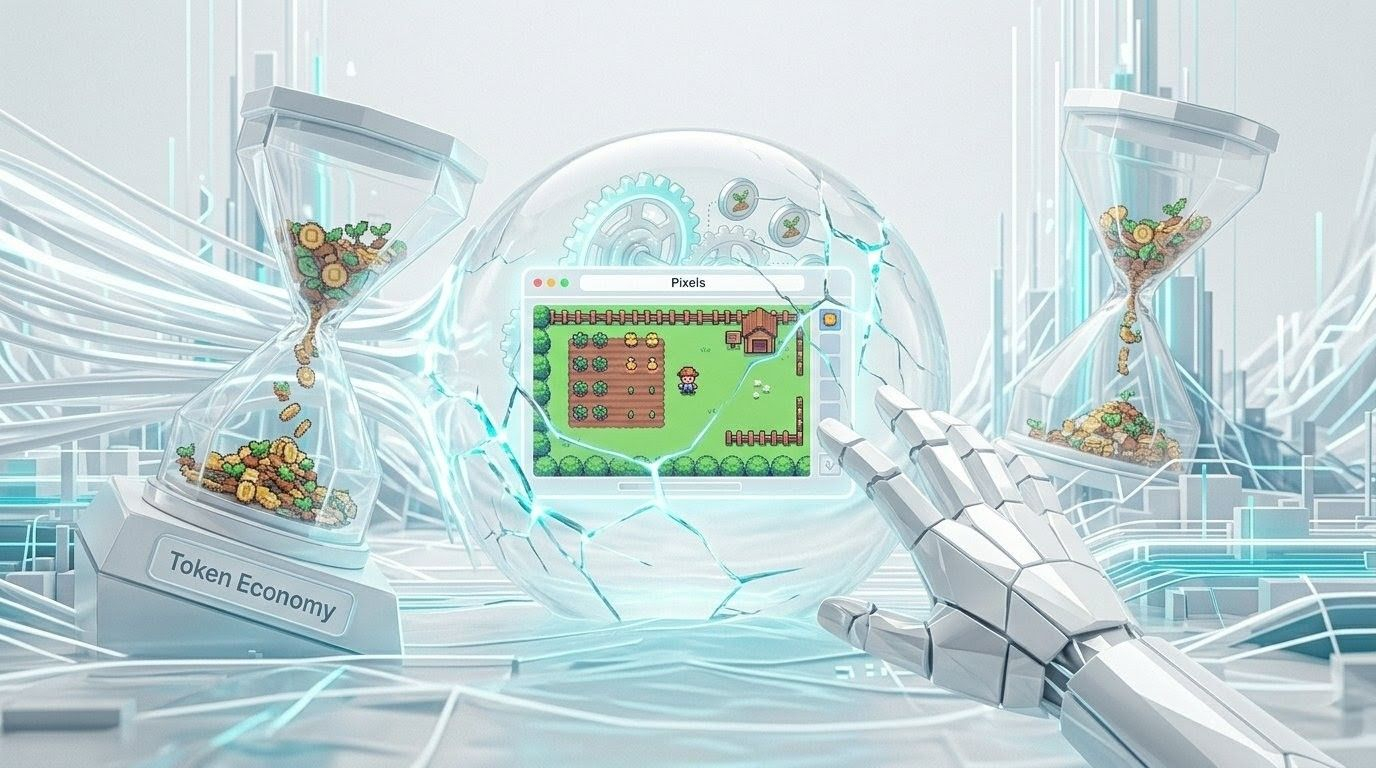
But it’s sitting there, quietly accumulating users, holding attention longer than it probably should in this kind of market. And that alone makes it worth watching.
Still, I can’t shake the question.
Is this the early shape of something more durable, or just a well-designed loop that works until the next narrative pulls everyone away again?