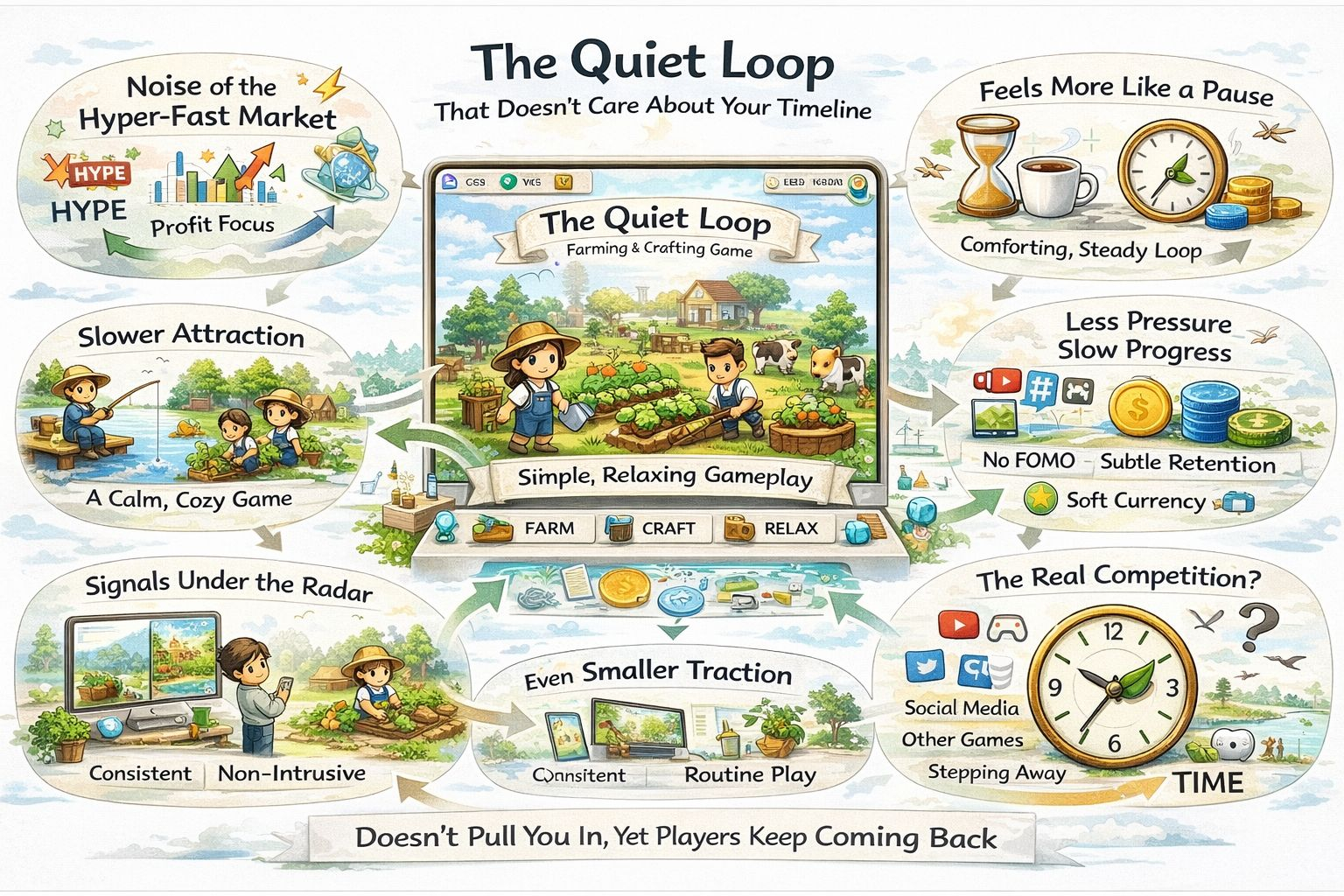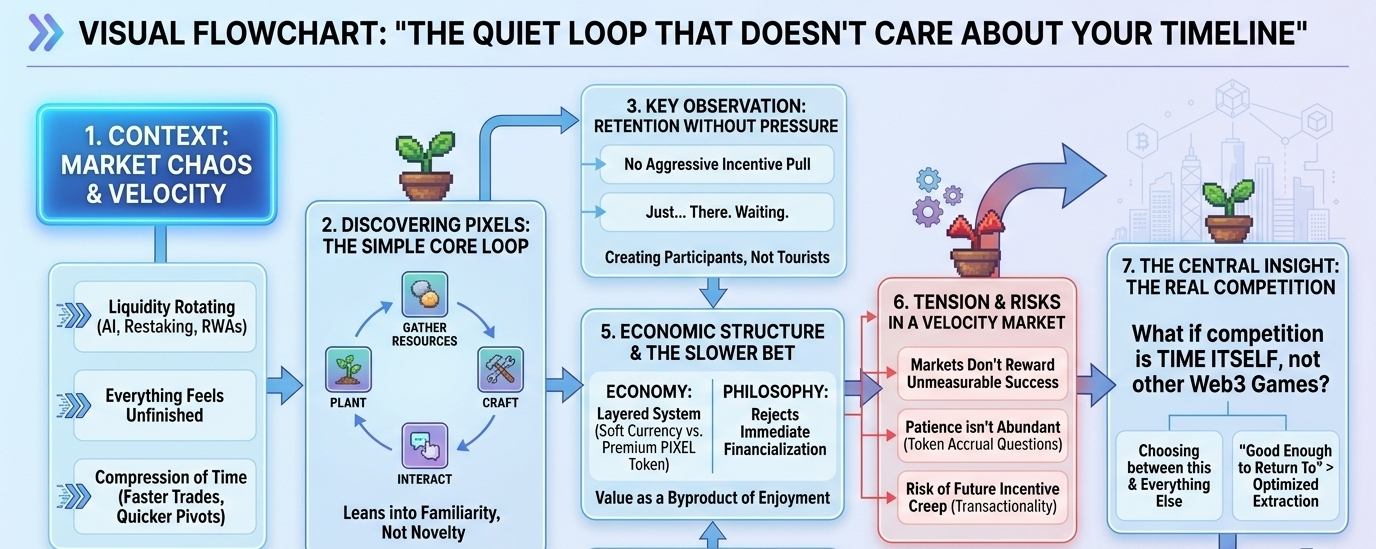

I found myself clicking into Pixels while I was supposed to be tracking something completely different. Liquidity had been rotating again AI narratives cooling just enough for people to start whispering about what’s next, restaking still absorbing attention, RWAs getting their usual institutional nods. It’s that familiar phase where nothing feels early, but everything still feels unfinished. And somehow, in the middle of all that, I ended up watching someone plant digital crops.
Not farming yields. Just farming.
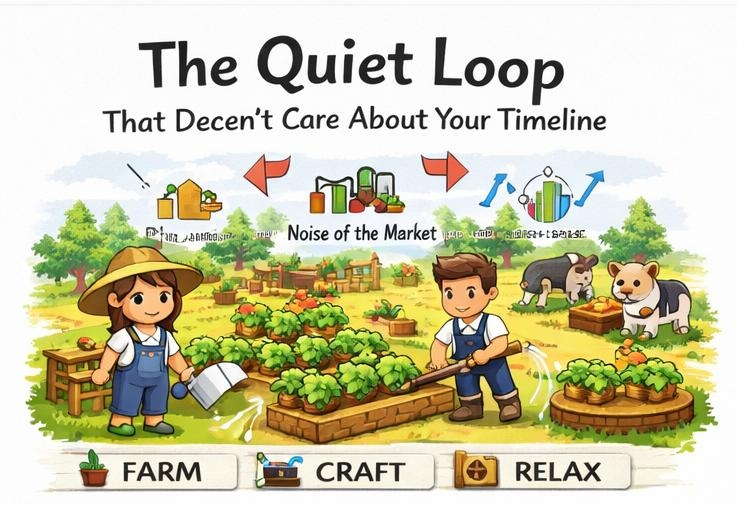
It felt out of place in a market that’s constantly trying to compress time. Everything right now is about acceleration. Faster trades, faster narratives, faster exits. Even the way people talk has changed lshorter conviction windows, quicker pivots. And then there’s Pixels, sitting there almost ignoring that entire tempo.
At first glance, it doesn’t look like it’s solving anything new. It’s a simple loop. You gather resources, plant, craft, interact. It leans into familiarity instead of novelty. But the more time I spent around it not even playing heavily, just observing behavior the more it started to feel like it’s addressing something deeper that most Web3 games still haven’t figured out.
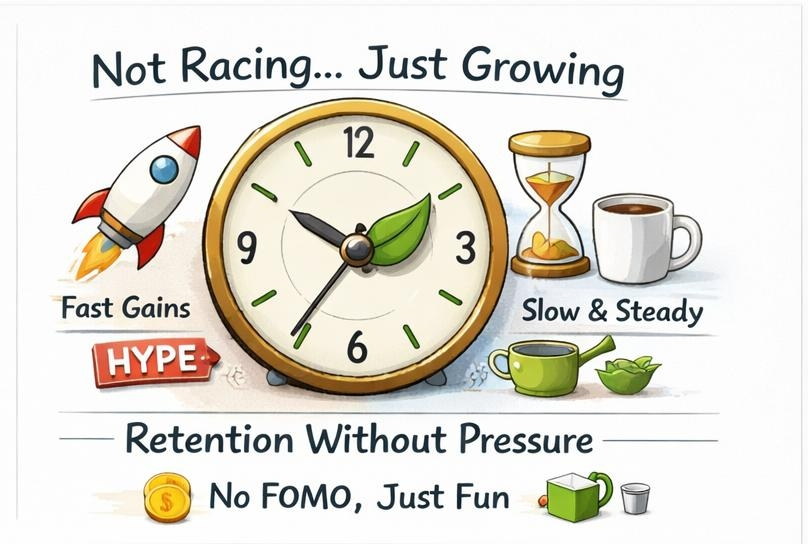
Retention without pressure.
That sounds basic, but it’s actually where most projects fail. They assume users need to be pulled back in with rewards, incentives, emissions. But what that really does is train people to leave the moment those incentives weaken. It creates tourists, not participants.
Pixels seems to be trying a different angle. It’s not aggressively pulling you in. It’s just there. Waiting. And oddly, that makes people come back.
Part of that is how it’s built. Running on Ronin gives it a kind of invisible advantage. Transactions are smooth enough that you don’t think about them. Wallet interactions don’t feel like a chore. That matters more than most people admit. Friction kills curiosity faster than bad gameplay.
But the tech isn’t the story here. It’s how little you notice it.
You’re not constantly reminded that you’re in a blockchain environment. There’s no moment where the game stops and says, “this is the Web3 part.” It all blends into the experience. That separation or lack of it feels intentional. Almost like the team understands that the more visible the infrastructure is, the less immersive the world becomes.
And then there’s the economy, which is where things usually fall apart in this sector.
Pixels splits things into layers. A soft currency that handles your day-to-day actions, and the PIXEL token sitting more like a premium layer. It’s a structure that mirrors traditional games more than crypto-native ones. And that choice says a lot.
Because it quietly rejects the idea that everything needs to be immediately financialized.
That’s not a small decision in this market. Most projects still design with extraction in mind. How do we capture value quickly? How do we align incentives so users stay just long enough? Pixels feels like it’s asking a different question what if value shows up later, as a byproduct of people actually enjoying the system?
It’s a slower bet. And slower bets are uncomfortable in crypto.
There’s something almost risky about how calm the progression feels. You’re not rushed. You’re not pushed toward optimizing every action. The loops repeat, but they don’t feel engineered for maximum efficiency. That creates a kind of rhythm that’s easy to settle into, but hard to measure.
And that’s where the tension sits.
Because markets don’t reward things they can’t easily measure.

If you’re looking at it purely from a token perspective, it raises questions. How does PIXEL accrue value if the system isn’t aggressively pushing financial activity? If users are mostly engaging through soft currencies and slow progression, where does the real demand come from?
There’s an argument that it builds over time. That once habits form, monetization can layer in naturally. But that assumes patience from both users and the market. And patience isn’t exactly abundant right now.
There’s also the risk of misalignment creeping in later. If growth slows, the temptation to increase incentives becomes real. And the moment incentives become the main driver again, the entire dynamic shifts. What feels organic today can start feeling transactional overnight.
I’ve seen that pattern play out too many times to ignore it.
Still, there’s something here that’s hard to dismiss. The adoption doesn’t feel forced. People aren’t constantly talking about earnings. They’re sharing routines, small wins, daily progress. It’s subtle, but it’s different from the usual noise.
And maybe that’s the point.
In a cycle where attention is constantly being pulled toward whatever’s loudest, Pixels is experimenting with what happens when you build something quiet enough that people choose it instead.
Not because it’s the most profitable option.
But because it fits into their day without friction.
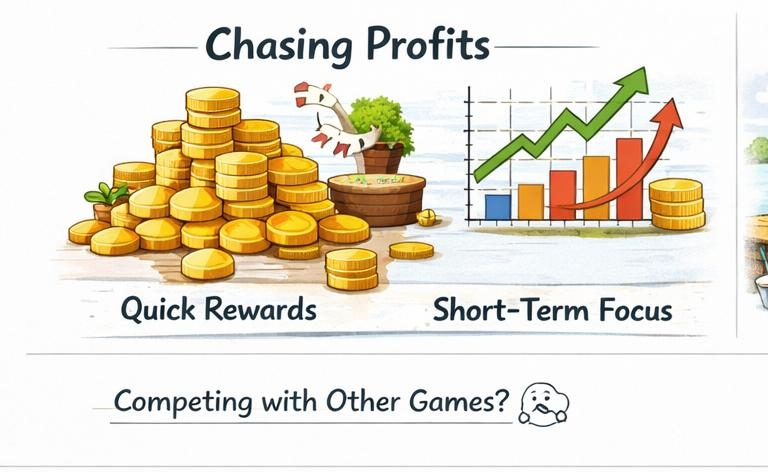
That’s not a typical Web3 success metric. It doesn’t show up cleanly on dashboards. You can’t easily model it or hype it. But if it works, it creates something more durable than short-term liquidity spikes.
Here’s the part I keep coming back to, though and it’s not something most people are talking about.
What if the real competition for Pixels isn’t other Web3 games at all?
What if it’s time itself?
Because the players it attracts aren’t just choosing between games. They’re choosing between this and everything else they could be doing in that moment. Social media, other games, even just stepping away entirely. And in that context, being “good enough to return to” might matter more than being “optimized to extract value from.”
That’s a very different battlefield.
I’m not convinced it’s solved yet. There are too many external forces market volatility, shifting narratives, user fatigue. And if the broader cycle turns risk-off again, even the most well-designed loops can feel irrelevant compared to capital preservation.
But I can’t ignore the signal either.
People keep showing up.

Not loudly. Not all at once. Just consistently.
And in a market obsessed with velocity, consistency might be the strangest edge of all.
So the question isn’t whether Pixels can capture attention for a moment. Plenty of projects can do that.
It’s whether it can hold a small piece of it, quietly, over time without needing to constantly justify itself through incentives.
And if it can does that mean it’s closer to the future of Web3 gaming?
Or just a well-crafted pause in a market that never really stops moving?