
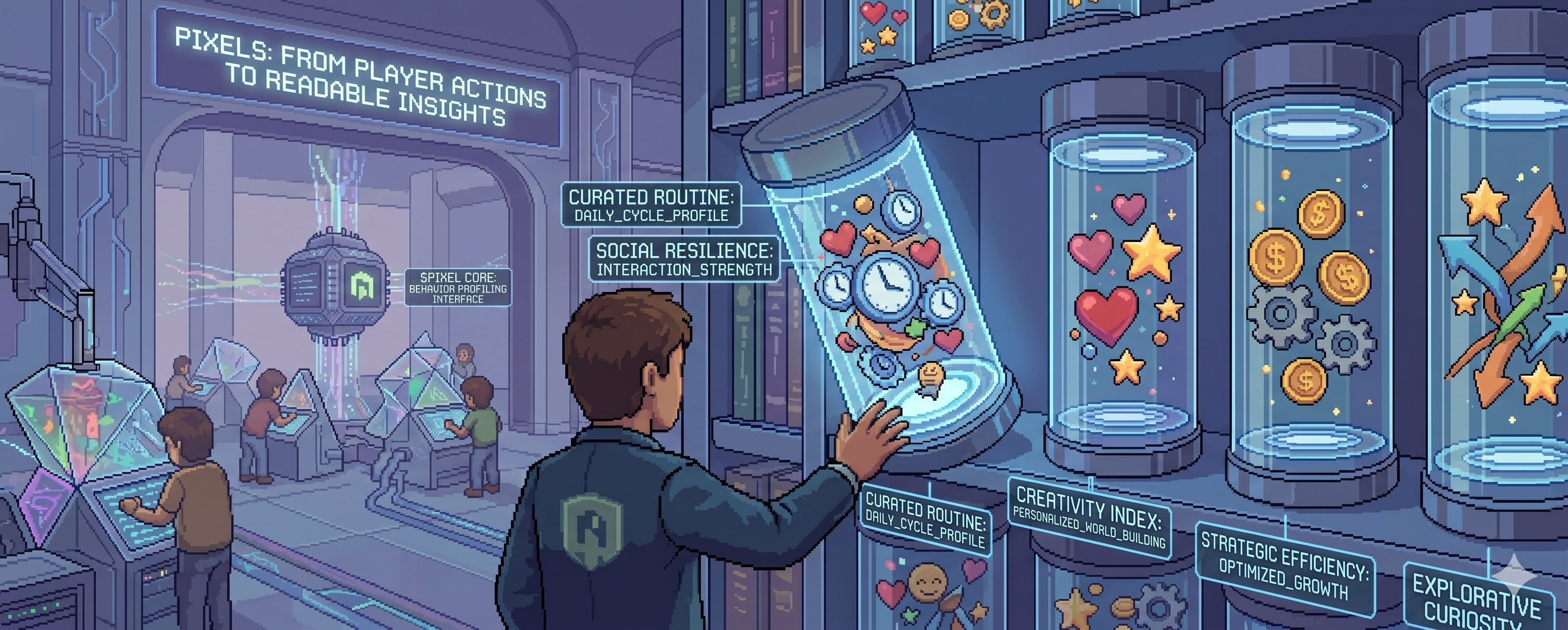
Most people describe Pixels in familiar terms: a relaxed farming world where you plant crops, gather resources, craft items, and slowly expand your land. It sounds simple, almost predictable. And on the surface, it is. But that surface-level explanation misses something deeper—something you only begin to notice after spending time inside.
Because Pixels is not just about actions. It’s about what those actions quietly reveal.
At first, everything feels mechanical. You follow loops, optimize tasks, and learn how to progress. But over time, your attention shifts. You stop focusing only on what you’re doing and start noticing how others move through the same space—and how different those movements can be.
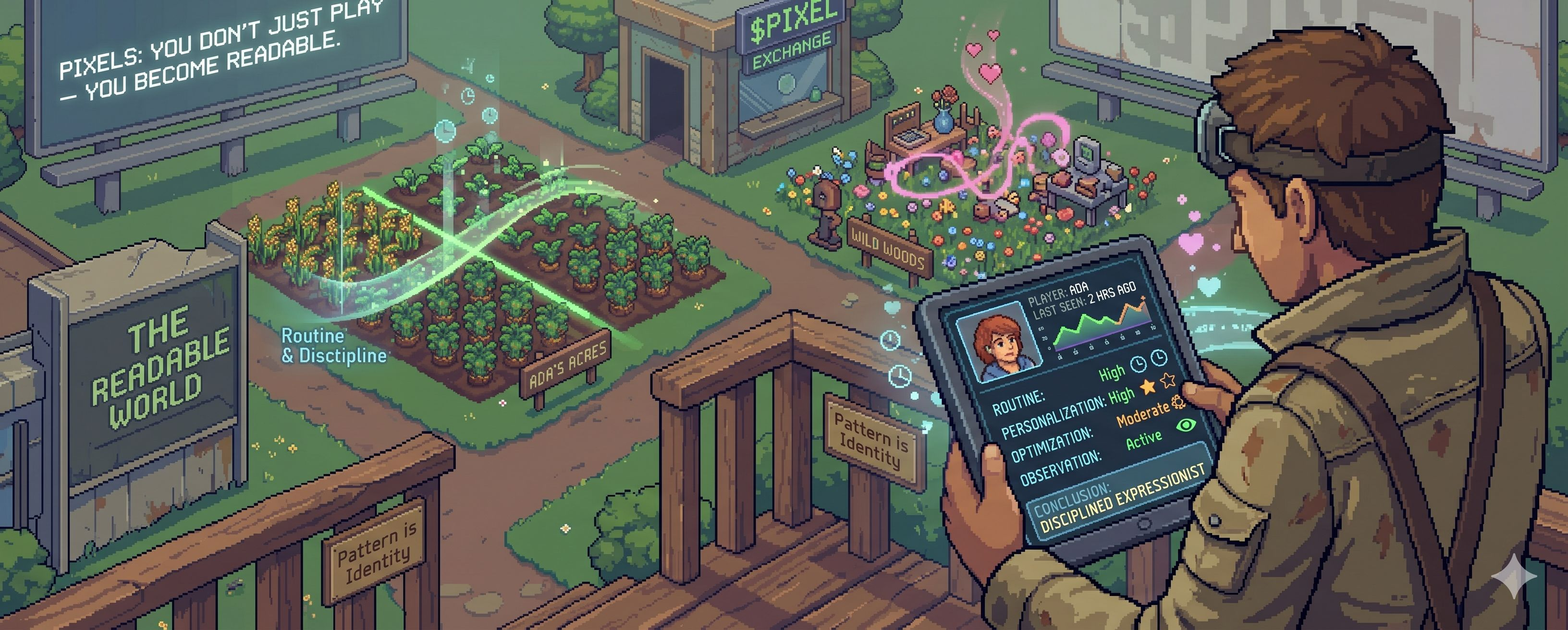
Some players are precise, building steadily with clear intention. Others drift, exploring without urgency. Some chase efficiency, turning everything into a system. Others slow down, decorate, experiment, or simply exist in the world without pressure. None of this is announced, yet all of it becomes visible.
That’s where @Pixels becomes more than a game. It becomes a space where behavior turns into identity.
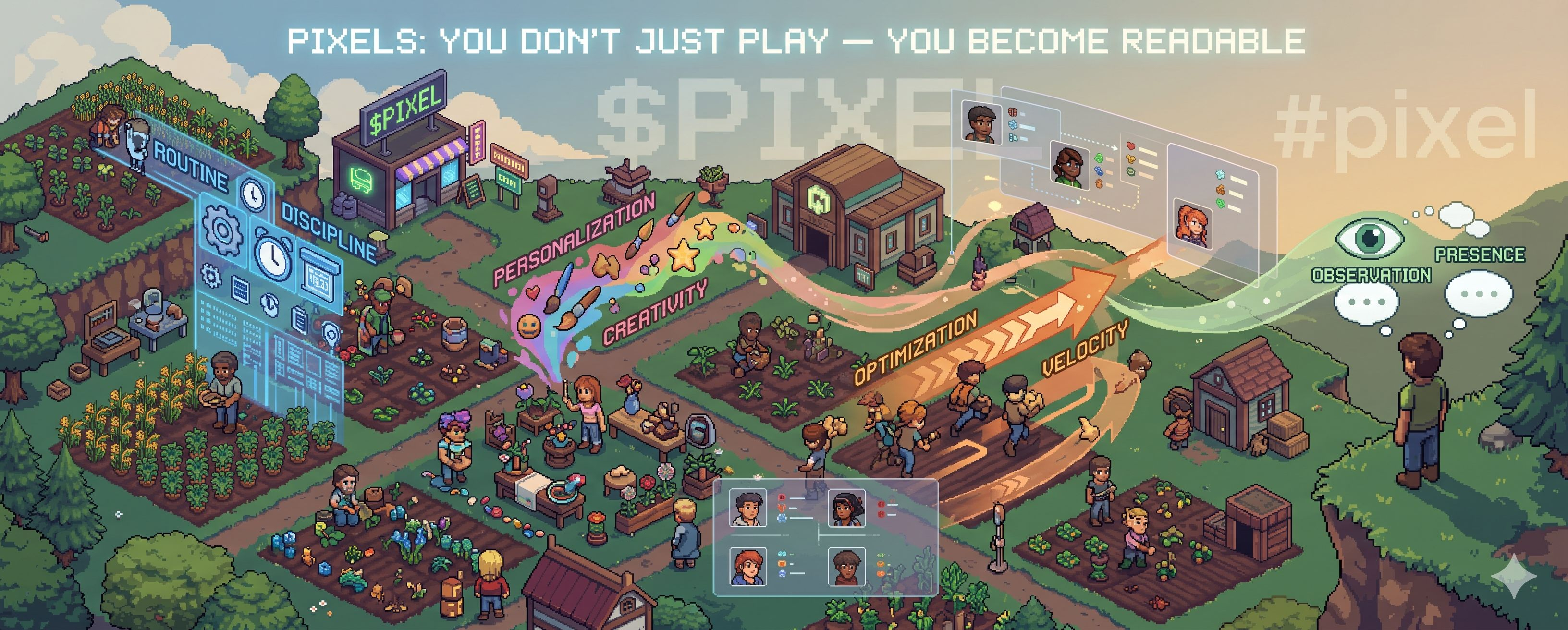
Repetition is the key. A single action means very little. But repeated actions—performed over time—begin to form patterns. And patterns are readable. A player who shows up daily and maintains their land signals commitment. Someone who constantly shifts focus suggests curiosity. Someone who refines systems again and again reveals control and precision.
You don’t need conversation to understand this. You observe. You interpret. You recognize.
And that creates a subtle social layer.
In many games, identity is tied to outcomes—rankings, wins, visible achievements. But in Pixels, identity emerges through consistency. It’s not about what you achieve once, but what you choose to sustain. The question quietly changes from “what did you do?” to “what do you keep doing?”
That question runs deeper.
Because what you maintain over time says more about you than any single success.
Even simple actions like farming become expressive in this kind of environment. A well-kept field reflects discipline. A carefully designed space shows attention. A chaotic but active land suggests experimentation. Even absence becomes meaningful. When someone disappears after being consistent, that gap becomes part of their pattern too.
This is what makes the world feel alive.
Not constant interaction. Not loud communication. But quiet observation. Players reading each other through behavior, forming impressions through repetition. It’s a softer kind of social experience, but often a more real one.
And this is where the Web3 layer adds another dimension. Assets, land, and progress tied to $PIXEL are not just mechanics—they become visible extensions of behavior. They show not just what you have, but how you got there. Whether you built patiently or moved quickly. Whether you maintain or neglect. Whether you optimize or personalize.
The asset is visible—but the pattern behind it is what truly speaks.
That’s why Pixels feels different.
It doesn’t force expression. It doesn’t demand attention. It allows identity to emerge naturally, through presence and repetition. It creates a world where players become understandable not through what they say, but through what they consistently do.
And that feels closer to real life than most games admit.
Because in the end, people are rarely defined by their biggest moments. They are defined by their patterns. What they return to. What they build. What they maintain. What they reveal without trying.
Pixels turns all of that into part of the experience.
A quiet system where behavior becomes visible, patterns become meaning, and identity forms one routine at a time.