
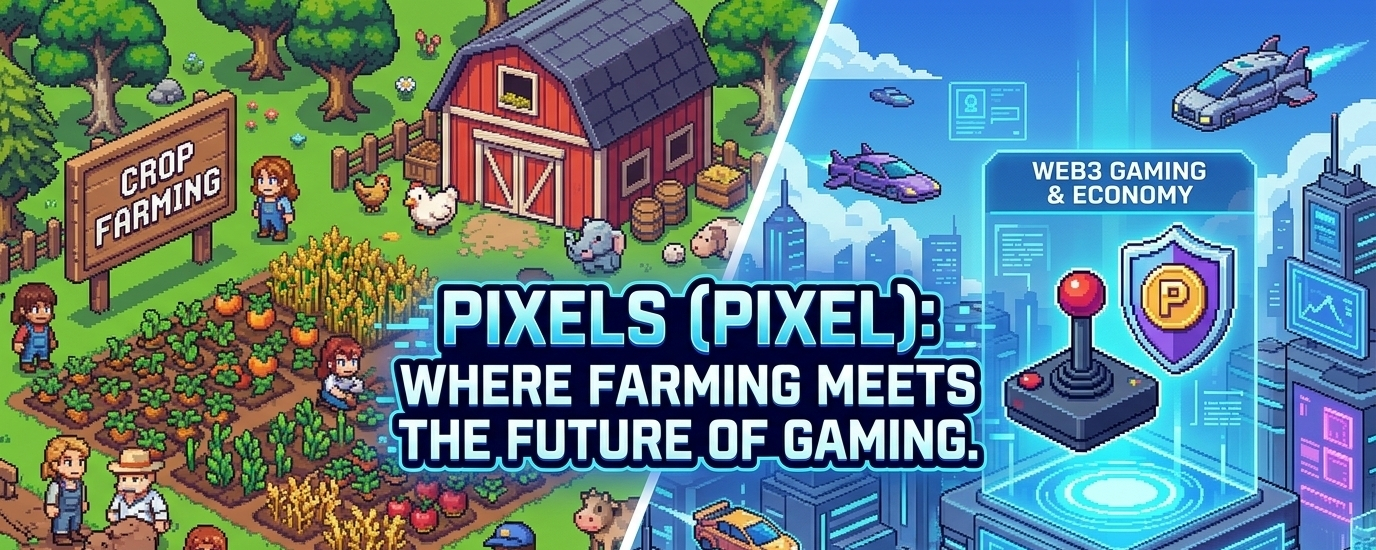
If you had told someone a decade ago that tending virtual crops could earn real money, they might have laughed it off. Today, that idea isn’t just realit’s thriving. And right at the center of it sits Pixels, a deceptively simple-looking game that quietly redefines what it means to “play
Built on the Ronin Network, Pixels isn’t chasing hyper-realistic graphics or cinematic storytelling. Instead, it leans into something far more powerful: a living, player-driven world where time, creativity, and strategy translate into real value
Let’s dig into what makes this game more than just another blockchain experiment—and why it’s pulling in both gamers and skeptics alike
A World That Feels Alive (Even in Pixels
At first glance, Pixels looks like a nostalgic throwback. The art style echoes old-school browser games—simple, colorful, and intentionally low-fi. But don’t let that fool you
Underneath that cozy aesthetic is a surprisingly dynamic ecosystem
You start small. A patch of land. A few seeds. Maybe a tool or two. There’s no dramatic cutscene pushing you forward. Instead, the game nudges you gently: plant something, explore a lttle, talk to someone nearby
And before you realize it, you’re hooked
Not because of flashy rewardsbut because the world responds to you
Crops grow in real time. Markets shift based on what other players are doing. Land isn’t just decoration; it’s productive. Every action feeds into a bigger system
It feels less like a game level and more like stepping into a functioning digital village
Farmin But Make It Strategic
Farming in Pixels isn’t mindless clicking. It’s closer to managing a small business
You have to think about
Which crops are in demand
How long they take to grow
Whether it’s better to sell raw goods or craft them into something more valuable
For example, growing wheat might be easybut turning it into flour, then bread, can multiply its value. Of course, that requires time, energy, and planning
And here’s where things get interesting: the market is player-driven
If everyone starts farming the same crop, prices drop. Suddenly, your safestrategy isn’t so safe anymore
It creates this quiet tension. You’re not just playing against the gameyou’re playing alongside (and sometimes against) thousands of other players making similar decisions
Exploration That Actually Matters
Many games throw in exploration as filler. Pixels doesn’t
Wandering off your farm can lead to
Rare resources
Hidden quests
New characters with unique rewards
Access to different land types
And unlike traditional RPGs, exploration here isn’t about defeating enemiesit’s about discovery and opportunity
One player might stumble upon a high-value resource zone early and build an entire strategy around it. Another might focus on networkingconnecting with landowners or guilds to gain access to better areas
There’s no single “correct” path, which is rare in modern games
The Social Layer: Where Things Get Real
Pixels quietly shines in its social dynamics
You’ll see players trading, collaborating, even specializing. Some focus entirely on farming. Others become crafters, traders, or land investors
It starts to feel like a tiny economy
There are real conversations happening
“I’ll supply you crops if you process them
Let’s share land and split profits
Prices are crashinghold your goods
This isn’t scripted gameplay. It’s emergent behavior
And that’s the magicPixels doesn’t force interaction, but it rewards it so naturally that players create their own systems
The PIXEL Token: More Than Just a Reward
At the heart of the game lies the PIXEL token. But unlike many Web3 games where tokens feel like a bolt-on feature, here it’s woven into the gameplay loop
You earn it by participatingfarming, completing tasks, contributing to the ecosystem
But what makes it compelling is how it connects effort to value
Players aren’t just grinding for points. They’re building something that exists beyond the game session
Of course, this comes with challenges. Token economies can fluctuate. Rewards can change. And not every player will profit equally
But Pixels seems aware of this balance. It leans more toward sustainability than hype, focusing on long-term engagement rather than short bursts of excitement
Why Ronin Network Matters
Choosing the Ronin Network wasn’t accidental
Ronin is designed specifically for gaming—fast transactions, low fees, and a smoother experience compared to traditional blockchain networks
That matters more than it sounds
Because if every in-game action felt like a slow, expensive transaction, the entire experience would fall apart. Instead, Pixels feels almost like a normal game—with blockchain quietly working in the background
That’s how it should be
Not Just Play-to-EarnPlay-and-Participate
Let’s be honestplay-to
earn” has a reputation problem
Many games promised easy money and delivered unsustainable systems. Players would rush in, extract value, and leave
Pixels takes a different approach
It feels more like: play, contribute, and maybe earn along the way
The focus isn’t on quick gains
it’s on building something over time
Players who succeed tend to
Understand the economy
Adapt to changes
Engage with the community
In other words, it rewards involvement, not shortcuts
Real-Life Parallels That Make It Stick
What’s fascinating is how closely Pixels mirrors real-world systems
Think about it
Farmers respond to market demand
Businesses decide whether to sell raw materials or finished goods
Communities form around shared resources
Even the risks feel familiaroverproduction, market crashes, shifting trends
It turns abstract economic concepts into something tangible and interactive
For some players, it’s just a game. For others, it’s a low-stakes way to understand how economies actually behave
Where It Could Go Next
Pixels is still evolving, and that’s part of its appeal
There’s room for
More complex crafting systems
Deeper social mechanics
Expanded land ownership models
Player-created content
If handled well, it could become less of a game and more of a platforma digital space where players don’t just participate but shape the world itself
Of course, growth comes with risks. Balancing the economy, keeping gameplay fun, and avoiding over-financialization will be key
Final Thoughts: A Quiet Revolution in Gaming
Pixels doesn’t shout for attention. It doesn’t rely on flashy trailers or overpromising roadmaps
Instead, it does something far more interestingit invites you in, lets you play, and slowly reveals its depth
What starts as planting crops turns into managing resources.
That turns into understanding markets.
That turns into participating in a living, breathing ecosystem
And somewhere along the way, you realize
This isn’t just a game about farming
It’s about ownership, community, and the idea that virtual worlds can hold real meaningnot because of hype, but because of the people inside them
Whether Pixels becomes a long-term staple or just a stepping stone in Web3 gaming, one thing is clear