
There’s a quiet shift that happens inside systems like $PIXEL s that most people don’t notice at first.
You log in thinking you’re playing a game.
Planting. harvesting. clicking. upgrading. repeating.
simple loop. clean. familiar.
but somewhere along the line… it stops feeling like play.
not because it breaks
but because it learns you
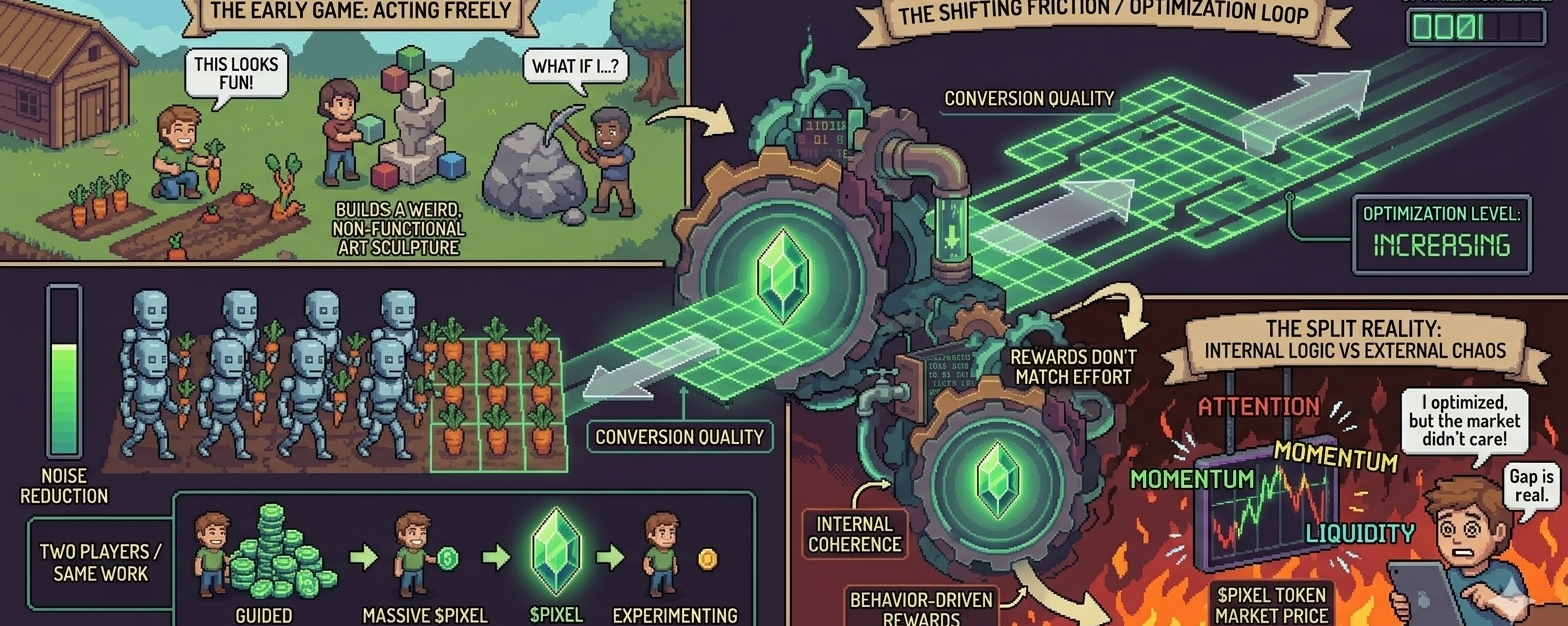
1. from playing → to optimizing (without deciding to)
At the beginning you act freely.
you explore, you experiment, you try random stuff that “feels right”
then slowly, almost silently, the system starts rewarding certain patterns more than others.
and you adjust.
not in one big decision.
but in tiny micro shifts
a slightly different route
a slightly faster timing
a slightly more “efficient” action chain
until one day you realize:
you are no longer asking what is fun
you are asking what works
and that change is not loud. it is quiet. almost invisible.
you don’t stop playing
you just start optimizing your behavior inside the $PIXEL space
2. rewards are not effort mirrors anymore
traditional thinking says:
more effort = more reward
but in systems like this, it’s not that simple
effort becomes secondary
what matters more is conversion quality
how clean your actions map into output the system recognizes as valuable
two players can do same hours of work
but get totally different returns
because the system is not just watching activity
it’s watching patterns
efficiency
alignment
predictability of output flow
and that creates a strange effect:
people start to reduce noise
less experimentation
more repetition
more “safe” moves
not because they want to
but because it works better
3. sinks are not brakes… they are steering mechanisms
fees, upgrades, crafting steps, progression walls
they look like barriers
but they don’t just slow you down
they redirect behavior
they force decisions like:
where do you store value
when do you spend
what path do you commit to
what do you abandon
this is important
because it means the system is not just extracting activity
it is shaping flow
like water channels carved into terrain
you think you are choosing direction
but the structure already narrows the possible paths
so behavior becomes less random
more guided
more structured
almost like a controlled experiment in value movement
4. internal logic vs external reality gap
this is where things start to break conceptually
inside the system:
logic feels coherent
behavior feels measurable
rewards feel “earned through alignment”
but outside the system:
token price doesn’t care about internal coherence
it reacts to attention
liquidity
momentum
external narratives
market emotion
so you get a split reality
one layer trying to optimize behavior precision
another layer responding to chaos
and they don’t sync cleanly
they rarely do
this gap creates confusion:
“if the system is well designed… why doesn’t the market reflect it?”
because they are not the same system
they only look connected
5. retention is not proof of health (this is where disagreement starts)
people often say:
“retention = success”
but retention is a weak signal if you don’t ask why it exists
because retention can come from many things:
sunk cost
slow reward drip
fear of missing out
progression delay hooks
social pressure
habitual login loops
none of these require real enjoyment
a system can keep people inside
while slowly reducing randomness, surprise, exploration
and still show strong retention numbers
so what does retention actually measure?
it measures return frequency
not return reason
there’s a big difference
6. behavior lock vs genuine engagement
this is the uncomfortable part
you can design systems where players:
don’t consciously choose to optimize
they just… start doing it
because the environment rewards that shape of behavior
this is what happens when optimization becomes invisible
players stop feeling like they are inside rules
and start feeling like they are just “doing what makes sense”
but “what makes sense” is already defined by system incentives
so what looks like choice
is often structured response
not forced
but guided enough that deviation feels inefficient
and inefficiency feels like wrong play
7. the real signal is not retention, not output, not volume
so if retention is weak as a success metric…
what replaces it?
maybe this:
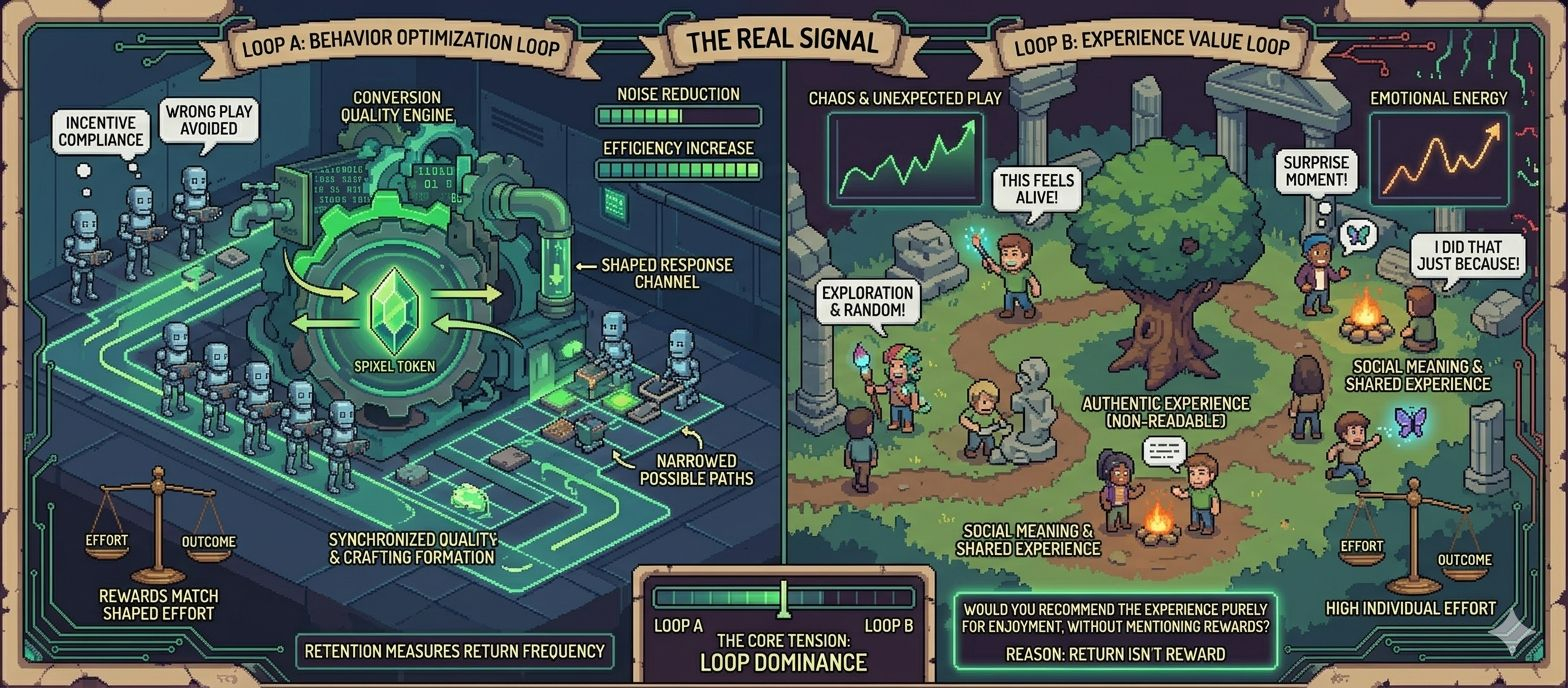
would someone recommend the experience purely for enjoyment, without mentioning rewards?
that question cuts deeper
because it removes:
extraction logic
reward chasing
optimization mindset
and asks only about lived experience
fun
surprise
social energy
unexpected moments
feeling of discovery
not “is it profitable to return”
but “is it worth experiencing again”
8. the core tension
this is the central conflict:
the more precise a system becomes at defining valuable behavior
the more it reduces natural randomness
efficiency goes up
clarity goes up
predictability goes up
but something else goes down
exploration
chaos
unexpected play
the feeling of “I did that just because I felt like it”
and without that layer
a game stops feeling like a game
and starts feeling like a system you operate inside
not broken
just… overly defined
9. final synthesis
so maybe the real framework is this:
there are two loops happening at once
Loop A: Behavior Optimization Loop
system rewards patterns
players adapt unconsciously
efficiency increases
randomness decreases
compliance feels like choice
Loop B: Experience Value Loop
surprise
social meaning
emotional unpredictability
exploration without optimization pressure
desire to return for experience itself
retention sits in the middle of both loops
so it cannot be trusted alone
because it does not tell you which loop is dominating
and maybe that’s the real problem in systems like this
not whether they work
but whether, after enough optimization
there is still anything left that feels unstructured enough to call it play
or if everything has slowly become… readable
predictable
quietly efficient
too efficient maybe
... and a bit less alive than it started out.