

Key Takeaways
The S&P 500's trailing P/E ratio stands at approximately 24 as of April 2026, well above the historical average of 16, per Financial Times reporting
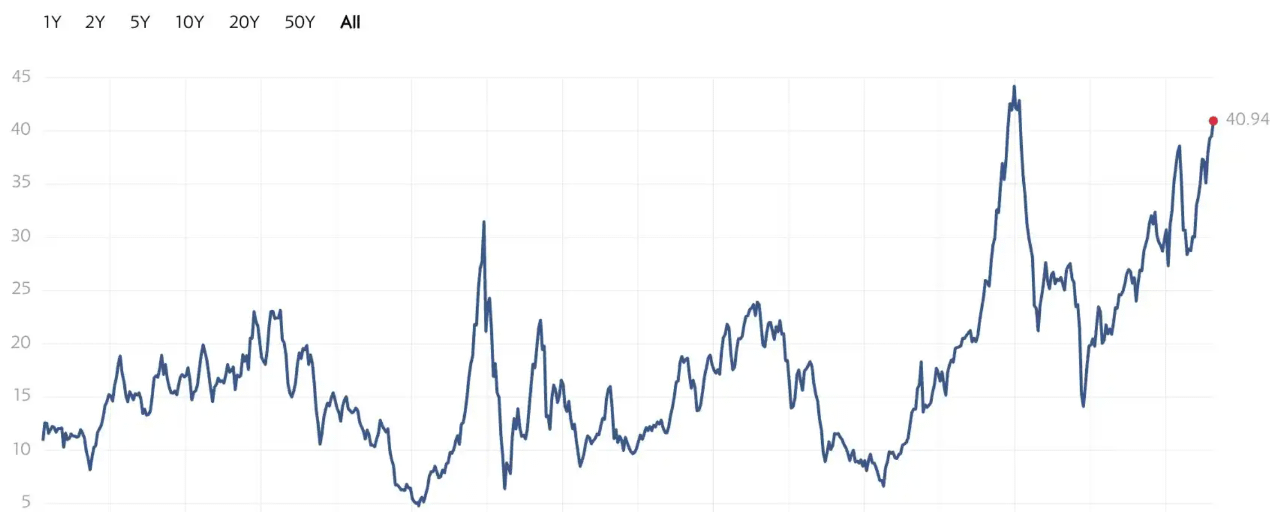
The Shiller cyclically adjusted P/E ratio has risen above 37 -- the second-highest level in history, surpassed only by the dot-com bubble peak
The current rally is built on a combination of optimistic assumptions including AI-driven profit growth, declining inflation, lower interest rates, and manageable geopolitical risk -- any deviation could trigger outsized market shocks
The "valuation plus high expectations" combination leaves the market with an extremely limited margin for error
Record highs in the S&P 500 and Nasdaq are masking a set of structural vulnerabilities that leave US equity markets with little room for disappointment, the Financial Times reported on May 1, warning that current valuations have reached levels second only to the dot-com era in modern market history.
As of April 2026, the S&P 500's trailing price-to-earnings ratio stands at approximately 24 -- roughly 50% above the historical average of 16. More strikingly, the Shiller P/E ratio, which adjusts for cyclical earnings fluctuations over a 10-year period to provide a longer-term valuation benchmark, has climbed above 37. That reading places current equity valuations at their second-highest level ever recorded, exceeded only by the peak of the dot-com bubble in the late 1990s and early 2000s -- a period that preceded one of the most severe market crashes in US history.
A Market Built on Optimistic Assumptions
The FT report identifies the structural fragility underlying the record highs as stemming not just from elevated valuations but from the combination of high prices and the optimistic assumptions required to justify them. The current rally is predicated on a specific set of conditions holding simultaneously: AI-driven corporate profit growth continuing to accelerate, inflation declining toward the Fed's 2% target, interest rates moving lower, and geopolitical risks -- including the ongoing US-Iran conflict -- remaining contained and manageable.
The danger lies in the interdependence of these assumptions. Any single deviation -- a hawkish Fed pivot, an oil price spike that keeps inflation elevated, a geopolitical escalation, or a disappointment in AI-driven earnings growth -- could trigger a magnified market reaction precisely because current valuations leave so little buffer. When markets are priced for perfection, imperfect outcomes produce disproportionate corrections.
Crypto Market Implications
For Bitcoin and digital assets, the equity valuation warning carries direct relevance. The strong positive correlation between crypto and US equities that has characterized the current cycle means a significant equity market repricing -- triggered by any of the risk factors identified by the FT -- would likely pressure crypto markets simultaneously. Bitcoin's ongoing struggle to clear $79,000--$80,000 resistance, combined with thinning spot market liquidity and persistent short positioning in derivatives, leaves it particularly exposed to a risk-off equity shock if the optimistic assumptions underpinning record stock highs begin to unravel.