


The cost of moving goods across the United States is exploding. While the financial markets focus on stock prices and interest rates, a massive storm is brewing in the physical supply chain. New data reveals that transportation costs have jumped to levels rarely seen in the history of the logistics industry. This sudden surge is acting as a major catalyst for inflation, threatening to undo the progress made over the last year.
❍ A Near-Record Reading of 95.0
The speed at which shipping prices are climbing has caught the industry off guard.
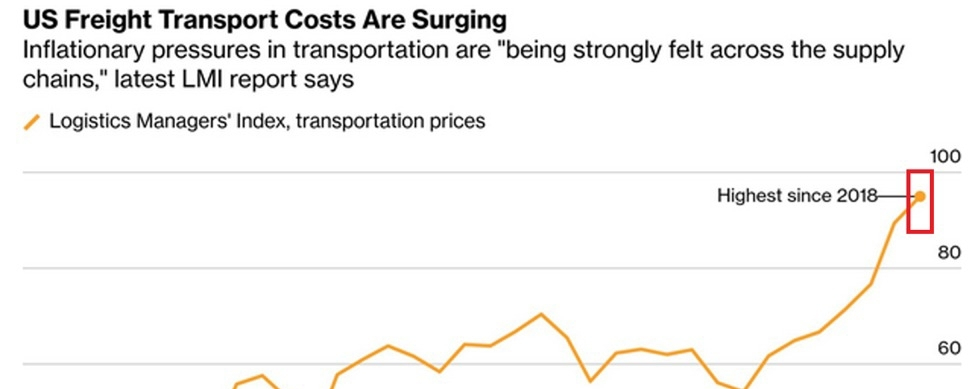
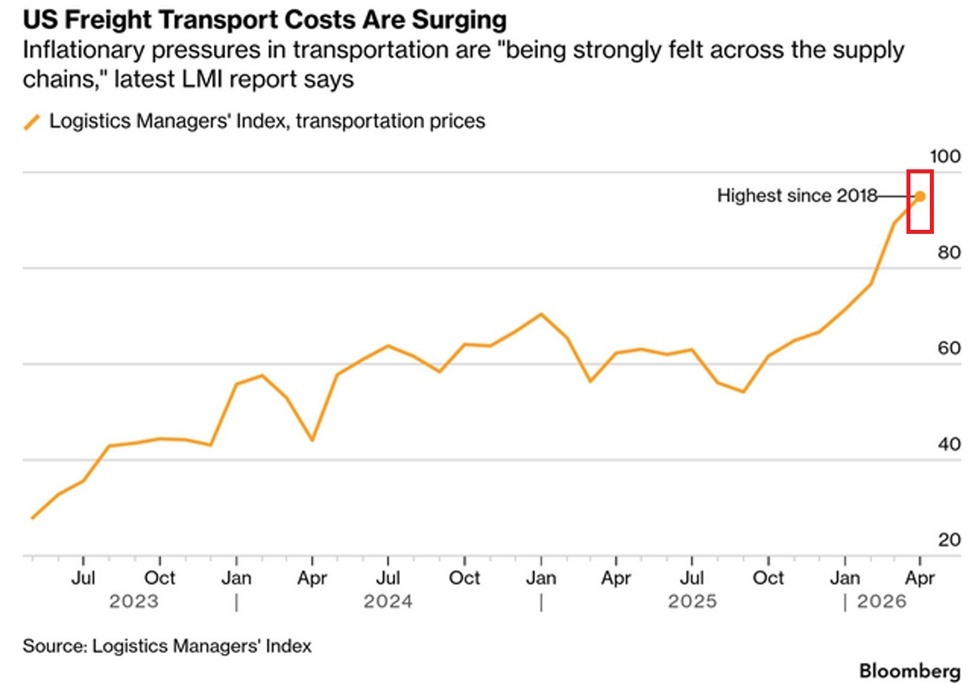
The April Spike: The Logistics Managers' Index (LMI) transportation prices index rose by +5.6 points in April.
Hitting 95.0 Points: This push brings the index to a reading of 95.0.
Highest Since 2018: This is the highest reading since the absolute peak of 96.0 points recorded in April 2018. It also stands as the third-highest mark since the index began back in 2016.
❍ What the LMI Tells Us
To understand how serious this number is, you need to understand how the index functions.
The Executive Survey: The LMI is a monthly survey of over 100 US supply chain executives. It tracks the growth or contraction of the logistics industry across eight key metrics, including inventory, warehousing, and transportation.
The 50-Point Baseline: A reading above 50 means freight costs are rising. A reading below 50 means they are dropping. A print of 95.0 means prices are expanding at an incredibly violent pace.
❍ A 75% Explosion in Months
This is not a gradual increase. The transportation market has turned completely upside down in just two quarters.
The Surge: The LMI transportation prices index has skyrocketed by +40.8 points since September 2025.
The Percentage Leap: This represents a massive +75% increase in costs in less than a year.
Some Random Thoughts 💭
In crypto, we talk about gas fees spiking when a network gets congested. This is the real-world equivalent. The physical network of the US economy is jammed, and the cost to move "transactions", which are actual goods, is hitting the roof. What makes this terrifying is the timing. This freight surge is happening exactly as general consumer inflation hits a three-year high.
You cannot separate transportation costs from the price of food, electronics, or clothes. If it costs 75% more to put a product on a truck, that cost will be passed directly to the consumer. This data tells us that inflation is not sticky because of wage growth. It is sticky because the basic plumbing of the physical economy has become incredibly expensive.