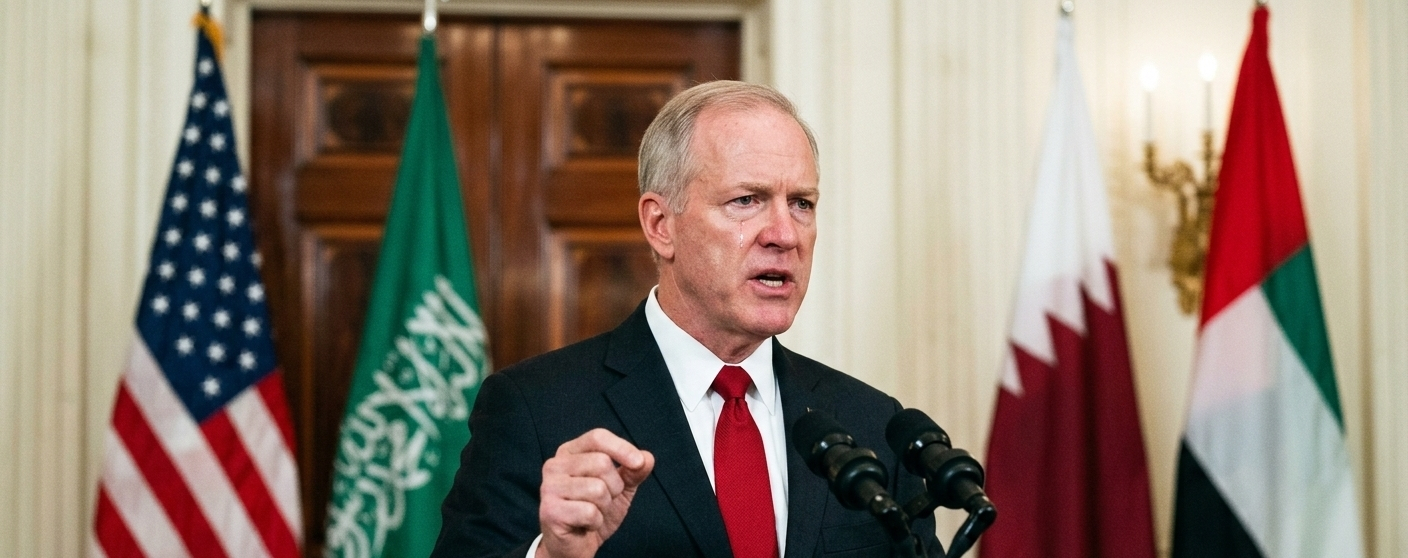
President Donald Trump has temporarily halted a scheduled military strike against Iran following direct, urgent interventions from key Gulf allies including Saudi Arabia, Qatar, and the UAE who argue a diplomatic resolution is still within reach.
Speaking from the White House, Trump disclosed that the operation has been paused for "two or three days" to allow regional leaders a final window to conclude high-stakes negotiations with Tehran.
"I put it off for a little while, hopefully maybe forever," Trump stated. "They think they are getting very close to making a deal."
According to administration sources, the proposed framework centers on a singular, non-negotiable objective: ensuring Iran never acquires a nuclear weapon. However, Trump emphasized that the military option remains fully authorized, warning that the U.S. will strike if negotiations collapse, though he declined to set an explicit deadline.
The High-Stakes Dilemma
The delay underscores a complex geopolitical and economic balancing act for Washington:
Tehran's Resistance: Iran continues to reject major concessions, complicating the path to a meaningful treaty.
Energy Market Volatility: Global oil markets are highly sensitive to conflict in the Middle East; a direct U.S. strike risks sending crude prices soaring.
Economic Fallouts: The White House is fiercely reluctant to trigger a global energy shock unless all diplomatic avenues are entirely exhausted.
While regional diplomacy has temporarily averted an immediate conflict, the window is rapidly closing. The region remains on a knife-edge, balancing between a historic non-proliferation agreement and a major military escalation.